






First, What Is El Niño?
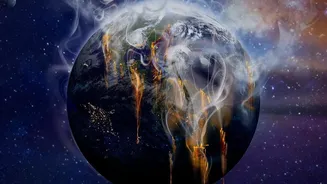
Simply put, El Niño is a climate pattern defined by the unusual warming of the sea surface in the central and eastern Pacific Ocean. Think of it as a vast expanse of the ocean running a fever. This isn't a new or man-made event; it's a naturally occurring
cycle known as the El Niño-Southern Oscillation (ENSO) that happens every two to seven years. While it originates thousands of kilometres away, its effects are powerful enough to disrupt weather patterns across the globe, influencing everything from hurricane seasons in the Atlantic to rainfall in India.
The Pacific's Powerful Influence on India
How does warmer water in the Pacific affect India's monsoon? It’s all about atmospheric circulation. Normally, strong winds push warm surface water in the Pacific westwards towards Asia. During an El Niño, these winds weaken. This shift alters massive air currents, including those that typically drive the moisture-laden southwest monsoon winds towards the Indian subcontinent. The result is often a weaker monsoon circulation, which can lead to below-normal rainfall and prolonged dry spells in many parts of India.
The Wild Card: The Indian Ocean Dipole
However, an El Niño doesn't automatically guarantee a drought in India. There's another crucial, closer-to-home factor: the Indian Ocean Dipole (IOD). The IOD is the Indian Ocean's own version of El Niño, based on temperature differences between the western and eastern parts of the ocean. A 'positive' IOD, with warmer waters in the western Indian Ocean (near the Arabian Sea), can help boost monsoon winds and bring more rain to India. Sometimes, a positive IOD is strong enough to counteract the negative effects of an El Niño, acting as a potential saviour for the monsoon season. It's this complex tug-of-war between the Pacific and Indian Oceans that makes forecasting so challenging.
The 2026 Monsoon and El Niño Status
So, what's happening this year? As of August 2026, a moderate El Niño is not only present but strengthening. International agencies like the World Meteorological Organization and NOAA have indicated that it could become a historically strong event by the end of the year. The India Meteorological Department (IMD) initially forecast a below-normal monsoon for 2026, predicting rainfall at around 92% of the long-term average, citing the developing El Niño. While July saw a good recovery in rainfall, the overall forecast for the second half of the season remains cautious, with August predicted to be below normal. As of early August, the cumulative rainfall deficit for the season stood at 12% below normal.
Why This Matters for Every Indian
The monsoon's performance has a direct impact on the lives of millions. Over half of India's farmland is rain-fed, so a weak monsoon can devastate the crucial kharif (summer) crops, leading to lower agricultural output. This has a domino effect on the economy. Lower farm incomes can reduce rural demand for goods and services. A shortfall in crop production can lead to higher food prices, stoking inflation that affects every household's budget. Furthermore, deficient rainfall impacts water levels in reservoirs, which are vital for drinking water, irrigation during the dry season, and generating hydroelectric power.