








An Ambitious Expansion of Protection
The Goa Forest Department has sent a significant proposal to the state's environment department, recommending that 24 beaches—10 in North Goa and 14 in South Goa—be officially designated as turtle nesting sites under the Coastal Regulation Zone (CRZ)
Notification of 2019. This marks a substantial increase from the four beaches currently notified for turtle conservation: Morjim, Mandrem, Agonda, and Galgibaga. The list of proposed beaches includes some of Goa's most popular and commercially active stretches, such as Baga, Calangute, Candolim, and Palolem, alongside quieter shores. If accepted, this designation would classify these areas as ecologically sensitive, paving the way for stricter regulations to protect the turtles.
The Vulnerable Olive Ridley Turtle
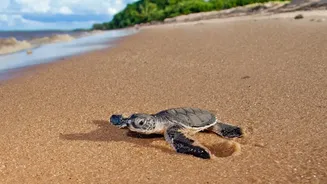
The focus of this plan is the Olive Ridley turtle, the smallest and most abundant of all sea turtles found in the world's oceans. They are classified as a 'Vulnerable' species, facing numerous threats globally. These turtles are known for their unique synchronized nesting in large numbers, a phenomenon called 'arribada', though they also nest individually. In Goa, the nesting season typically runs from October to May, a period that directly coincides with the peak tourist season. Female turtles return to the very beaches where they were born to lay their eggs, making the protection of these specific habitats absolutely critical for their survival. With a hatchling's chance of reaching adulthood estimated to be as low as 1 in 1,000, safeguarding every nest is paramount.
Why New Rules Are Needed
The proposal comes amid growing concerns about the impact of human activity on nesting sites. Artificial lighting from shacks and resorts can disorient hatchlings, causing them to move inland instead of towards the sea. Loud music, beach parties, and vehicle movement on the sand can deter female turtles from coming ashore to lay their eggs. Uncontrolled tourism and coastal development have long been cited as reasons for a decline in nesting numbers over the years. The new protections would likely lead to tighter controls on nighttime activities, including restrictions on lighting, beach shacks, events, and vehicle use during the crucial nesting season.
A Delicate Balance: Conservation vs. Livelihoods
The ambitious proposal has sparked concern among local communities and tourism stakeholders. Representatives for shack owners and fishermen fear that broad restrictions could severely impact their livelihoods, which are heavily dependent on the bustling tourist season. Industry bodies have called for a balanced approach, asking for clarity on the exact nature of the proposed rules. They argue that conservation and tourism can coexist and that many operators have already been cooperating with the Forest Department's efforts. The main concern is that declaring nearly the entire coast as a protected zone could cripple the local economy without a clear, consultative plan that safeguards both the turtles and the people who depend on the beaches for their income.
The Path Forward
The Forest Department's proposal is now with the Department of Environment and Climate Change for consideration. Its inclusion in the CRZ notification would give legal weight to the conservation efforts. For years, conservation in Goa has been a joint effort between the Forest Department and local volunteers who patrol beaches and protect nests. The success of this new, expanded plan will likely depend on effective collaboration. It will require finding a middle ground that enforces necessary protections for the Olive Ridleys while addressing the legitimate economic anxieties of the coastal communities. This move represents a critical moment for Goa to define its future—as a premier tourist destination that also serves as a vital sanctuary for one of the ocean's most cherished species.