



The High Cost of Sitting Still
Our bodies are built for motion, yet many jobs require us to remain sedentary for eight or more hours a day. This prolonged sitting has been linked to a range of health issues. When you sit for extended periods, your circulation slows, muscles like your hip
flexors shorten and tighten, and your posture often suffers, leading to a slouched position that strains your spine. This inactivity can cause muscle imbalances, where some muscles weaken while others overcompensate, resulting in chronic lower back pain, neck strain, and shoulder discomfort. Beyond musculoskeletal issues, prolonged sitting is associated with increased risks of more serious health conditions, including heart disease and type 2 diabetes. It can even affect your mental state, leading to mental cloudiness and reduced concentration as blood and oxygen flow to the brain decreases.
The Power of the Micro-Break
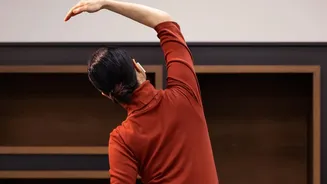
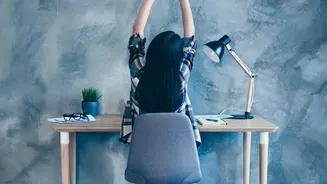
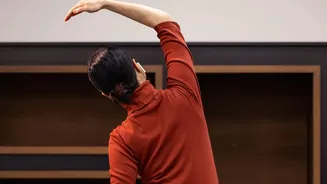
The key to combating the negative effects of a desk job isn't necessarily a strenuous gym session after work, but consistent movement throughout the day. Research suggests that breaking up long periods of sitting with short, frequent movement breaks is highly effective. Taking just a few minutes every hour to stand up and stretch can make a significant difference. These 'micro-breaks' help to increase blood flow, delivering vital oxygen and nutrients to your muscles and brain. This boosts energy levels, sharpens focus, and helps prevent the stiffness and fatigue that build up over hours of sitting. Regular stretching also helps maintain flexibility and range of motion in your joints, which is crucial for preventing injuries and maintaining good posture.
How to Build a Reminder Habit
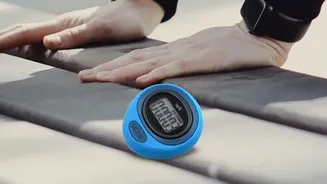
The intention to stretch is great, but in the middle of a busy workday, it's easy to forget. This is where technology becomes your ally. The most effective way to build a stretching habit is to remove willpower from the equation and rely on external triggers. Set a recurring alarm on your phone or a calendar notification on your computer for once every hour. There are also browser extensions and simple apps designed specifically to remind you to take a break. The trick is consistency. When the reminder goes off, honour it immediately. Don't hit dismiss. Stand up, even if it's just for 60 seconds. Pairing the reminder with an action, like getting a glass of water, can also help solidify the habit.
Essential Stretches for Your Neck and Shoulders
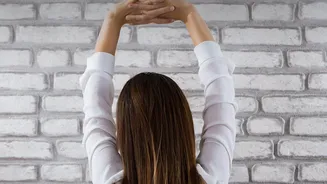
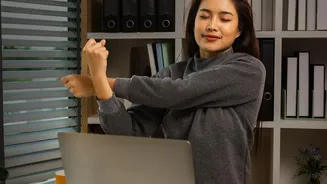
The neck and shoulders often bear the brunt of 'tech neck' posture. To relieve this tension, start with a simple neck tilt. While seated, gently drop your right ear toward your right shoulder, holding for 15–30 seconds to feel a stretch along the left side of your neck. Repeat on the other side. Next, perform shoulder rolls by shrugging your shoulders up toward your ears, then rolling them back and down. Finally, try a chest opener. Clasp your hands behind your back, straighten your arms, and gently lift them while squeezing your shoulder blades together. This counteracts the forward slump and opens up your chest.
Relieving Your Tight Back and Hips
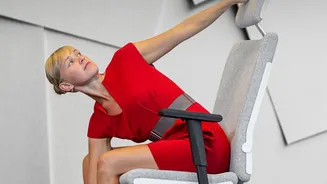
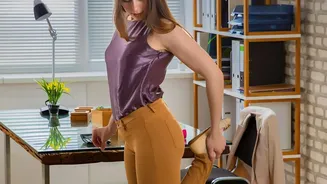
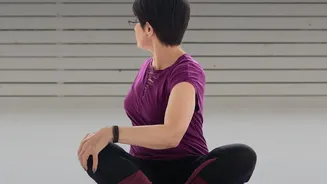
Sitting shortens the hip flexors and puts pressure on the lower back. A seated spinal twist can offer immense relief. Sit tall in your chair and cross your right leg over your left. Place your left hand on your right knee and gently twist your torso to the right, holding for 15–20 seconds before switching sides. To target your hips, try a seated figure–four stretch. Place your right ankle on your left knee. If you can, gently lean forward with a straight back until you feel a stretch in your right hip and glute. To mobilize the entire spine, perform seated cat–cow stretches. Place your hands on your knees, and as you inhale, arch your back and look up. As you exhale, round your spine and tuck your chin to your chest.
Don't Forget Wrists and Legs
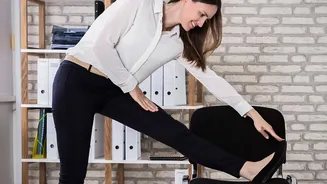
Constant typing and mouse use can lead to wrist strain. To counteract this, extend your right arm with your palm facing up. With your left hand, gently pull the fingers of your right hand down and back toward your body, holding for about 20 seconds. Repeat with your palm facing down, and then switch hands. For your legs, which can suffer from poor circulation while sitting, simply extend one leg straight out in front of you and flex and point your foot several times. You can also do seated calf raises by lifting your heels off the floor while keeping your toes down. Even these small movements encourage blood flow and prevent stiffness.