




The Challenge of the City Sky
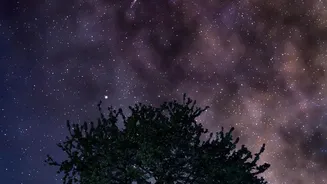
The primary villain for any aspiring urban astronomer is light pollution. Excessive artificial light from street lamps, buildings, and vehicles creates a bright veil known as ‘skyglow’. This glow washes out all but the most brilliant celestial objects,
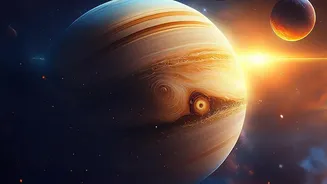
making it nearly impossible to spot faint stars or constellations. While the Moon, along with bright planets like Venus, Jupiter, and Saturn, are usually luminous enough to punch through this urban haze, knowing where to look is the real challenge. Without a guide, you could be staring directly at a planet and mistake it for a distant aeroplane or simply another faint star. This is where modern technology becomes an indispensable tool for the city-bound stargazer.
Your Phone as a Pocket Planetarium
Modern astronomy apps transform your phone into a powerful, portable guide to the universe. By using your device's built-in GPS, compass, and gyroscope, these applications know your precise location and which direction you're pointing. They generate a real-time map of the sky, showing you exactly which stars, constellations, and planets are in your line of sight. The most game-changing feature for city dwellers is Augmented Reality (AR). By accessing your phone's camera, the app overlays its star map directly onto a live view of your surroundings. This eliminates all the guesswork. Instead of trying to match a dot on a static chart to a point of light in the sky, AR shows you in real-time: “That bright light you see above that building is Saturn.” It’s a simple yet revolutionary way to make astronomy accessible to everyone, no prior knowledge required.
Top Apps for Urban Stargazers
The number of available apps can feel overwhelming, but a few consistently stand out for their user-friendly design and powerful features.
Star Walk 2: Known for its stunning graphics and intuitive interface, Star Walk 2 is a favourite among beginners. Its AR mode is seamless, and features like “Visible Tonight” recommend the best objects to observe from your specific location. The app also has a 'time machine' function that lets you see where celestial bodies will be on future nights, helping you plan ahead.
SkyView Lite: Praised for its simplicity, this app is perfect for those just starting. You simply point your device at the sky, and it identifies stars, planets, and even satellites like the International Space Station (ISS) as they pass overhead. It also allows you to set reminders for celestial events.
Stellarium Mobile: Often considered the gold standard, Stellarium offers a massive database of stars, planets, and deep-sky objects. Based on open-source software used by amateur astronomers for years, it's incredibly detailed. A particularly useful feature for urbanites is the ability to simulate different levels of light pollution, giving you a realistic preview of what you can expect to see.
Tips for Better City Viewing
While these apps are powerful, a few good practices can significantly improve your urban stargazing experience. First, find the darkest spot available. This could be a local park, a rooftop, or any area shielded from direct streetlights. Second, give your eyes time to adjust to the darkness—at least 15-20 minutes. Many apps have a red-light 'night mode' which helps preserve your night vision while you use your phone. Finally, be patient and focus on the bright targets. The Moon and planets are your best bets in a light-polluted environment. Use your app to confirm which planets are visible. For instance, in September 2026, Venus is a brilliant object in the west after sunset, while Jupiter and Saturn are visible for much of the night. An app will point you right to them.