




The Hidden Risks of Traditional Crunches
For decades, crunches have been the go-to exercise for sculpting abs. However, fitness experts and spine specialists increasingly caution against them. The primary issue lies in the movement itself: repeated spinal flexion, or bending the spine forward.
This motion can put significant pressure on the intervertebral discs in your lower back. Over time, this repetitive strain may lead to irritation, pain, and even increase the risk of disc issues. Another common problem is neck strain. Many people instinctively pull on their head to lift their shoulders, which shifts the effort from the abs to the delicate neck muscles. While crunches do isolate the rectus abdominis (the “six-pack” muscles), they neglect the deeper core muscles that are crucial for overall stability.
Why Planks Are a Superior Alternative
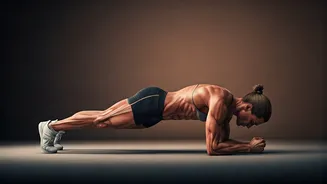
Enter the plank. Unlike the crunch, the plank is an isometric exercise, meaning your muscles are engaged without lengthening or shortening. The main goal is to resist spinal movement and maintain a neutral, straight line from head to heels. This bracing action is a more functional way to train your core, as the primary job of your abdominal muscles in daily life is to stabilize the spine during movement. Planks engage a much wider range of muscles than crunches. They work the deep transverse abdominis (your body's internal corset), the obliques, and the erector spinae in your back. Furthermore, they also recruit muscles in your shoulders, chest, glutes, and legs, making the plank a highly efficient full-body exercise. This comprehensive muscle activation leads to better posture, improved balance, and a reduced risk of back injury.
How to Master the Perfect Plank
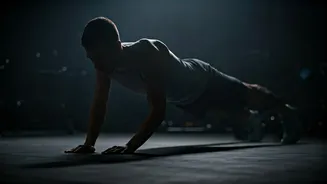
Proper form is everything when it comes to planks. An incorrect plank can lead to lower back strain. To perform a perfect forearm plank, start by lying face down. Place your forearms on the floor with your elbows directly under your shoulders. Extend your legs straight behind you and rise up onto your toes. Your body should form a straight, rigid line from your head to your heels. Engage your core by pulling your belly button in toward your spine, and be sure to squeeze your glutes. This prevents your hips from sagging, which is a common mistake that strains the lower back. Keep your neck in a neutral position by looking at the floor slightly in front of you, not up or down. Hold the position while breathing steadily. It's better to hold a perfect plank for 20 seconds than an improper one for a minute.
Easy Variations to Progress Your Planks
Once you've mastered the basic plank, you can introduce variations to keep challenging your muscles. A simple way to start is with an Incline Plank, where you place your forearms on a sturdy bench or chair. This reduces the load and is great for beginners. To target your obliques, try a Side Plank. Lie on your side, supporting your body on one forearm with your elbow under your shoulder, and lift your hips until your body is in a straight line. For a dynamic challenge, you can add movement. A Plank with a Leg Lift involves holding a standard plank while slowly lifting one leg a few inches off the floor, holding for a moment, and then lowering it before switching sides. This further tests your core's ability to resist rotation and maintain stability.
Integrating Planks Into Your Fitness Routine
Swapping crunches for planks doesn't require a complete overhaul of your workout. Start by incorporating planks into your existing routine two to three times per week. Focus on time rather than repetitions. Aim to hold a solid plank for 30 to 60 seconds, completing three sets. If you're new to the exercise, begin with shorter holds of 15-20 seconds and gradually increase the duration as you get stronger. Remember, quality is always more important than quantity. A plank challenges your core to provide stability, which translates directly into better performance in other exercises and daily activities, from lifting groceries to playing sports. By prioritizing this safe and effective movement, you're not just building abs; you're building a stronger, more resilient body from the inside out.