







A New Era for Indian Space
For decades, a career in India's space sector largely meant one thing: working for the Indian Space Research Organisation (ISRO). While ISRO remains the proud anchor of the nation's ambitions, the landscape is undergoing a dramatic transformation. The
Indian space industry is no longer a government monopoly. A vibrant ecosystem of private companies is now emerging, building everything from rockets and satellites to sophisticated software that analyzes data from orbit. This shift was accelerated by government policies like the Indian Space Policy 2023 and the creation of IN-SPACe, a body designed to facilitate private sector participation. As a result, India is now home to over 400 space startups, turning a once-exclusive field into a dynamic and accessible industry.
The Rise of Private Space Pioneers
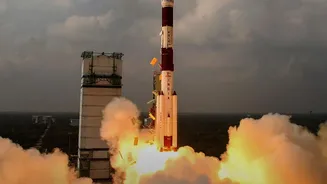
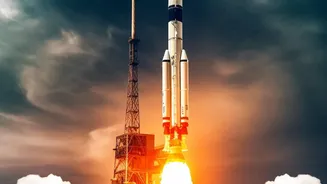
Companies like Skyroot Aerospace, which successfully launched India's first private orbital rocket, and Agnikul Cosmos, known for its 3D-printed engines, are becoming household names. These startups are not just complementing ISRO; they are creating a new commercial market, launching satellites for clients and driving innovation at a rapid pace. This has led to a surge in demand for skilled professionals, with some veteran ISRO scientists even moving to the private sector to lead new projects. This brain circulation, rather than a brain drain, is strengthening the entire domestic industry and creating thousands of new, high-skilled jobs. India’s space economy, valued at around $8.4 billion, is projected to grow to over $40 billion by the next decade.
The Data-Driven Frontier
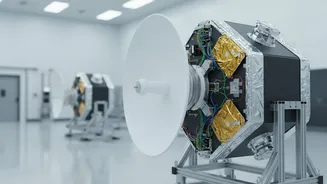
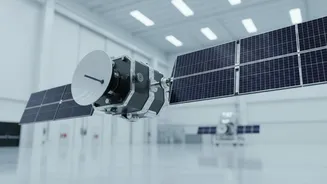
Perhaps the most significant expansion in space careers lies not in building rockets, but in using the data they help collect. Satellite data is a goldmine of information that impacts sectors across the economy. Companies now use this data for everything from agricultural monitoring and improving crop yields to urban planning, disaster management, and tracking climate change. This has created a boom for roles like GIS analysts, remote sensing engineers, and data scientists who can interpret satellite imagery using AI and machine learning. Startups such স্যা as Pixxel, which is building a constellation of hyperspectral imaging satellites, are hiring a mix of hardware and software talent to turn orbital data into actionable business intelligence.
Careers Beyond the Obvious
The new space economy needs more than just engineers and scientists. As the sector commercializes, a host of non-technical roles are becoming equally crucial. With hundreds of startups and growing international collaboration, there is a rising need for experts in space law and policy. These professionals help navigate complex international treaties, manage satellite launch contracts, and create regulations for emerging issues like space debris management. Furthermore, with India's Gaganyaan mission aiming for human spaceflight, fields like space medicine are gaining importance to ensure astronaut health. The ecosystem also requires professionals in finance to manage venture capital investments, marketing experts to promote new services, and managers to run these complex operations, opening the door for talent from diverse educational backgrounds.
Building the Skills for Tomorrow
For students aspiring to join this exciting field, the pathways are more varied than ever. A strong foundation in science, technology, engineering, and mathematics (STEM) remains vital, with degrees in aerospace, electronics, and computer science in high demand. However, the growth of data applications means skills in AI, machine learning, and data analytics are now just as critical. Beyond technical expertise, the industry values interdisciplinary skills like systems thinking, problem-solving, and communication. Whether through traditional university programs, specialized courses from institutes like IIST, or online certifications, the opportunities to acquire the necessary skills to contribute to India's space journey are expanding rapidly.