



The Perfect Recipe for a Clear Sky
Spiti's reputation as a stargazing paradise isn't a happy accident; it's the result of a rare trifecta of geographical blessings. First is its extreme remoteness and sparse population, which means there is virtually no light pollution. Many villages are rated
Bortle Class 1, the darkest possible classification on a scale measuring night-sky quality. Second is its high altitude. With most villages sitting above 3,500 metres (around 12,000 feet), you are above a significant portion of the Earth's atmosphere, which otherwise distorts and dims starlight. Third, Spiti is a rain-shadow desert. The air is exceptionally dry, with very low humidity and minimal cloud cover, especially outside of the monsoon season. This combination of darkness, altitude, and dry air creates an almost perfectly transparent window to the cosmos.
Altitude's Unseen Advantage
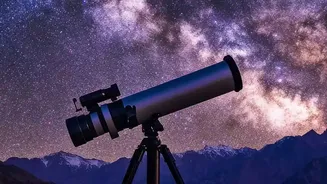
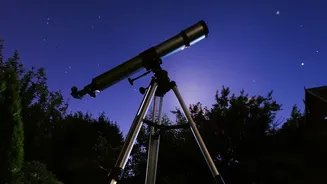
The science behind why high-altitude deserts like Spiti offer superior stargazing is simple yet profound. At sea level, starlight has to travel through the thickest, densest part of our atmosphere. This air is full of moisture, dust, and pollutants that scatter and absorb light, causing stars to twinkle and faint objects to disappear entirely. At altitudes like those in Spiti—routinely over 4,000 meters—the air is significantly thinner and holds far less water vapor. This lack of atmospheric turbulence means stars don't twinkle; they burn with a steady, unwavering intensity. It’s why professional astronomical observatories are built in similar high, dry locations like the Atacama Desert in Chile. In Spiti, you don't need a professional telescope to reap the benefits; the clarity is palpable to the naked eye.
What You Can Actually See
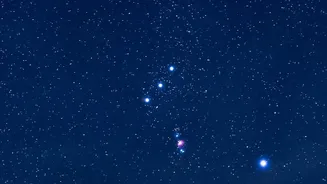
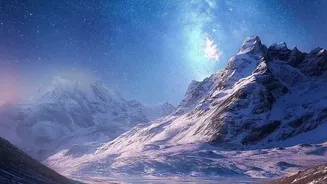
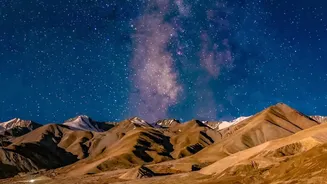
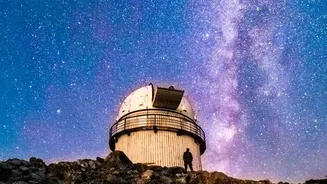
On a clear, moonless night in Spiti, the sky is overwhelming. The Milky Way is not a faint, hazy band; it's a bright, structured entity with visible dust lanes and a glowing core so brilliant it can seem to light up the ground. From April to September, the galactic core is high in the sky, offering the classic, jaw-dropping view that astrophotographers chase. Even without equipment, you can easily spot the Andromeda Galaxy, our closest galactic neighbor, as a faint, fuzzy patch of light. Meteors are a common sight, streaking across the sky every few minutes on a good night. During the winter months, the view shifts to the brilliant constellations of Orion, Taurus, and the Pleiades star cluster, which shine with exceptional sharpness in the cold, crisp air.
A Paradise for Photographers
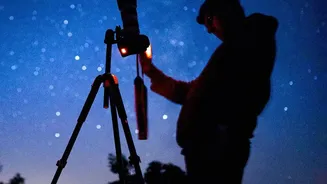
The unparalleled conditions make Spiti a dream destination for astrophotography. The darkness is so profound that even modern smartphones on a mini-tripod can capture striking images of the Milky Way. For those with more advanced camera gear, the valley offers a chance to shoot celestial objects against dramatic Himalayan backdrops. Iconic locations like Langza village, with its giant Buddha statue, provide a surreal foreground for the spinning cosmos. At Chandratal, the 'Moon Lake', the still water reflects the star-filled sky, creating a breathtaking 'stars above, stars below' effect on calm nights. The ancient monasteries of Dhankar and Tabo, perched on cliffs, also offer unforgettable compositions, blending culture and cosmos into a single frame.
Planning Your Celestial Journey
The best time for stargazing is crucial. While the skies are clear for much of the year, the prime season runs from late spring to autumn (May to October). The period from June to September is ideal for viewing the bright core of the Milky Way. For the absolute clearest, most transparent skies, many prefer the post-monsoon months of September and October, though nights are significantly colder. A vital part of planning is to schedule your visit around the new moon. A full moon, even in a Bortle 1 sky, will wash out the fainter stars and the Milky Way's magnificent detail. Villages like Langza, Komic, and Kibber are renowned as some of the best observation spots, combining high altitude with minimal local light.