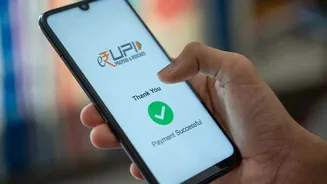






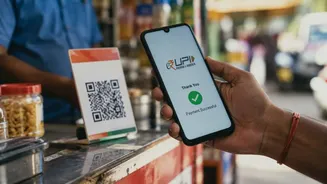
What Exactly Are These UPI Charges?
The fee in question is called the Merchant Discount Rate (MDR). It's not a new concept in digital payments, but its application to certain UPI transactions has caused some confusion. This is not a fee that customers pay. Instead, it's a charge that some merchants
pay to their bank or payment service provider for processing a digital payment. The rule, effective from October 15, 2026, introduces a 0.4% MDR on person-to-merchant (P2M) UPI payments. The purpose is to create a sustainable revenue stream for the banks and payment companies that run the massive UPI infrastructure, covering costs like servers, cybersecurity, and innovation.
The Critical ₹2,000 Threshold
The most important thing to know is that this MDR only applies to merchant transactions above ₹2,000. Any UPI payment you make to a business that is ₹2,000 or less remains completely free of this charge. According to the National Payments Corporation of India (NPCI), this exemption covers the vast majority—about 96%—of all person-to-merchant transactions, meaning your daily chai, groceries, and small retail purchases are unaffected. Person-to-person (P2P) transfers, like sending money to friends or family, also remain completely free, regardless of the amount.
Who Actually Pays the Fee?
To be crystal clear: customers do not pay this fee. The 0.4% MDR is borne entirely by eligible merchants. For example, if you buy an item worth ₹3,000 from a large store and pay via UPI, the merchant receives ₹2,988, with ₹12 (0.4% of ₹3,000) going to the payment ecosystem participants. Your account is debited only for ₹3,000. The government has explicitly advised banks to ensure that merchants do not pass this cost on to consumers by adding a surcharge. Furthermore, UPI apps are prohibited from levying any platform fees or hidden charges on these transactions.
Understanding the 0.4% and ₹300 Cap
The standard MDR is 0.4% for eligible merchant transactions over ₹2,000. However, to protect businesses from excessive fees on high-value sales, there is a maximum charge, or cap. For any transaction of ₹75,000 or more, the MDR is capped at a flat ₹300. So, for a purchase of ₹1,00,000, the MDR is not ₹400 (0.4% of ₹1 lakh) but is fixed at ₹300. This tiered system ensures that the fee remains nominal even for larger payments. It's also worth noting this is significantly lower than the MDR on credit cards, which can range from 1.5% to 2.5%.
Are All Merchants Affected?
No, not all merchants are subject to this MDR. Small vendors are specifically protected. Merchants classified under the Person-to-Person-Merchant (P2PM) framework, who typically receive payments up to ₹1 lakh per month via UPI QR codes into their personal bank accounts, are completely exempt from MDR, even on transactions over ₹2,000. A merchant is only moved to the standard P2M category (where the MDR applies) if their collections exceed this threshold for three consecutive months. Additionally, certain essential sectors like railways, fuel, telecom, and insurance have a lower, flat MDR of just ₹5 for transactions above ₹2,000.
What About Wallet and Credit Card UPI?
The initial confusion around UPI charges began with an earlier circular about interchange fees on transactions made via Prepaid Payment Instruments (PPIs), like digital wallets. While a fee structure does exist for wallet-based merchant payments over ₹2,000, it's an internal fee between payment companies and is also not paid by the customer. The 0.4% MDR framework discussed here applies specifically to bank account-to-merchant payments. Payments made using a RuPay Credit Card linked to UPI operate under a separate framework and are not affected by this 0.4% MDR rule.