

From Kitchen Scrap to Pantry Staple
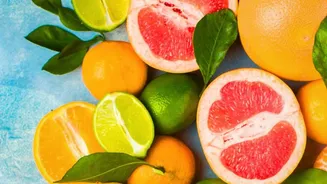
Every time you peel an orange and discard the rind, you're throwing away a burst of flavour. The peel is packed with aromatic essential oils and natural pectin, the key ingredient that helps jams and jellies set. By saving your peels, you’re not just
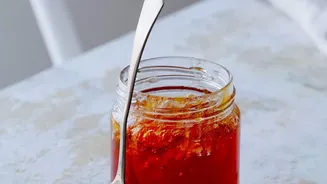
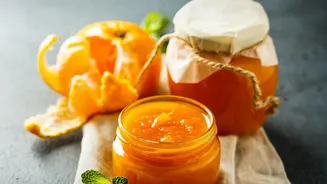
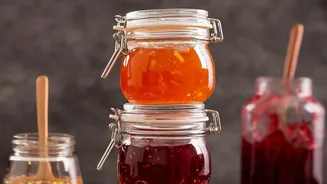
reducing food waste; you're capturing the very essence of the fruit. Making marmalade from rinds is a time-honoured tradition that turns a would-be piece of rubbish into a gourmet spread for your morning toast, scones, or even as a glaze for roasted meats. The process is surprisingly straightforward and requires only a few basic ingredients, proving that the most flavourful things often come from the simplest of places.
Gather Your Zero-Waste Ingredients
The beauty of this project lies in its simplicity. You don't need a long list of complicated items, just the patience to let the ingredients work their magic. For a small batch, you will generally need the peels from about 4 to 5 medium oranges, an equal weight of granulated sugar to your prepared peels, the juice of one lemon, and water. The lemon juice is crucial; it not only brightens the flavour but also adds pectin, which ensures your marmalade achieves that perfect, spreadable consistency. For the main ingredient, you can collect peels over time by storing them in an airtight container in the freezer until you have enough for a batch.
The Step-by-Step Marmalade Method
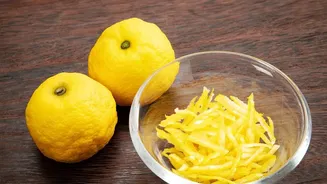
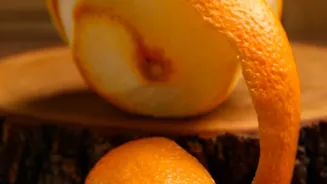
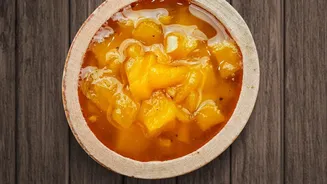
First, prepare the peels. Using a sharp knife, slice the orange rinds into thin, uniform strips. The thickness is up to you—thinner for a delicate texture, thicker for a chunkier preserve. Next, it's essential to tame the bitterness of the pith (the white part). Place the peel strips in a pot, cover them with water, bring to a boil, and simmer for about 10 minutes. Drain the water and repeat this process at least once more. This double-boiling step is the secret to a well-balanced marmalade. After the final drain, return the softened peels to the pot. Add the sugar, lemon juice, and enough fresh water to cover the mixture. Bring it to a rolling boil over medium-high heat, then reduce to a steady simmer. Let it cook, stirring occasionally to prevent sticking, for about 30 to 45 minutes. The mixture will gradually thicken and become glossy as the sugar dissolves and the pectin activates.
The Secret to the Perfect Set
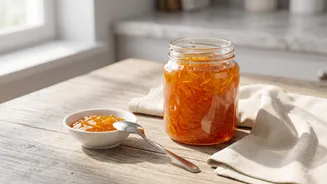
Knowing when your marmalade is ready is the most critical part of the process. There are two reliable methods. The first is the temperature test: a digital thermometer should read 105°C (220-222°F), which is the setting point for most jams. The second, more traditional method is the wrinkle test. Before you start cooking, place a few small plates in your freezer. When you think the marmalade is ready, spoon a small amount onto a cold plate and return it to the freezer for one minute. Nudge the marmalade with your finger; if the surface wrinkles and holds its shape, it’s done. If it’s still runny, continue cooking for a few more minutes and test again. Once it reaches the setting point, carefully ladle the hot marmalade into sterilised jars, leaving a small amount of headspace at the top.
Beyond Marmalade: Other Peel Hacks
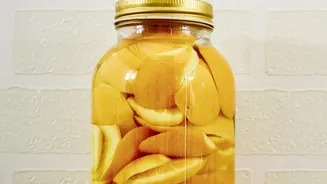
Your journey into zero-waste citrus doesn't have to end with marmalade. Orange peels have dozens of uses around the home. You can make candied peels by simmering them in a simple syrup and then coating them in sugar. Dried and ground, the zest can be used to make a fragrant citrus salt or added to tea blends. For a natural, all-purpose cleaner, submerge citrus peels in a jar of white vinegar for a few weeks. The resulting liquid is a powerful degreaser with a fresh scent, perfect for cleaning countertops and sinks. You can even use fresh peels as a natural air freshener for your home or refrigerator.