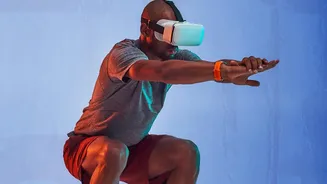








What is AI Workout Guidance?
The AI wellness trend isn't about futuristic robots in the gym. Instead, it involves sophisticated apps that act as digital coaches. These tools use algorithms to create personalized workout plans based on your goals, experience level, available equipment,
and schedule. Some apps, like Fitbod and Freeletics, generate adaptive programs that change as you get stronger. More advanced versions use your phone’s camera to analyze your form on exercises like squats and push-ups, providing real-time feedback to correct your posture. The core idea is to move beyond generic, one-size-fits-all plans and offer tailored guidance that is accessible and affordable. For a monthly fee that is a fraction of the cost of a human trainer, these apps promise to optimize every session for better results.
The Promise: A Personal Trainer on Demand
The appeal of AI coaching is clear. Firstly, there's the unparalleled accessibility. Your AI coach is available 24/7, ready whenever you can find time for a workout. Secondly, the level of personalization is a huge draw. These apps can analyze your performance data to progressively increase weight or reps, helping you break through plateaus. Some even connect with wearables to adjust your workout based on your sleep quality and recovery data. For self-motivated individuals, AI coaches solve the 'what to do' problem by providing structure and consistency, which are key drivers of progress. Studies have shown that features like a simple step goal can significantly increase daily activity. In a world where personalized guidance is often expensive and time-consuming, AI offers a data-driven, convenient alternative.
The Limits: Where Algorithms Fall Short
Despite their sophistication, AI coaches have significant limitations. A key issue is the lack of genuine human understanding and accountability. An AI can't replicate the empathy, intuition, or motivation of a human coach who notices when you're struggling. While AI is getting better at programming, it hasn't solved the adherence problem; studies show that supervised training with a person yields significantly higher follow-through rates. Furthermore, AI form correction has its flaws. While it can assess basic movements, it often misses subtle compensations or the underlying reasons for poor form, which is where injuries can begin. An algorithm can’t see the grimace on your face or ask about a nagging pain, so it may push you to perform exercises that are unsafe for your body.
The Risks of Blind Trust
Relying solely on an AI workout plan comes with risks. Health experts warn that these systems, which lack real-world observation, can increase injury risk by providing advice based on incomplete information. An app won't know if you have a history of a herniated disc unless you disclose it, and even then, its recommendations may be too generic. There are also psychological dangers. The heavy focus on data and hitting targets can lead to perfectionism or unhealthy obsessions with fitness metrics. Some trainers report that clients prioritize app goals over their body's signals, ignoring fatigue or pain to maintain a streak. Privacy is another concern, as these apps collect sensitive health data that could be misused if not properly protected.
Using AI Workout Guides Wisely
The key to leveraging the 2026 AI wellness trend is to treat these apps as a tool, not a replacement for human expertise or your own intuition. Start by getting clearance from a doctor before beginning any new exercise program. Use AI guides as a supplement to your fitness journey, especially if you're an intermediate exerciser who understands basic movements and needs help with programming. Always prioritize listening to your body over the app's instructions. If you feel pain, stop. Don't let a notification push you past your limits. For beginners or individuals with past injuries, working with a certified human trainer who can teach you proper form and build a foundational understanding of movement is irreplaceable. The AI can then help you maintain consistency, but it shouldn't be your only guide.