





A Workhorse Telescope Falters
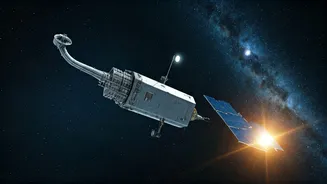
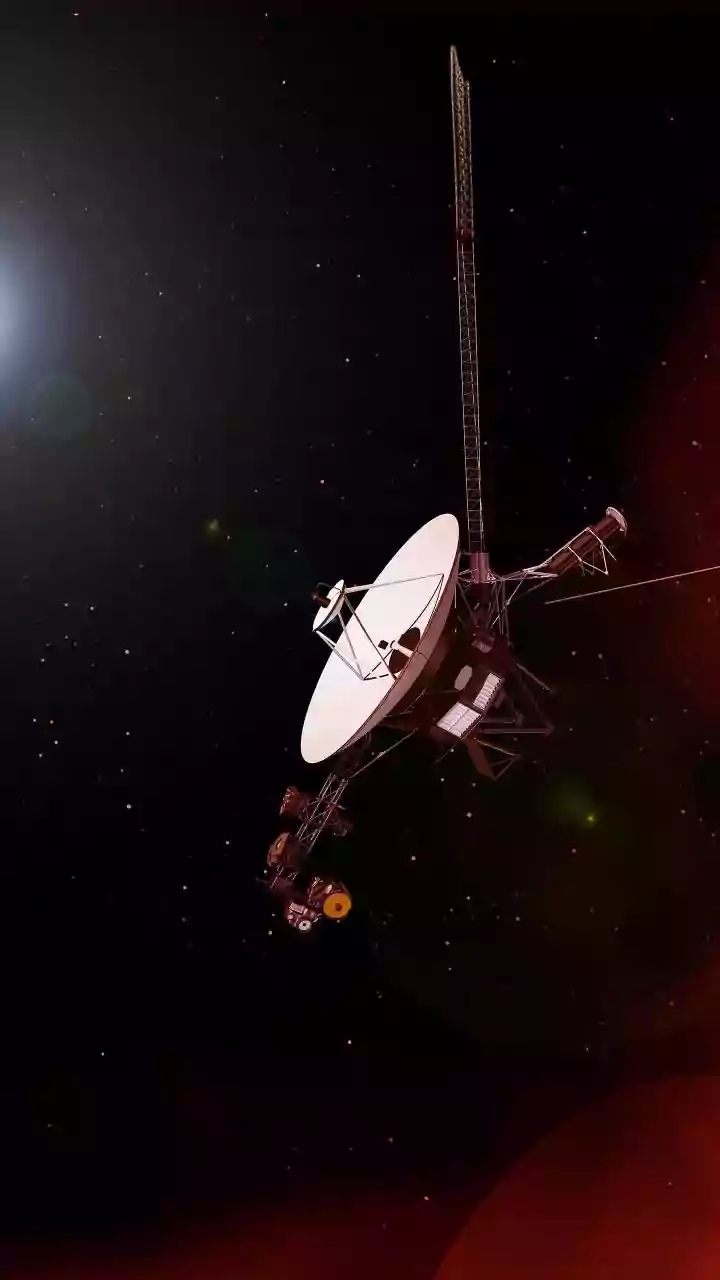
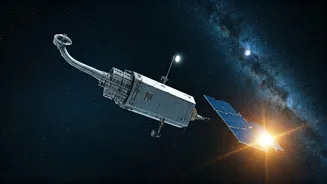
Launched in 2004, the Swift Observatory is NASA’s rapid-response “first responder” for studying the most powerful explosions in the universe: gamma-ray bursts. Its ability to quickly pivot and observe these fleeting events has made it an indispensable
part of global astrophysics. But after more than 20 years, the venerable telescope is in trouble. Not because of its scientific instruments, but because its orbit is decaying. Increased solar activity has caused Earth's upper atmosphere to expand, creating more drag on the satellite. Without its own propulsion system to counteract this pull, Swift has been sinking faster than anticipated and was projected to make a destructive reentry into the atmosphere later this year. To buy time, NASA suspended most of Swift's science operations in early 2026, pointing it in a way that minimizes atmospheric drag.
The Robotic Solution
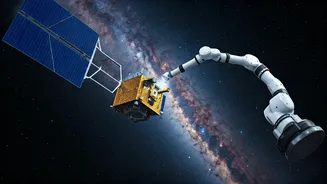
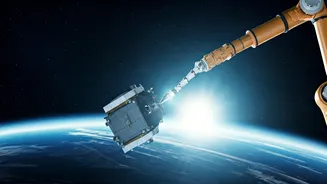
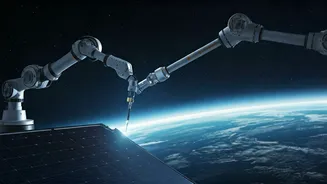
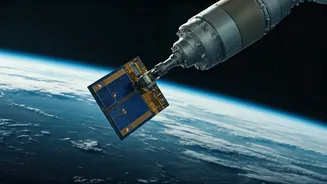
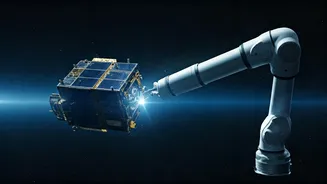
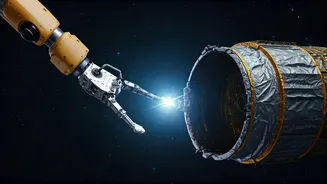
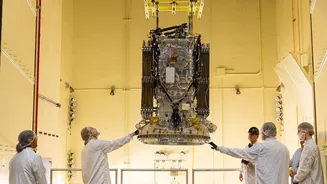
Rather than letting the half-billion-dollar observatory burn up, NASA opted for a high-risk, high-reward solution: a first-of-its-kind robotic rescue. The agency awarded a $30 million contract to Katalyst Space Technologies, an Arizona-based startup, to design and launch a servicing vehicle named LINK. The plan is for LINK to launch, rendezvous with Swift, and use its three robotic arms to grapple the unprepared-but-cooperative satellite. Once attached, LINK will use its own gentle thrusters to slowly boost Swift back to a stable, higher orbit over several months, extending its operational life for years to come. The mission is a race against time, with Katalyst having less than a year to design, build, and launch the spacecraft. After a few launch delays in early July 2026 due to weather and vehicle issues, the mission is poised to be the first time a private company has attempted to dock with and move a U.S. government satellite not designed for servicing.
More Than Just a Tow
The mission to save Swift is about much more than just one telescope. It represents a crucial test for the future of in-space servicing, assembly, and manufacturing (ISAM). While the Hubble Space Telescope was famously serviced five times, those were complex, dangerous, and expensive missions conducted by astronauts during the Space Shuttle era. The Swift rescue, by contrast, relies entirely on robotics and a commercial partnership. This approach is more affordable than replacing the observatory, which could cost hundreds of millions of dollars. Success would demonstrate a new, more sustainable model for space exploration, where valuable assets can be maintained, refueled, or repositioned robotically. It opens the door for a future where fleets of autonomous robots routinely service satellites, extending their lifespans and reducing space debris.
Pioneering Future Repairs
The technologies and procedures developed for the Swift mission could directly inform how NASA and private industry approach future challenges. The aging Hubble Space Telescope, for instance, is also losing altitude and could be a candidate for a similar robotic boost. Katalyst believes its next-generation spacecraft could potentially extend Hubble’s life. Beyond rescues, this capability is critical for upcoming flagship missions. The Nancy Grace Roman Space Telescope, NASA’s next great observatory scheduled to launch in 2026, has a prime mission of five years but is being designed with robotic servicing in mind. Proving that a robotic capture and boost is possible with a satellite like Swift, which was never designed for it, provides invaluable data and confidence for servicing future telescopes that are designed for it from the start. This would allow for potential upgrades, repairs, and life extensions for multibillion-dollar observatories, maximizing their scientific return.