





An Indian Startup's Interplanetary Ambition
HEX20, a space-tech startup with engineering operations in Technopark, Thiruvananthapuram, has secured a historic position in an international deep-space project. The company has been selected by the UAE Space Agency to develop and supply critical components
for a probe destined for the asteroid belt. This makes HEX20 the first private Indian company to be chosen for such a mission by the Gulf nation, a significant milestone that highlights the increasing capabilities of India's burgeoning 'NewSpace' ecosystem. Founded by a team of young engineers, HEX20 is contributing its expertise to the ambitious Emirates Mission to the Asteroid Belt (EMA). The firm's involvement demonstrates a global confidence in Indian engineering and marks a shift from domestic satellite launches to contributing key hardware for complex interplanetary journeys.
The Mission: A Five-Billion-Kilometre Journey
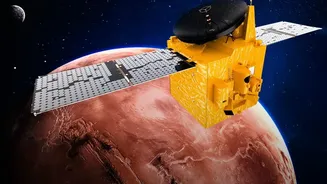
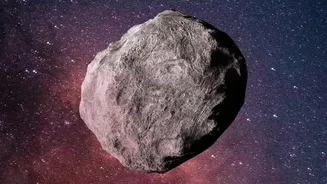
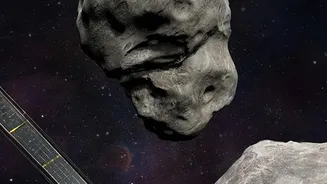
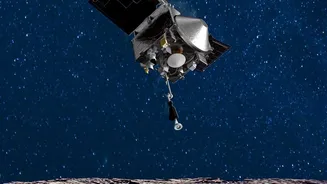
The mission, spearheaded by the UAE, is an audacious eight-year odyssey to the main asteroid belt located between Mars and Jupiter. The primary spacecraft, named the MBR Explorer, is scheduled for launch in March 2028. Its journey will span approximately five billion kilometres, using gravity-assist flybys of Venus, Earth, and Mars to build momentum. The MBR Explorer will study six different asteroids before arriving at its final destination in 2034: a unique, reddish asteroid named 269 Justitia. It is here that HEX20's contribution will face its ultimate test. The probe they helped build is designed to separate from the main spacecraft and make an autonomous descent to Justitia's surface, providing invaluable data on one of the solar system's ancient celestial bodies.
Decoding the 'Integration' and 'Bus'
The headline's 'integration work' refers to the complex assembly process that HEX20 has been responsible for. The startup developed the probe's 'spacecraft bus', which is essentially the foundational structure that holds and supports all the mission's scientific instruments and operational systems. This includes developing and integrating the onboard computer, power distribution systems, and the mission-specific software required to operate in the harsh environment of deep space. HEX20 successfully delivered these critical systems within a tight 15-month timeline. The probe was then assembled in Abu Dhabi by the UAE's Technology Innovation Institute (TII) and other partners, before its next journey to Colorado in the US for final integration with the main MBR Explorer spacecraft.
A New Era for India's Private Space Sector
HEX20's success is a powerful symbol of the maturation of India's private space industry. For decades, space exploration was the domain of the national agency, ISRO. Now, with the government opening up the sector, hundreds of startups have emerged, tackling everything from launch vehicles to satellite manufacturing and data analysis. Companies like Skyroot Aerospace, which recently launched India's first privately developed orbital rocket, and Dhruva Space are creating a robust ecosystem. HEX20's contract with a foreign space agency for a deep-space mission shows that Indian startups are not just servicing domestic needs but are becoming competitive global players. This collaboration fosters an environment where private Indian firms are seen as reliable partners for high-stakes, technologically demanding projects far beyond Earth's orbit.