






A Strategic Shift in Leadership
Meta has announced a pivotal change at the top of its infrastructure division, the group responsible for building the physical foundation of its AI future. Santosh Janardhan, a 17-year veteran who has been instrumental in scaling Meta's global data centres,
will step down from leading the AI infrastructure unit in early 2027. He will be succeeded by David Brown, a former senior vice president from Amazon Web Services (AWS) who joined Meta in July. Janardhan will remain through the first quarter of 2027 to ensure a smooth transition, after which he will serve as Chief Technology Officer of Meta Compute, an advisory role. This move is not a simple departure but a calculated handover. By bringing in an executive with deep experience in building hyperscale cloud infrastructure at AWS, Meta is signaling a strategic pivot.
The Grand Vision for AI Data Centres
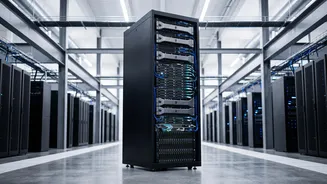
To understand this leadership change, one must grasp the sheer scale of Meta’s infrastructure plans. CEO Mark Zuckerberg has committed to spending hundreds of billions of dollars to build out a new generation of massive AI data centres. The company's capital expenditure for 2026 alone is projected to be between $135 billion and $145 billion, with the vast majority earmarked for AI projects. These aren't just incremental upgrades; Meta is planning 'titan clusters' with multi-gigawatt capacity. Projects with names like 'Prometheus' and 'Hyperion' are designed to be among the largest in the world, capable of powering the development of what Zuckerberg hopes will be Artificial General Intelligence (AGI). The scale is unprecedented, with one planned campus in Louisiana, Hyperion, potentially scaling up to 5 gigawatts—a capacity that dwarfs most existing data centres globally.
Centralisation and Acceleration
The appointment of David Brown is a deliberate move to accelerate this ambitious build-out. His role will be to oversee all infrastructure operations while also serving as CTO of Meta Compute, an initiative aimed at coordinating the company's massive AI investments. This dual role centralises authority and is designed to streamline decision-making in a high-stakes race where speed is critical. Bringing in an AWS veteran suggests Meta is adopting a new, more aggressive approach to infrastructure, shifting from a model that supported social media to one designed for the colossal demands of training and deploying advanced AI models. The goal is to create an expandable platform that can absorb several generations of technological growth without constant reinvention, a strategy honed in the competitive cloud computing sector.
The Competitive AI Arms Race
Meta's move does not exist in a vacuum. It is a direct response to the intense competition among tech giants to achieve AI dominance. Companies like Google, Microsoft (via its partnership with OpenAI), and Amazon are all investing billions in their own AI infrastructure. This competition has led to a talent war for top engineers and a global race to secure the land, power, and specialised chips necessary for these massive data centres. Zuckerberg has been personally involved in recruiting top AI talent to create a new division called Superintelligence Labs. This leadership shuffle is another piece of that larger strategy, ensuring that the operational side of the house can keep pace with the company's research and talent acquisitions. By poaching a senior leader from AWS, Meta not only gains valuable expertise but also sends a clear message to its rivals about the seriousness of its intent.