






The Indoor Drying Challenge
Anyone living in a shared apartment or paying guest accommodation knows the struggle. The joy of a sunny morning, perfect for drying laundry, can quickly turn into a mad dash to rescue clothes from a sudden downpour. The problem is that when outdoor drying fails,
your limited indoor space becomes prime real estate. Drying clothes inside isn't just about finding a spot; it's about preventing the dreaded musty smell, avoiding mould growth, and not turning the living room into a damp obstacle course for your housemates. The high humidity during the rainy season means clothes take significantly longer to dry, and improper drying can lead to mildew and unpleasant odours clinging to your favourite fabrics.
Maximise Airflow, Minimise Odour
The golden rule of indoor drying is ventilation. Trapped moisture is the enemy, so your primary goal should be to get air moving. If possible, crack open a window to let humid air escape. A more effective solution is to use fans. Position a standing fan or a table fan to blow air across your clothes rack. This constant circulation helps whisk away moisture from the fabric, dramatically speeding up the drying process. For best results, don't overcrowd the drying rack. Give each item enough space to breathe. Hanging clothes on individual hangers before placing them on the rack can also improve airflow and help them dry more evenly.
Smart Tools for Small Spaces
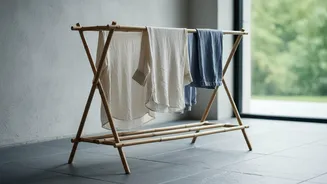
When floor space is at a premium, you need to think vertically and creatively. Thankfully, there are many tools designed for compact living. Foldable winged drying stands are a popular choice in India, as they offer ample space and can be tucked away when not in use. For even smaller homes, wall-mounted or over-the-door racks are excellent solutions that keep your floor clear. Another simple but effective hack is to use a tension rod in a bathroom or shower corridor. You can hang multiple hangers on it, and any dripping water is contained within a waterproof area. Ceiling-mounted pulley racks, often seen on balconies, can also be installed in a utility area indoors to make use of vertical space.
Quick Hacks for Faster Drying
A few simple tricks can cut down drying time significantly. Before hanging clothes, run an extra spin cycle in your washing machine. This removes a surprising amount of excess water, giving you a head start. Another popular hack involves a dry towel: place a large, fluffy dry towel in the dryer with your wet clothes for 10-15 minutes. The towel will absorb a lot of the initial moisture. If you don't have a dryer, you can gently roll very wet items (like hand-washed delicates) in a dry towel to absorb excess water before hanging. For clothes that are just slightly damp, a quick press with a hot iron can finish the job, which is particularly useful for thick fabrics like jeans or collars on shirts.
The Dehumidifier Debate
A dehumidifier is a more significant investment, but it can be a game-changer for those who frequently dry clothes indoors. These appliances work by pulling excess moisture directly from the air, creating a less humid environment that is ideal for drying laundry. This not only helps clothes dry faster but also prevents the build-up of dampness and mould in your home. Placing a dehumidifier in the room where your clothes are hanging and closing the door can create an efficient drying chamber. While the upfront cost is a factor, it can be a worthwhile solution for those in extremely humid climates or with persistent dampness issues.
Etiquette for a Harmonious Home
In a shared space, communication and consideration are as important as any drying rack. Set a schedule with your housemates for laundry days to avoid a pile-up. Once your clothes are dry, put them away promptly to free up the shared drying space for others. Avoid draping wet clothes over furniture or in common areas like the living room sofa without asking first. If you use a communal laundry room, be mindful of timelines. Set a timer and remove your laundry as soon as the cycle is done so others can use the machines. Wiping up any spilled detergent and keeping the area tidy is also a basic courtesy that goes a long way in maintaining a peaceful home.