




The Changing Character of the Monsoon
The very nature of India's monsoon is transforming. Scientific studies confirm a significant shift in rainfall patterns over recent decades. Instead of the steady, multi-day drizzles that once defined the season, the country is now experiencing fewer
rainy days overall but with a sharp increase in the intensity of wet spells. Climate change is a primary driver, with a warmer atmosphere capable of holding more moisture—about 7% more for every 1°C of warming. This leads to what experts call extreme rainfall events: short, concentrated bursts that dump an enormous volume of water in a very brief period, sometimes just a few hours. These intense spells are now a dominant feature of the monsoon, overwhelming natural and man-made systems that were never designed for such deluges.
Why Our Cities Can't Cope
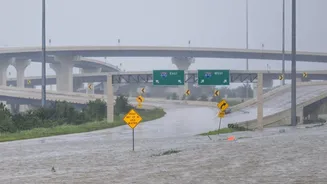
Indian cities are particularly vulnerable to these sudden downpours. Much of the urban landscape is a sea of concrete and asphalt, which are impermeable surfaces that prevent rainwater from seeping into the ground. This rapid, unplanned urbanisation has often come at the cost of natural sponges like lakes, wetlands, and floodplains, which were built over to make way for new construction. As a result, when a short, intense burst of rain hits, the water has nowhere to go. It becomes surface runoff, immediately overwhelming stormwater drainage systems. Many of these drainage networks are decades old, designed for a much gentler and lower volume of rainfall, and are often clogged with silt and solid waste, further reducing their capacity.
The Science of a Flash Flood
A flash flood is defined as flooding that begins within six hours of heavy rainfall. It happens when the rate of rainfall exceeds the land's capacity to absorb it. In a natural environment, soil and vegetation soak up a significant portion of rainwater. But in a city, the sheer volume and speed of water from a cloudburst-like event quickly saturates the few permeable surfaces that remain. The excess water flows into drainage channels, and when the inflow is faster than the outflow, the system backs up and spills onto streets. This explains why an entire neighbourhood can go from dry to waist-deep in water in under an hour. It’s not just the amount of rain, but the speed at which it falls that is the critical factor.
A Nationwide Phenomenon
While urban flooding in cities like Mumbai, Delhi, and Bengaluru grabs headlines, this issue is not confined to the metros. In the Himalayan regions, these intense rainfall events are a primary trigger for devastating flash floods and landslides. The steep, deforested slopes cannot hold the sudden rush of water, leading to torrents of mud and debris that sweep through downstream villages. Similarly, smaller towns and even rural areas are now experiencing floods with alarming frequency. Recent monsoon seasons have seen widespread devastation across states like Assam, Bihar, and Uttar Pradesh, where intense rain combined with overflowing rivers has impacted millions of people.
The Urgent Need for Adaptation
Experts agree that this trend of short, intense rainfall is the new normal. This means India can no longer rely on outdated infrastructure and reactive flood responses. The path forward requires a fundamental shift towards proactive, climate-resilient planning. This includes upgrading and expanding urban drainage systems to handle higher capacities and creating what are known as "sponge cities." This approach involves increasing green cover, protecting and restoring urban water bodies like lakes and wetlands, and using permeable materials for pavements and public spaces. By helping cities absorb rainwater naturally, the pressure on drainage systems is reduced, mitigating the risk of catastrophic flooding. These measures are crucial for adapting to a climate where the monsoon's fury is increasingly delivered in short, sharp shocks.