




Why Bother Cooking Greens?
Eating a crisp, raw salad is refreshing, but applying a little heat to greens like spinach and kale can offer surprising benefits. Cooking helps break down the tough cell walls of plants. This process can make certain nutrients more available for your
body to absorb. For instance, your body can more readily access minerals like iron and calcium, and fat-soluble vitamins like Vitamin A and K from cooked greens. Cooking can also reduce the volume of greens dramatically, making it easier to consume a larger, more nutrient-dense portion. For example, a cup of cooked spinach contains significantly more greens than a cup of raw spinach. Lastly, for some people, cooked greens are simply easier to digest and can make tougher leaves like mature chard or collards much more palatable.
The Nutrient Preservation Puzzle
The main challenge with cooking is preserving heat-sensitive, water-soluble vitamins, primarily Vitamin C and some B vitamins like folate. These nutrients can degrade with prolonged heat exposure and leach into cooking water. Boiling, for example, can cause a significant loss of Vitamin C, with some studies showing spinach can lose over half its Vitamin C after just five minutes of blanching. However, fat-soluble vitamins like A, D, E, and K, as well as many minerals, are much more stable during cooking. In fact, cooking can actually enhance the bioavailability of compounds like carotenoids. The goal is to cook the greens just long enough to soften them and release their nutrients, but not so long that you destroy the more delicate vitamins. The key is to use quick cooking methods that use minimal water.
Best Light-Cooking Techniques
To strike the perfect balance between nutrient retention and availability, choose a cooking method that is quick and uses little to no water.
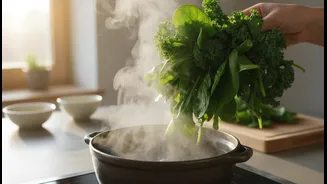
Steaming: This is widely considered one of the best methods for preserving nutrients. Simply place your greens in a steamer basket over a small amount of boiling water for just a few minutes until they are wilted but still bright green. Since the greens don't sit in the water, fewer water-soluble vitamins are lost.
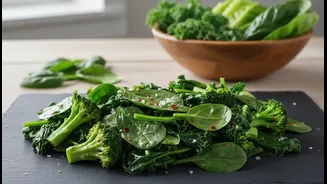
Sautéing: A quick sauté in a hot pan with a small amount of healthy fat like olive oil is another excellent option. The fat can actually help your body absorb fat-soluble vitamins. Heat the oil, add some garlic for flavour if you like, and toss in the greens. Cook, stirring frequently, for just a couple of minutes until they are just wilted.
Blanching: This method involves briefly submerging greens in boiling water for 30-60 seconds, then immediately plunging them into an ice bath to stop the cooking process. While some nutrients can be lost to the water, it's a very quick process that helps retain colour and texture. It's particularly good for tougher greens to reduce bitterness.
A Note on Microwave Cooking
Often overlooked, microwaving is a surprisingly effective method for preserving nutrients in vegetables. Because it cooks food quickly with very little water, it results in minimal loss of heat-sensitive vitamins like Vitamin C. To microwave greens, simply place them in a microwave-safe bowl with a tablespoon or two of water, cover, and cook for 1-2 minutes, or until just wilted. It's a fast, convenient, and nutritionally sound way to lightly cook your greens.
Safety First: Wash Your Greens Thoroughly
Whether you plan to eat them raw or cooked, washing your greens properly is a non-negotiable step for safety. Leafy greens are grown in soil and can be exposed to bacteria like E. coli. Always wash your hands before handling produce. To wash greens, discard any wilted outer leaves. Then, rinse them under cool, running water. Rubbing the leaves gently with your hands can help remove dirt and microbes. For extra cleaning, you can soak the leaves in a large bowl of cold water for a few minutes to let dirt and sand settle at the bottom. Some sources suggest a soak in a solution of vinegar and water can help reduce bacteria further. Always wash greens just before you plan to use them, as washing too far in advance can cause them to spoil faster.