






The Power of the Sidelines
Neutrality is more than just refusing to pick a side in a conflict; it's a deliberate policy of non-participation in military alliances and disputes. Under international law, this status comes with rights and duties, protecting a neutral state from invasion
while obliging it to remain impartial. However, modern neutrality is not about passive indifference. It is an active strategy, often called “engaged neutrality,” where a nation uses its non-aligned position to its advantage. A neutral party can become an indispensable mediator, a trusted channel for communication, or a safe haven for diplomacy and commerce when others are entangled in conflict. Think of it less as sitting on the fence and more as positioning oneself on a watchtower, able to see the entire field of play, engage where necessary, and preserve the freedom to act solely in one's own long-term interest.
India’s Journey from Non-Alignment to Strategic Autonomy
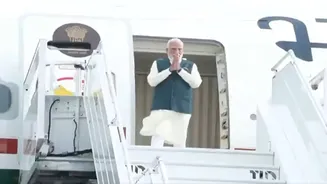
For India, the idea of staying out of great power rivalries is deeply ingrained in its foreign policy DNA. Born out of the Cold War, the Non-Aligned Movement was India’s answer to a world divided into two opposing blocs. It was a principled stance for a newly independent nation seeking to forge its own path without being drawn into external conflicts. Over the decades, this concept has evolved. Today, Indian diplomats speak less of non-alignment and more of “strategic autonomy” or “multi-alignment.” This modern approach maintains the core idea of independent decision-making but moves beyond a rigid aversion to partnerships. India now engages with multiple, sometimes competing, global powers on an issue-by-issue basis, forming flexible coalitions to advance its national interests without being permanently tied to any single camp. It’s a pragmatic mutation of its founding ideals, tailored for a complex, multipolar world.
When Neutrality Pays Dividends
The benefits of a neutral stance can be immense. For centuries, Switzerland's policy of permanent, armed neutrality has helped it avoid the devastation of European wars while becoming a global hub for finance and diplomacy. Its neutrality is not a sign of weakness but a credible commitment that allows it to host international organizations and act as a protecting power for nations with broken diplomatic ties. Neutral states can also facilitate critical negotiations, from peace talks to arms control treaties. In the business world, a similar logic applies. A tech company that avoids exclusive alignment with one operating system can serve a broader market. A nation that maintains open trade with all partners, without joining restrictive economic blocs, can secure more diverse and resilient supply chains. The core advantage is options: neutrality keeps doors open that would otherwise be closed by binding alliances.
The Danger of Permanent Neutrality
However, neutrality is not a universally applicable or permanent solution. There are times when it can be misinterpreted as moral indifference or strategic weakness, inviting aggression rather than deterring it. The world has become intolerant of impartiality in the face of extreme events. The most striking recent examples are Finland and Sweden. For decades, both Nordic countries maintained policies of non-alignment, a legacy of Cold War geopolitics. Finland's historical experience with the Soviet Union led to a pragmatic, cautious neutrality, while Sweden had a longer tradition of staying out of military conflicts. Yet, Russia's 2022 invasion of Ukraine fundamentally altered their security calculations. The perceived threat became so direct and overwhelming that the risks of remaining outside a defensive alliance like NATO suddenly outweighed the benefits of neutrality. Their decision to join NATO marks a historic pivot, demonstrating that neutrality has its limits when a nation's core security is at stake.
Knowing When to Choose a Side
The lesson from Sweden and Finland is not that neutrality is obsolete, but that its utility is conditional. It is a strategy, not a dogma. The key is to recognise the point at which flexibility becomes a liability. A neutral position is most powerful when it is a conscious choice made from a position of strength, not a default state born of fear or indecision. The decision to abandon neutrality—or to form a new alliance—must be just as strategic as the decision to remain neutral in the first place. For India, its policy of strategic autonomy is designed for exactly this kind of flexibility, allowing it to act as a “net security provider” in the Indian Ocean and build partnerships to counterbalance regional threats without formally abandoning its independent stance. It’s about assessing the global environment and knowing when to lean in one direction without losing your overall balance.