


A Celestial Shadow Play
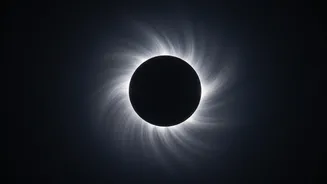
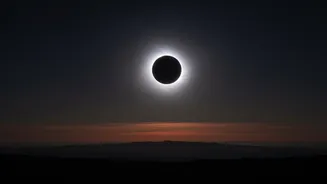
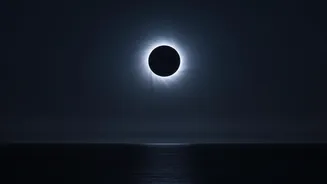
A total solar eclipse happens when the Moon passes directly between the Sun and Earth, completely blocking the face of the Sun. For a few brief, wondrous minutes, the sky darkens dramatically, temperatures can drop, and the Sun's ethereal outer atmosphere,
the corona, becomes visible. This ghostly white crown of light is normally hidden by the Sun's intense glare, making a total eclipse a rare opportunity for scientists and sky-gazers alike to witness it. The alignment must be perfect, which is why totality is only visible along a very narrow track on the Earth's surface, known as the path of totality.
The Path of Totality: A European Affair
For observers in India, there's some important news upfront: this total solar eclipse will not be visible from the subcontinent. The event will occur during the night in India, beginning around 9:45 PM IST on August 12 and concluding in the early hours of August 13. Consequently, no Sutak Kaal or related religious observances will apply.
The path of totality for this eclipse begins over Russia's remote Arctic coast, sweeps south of the North Pole, and crosses over Greenland and the western coast of Iceland. Its final destination is Europe, making it the first total solar eclipse visible on the continent since 1999. The path will cross northern Spain and a tiny corner of Portugal, offering spectacular views from cities like Bilbao and Palma, though Madrid and Barcelona lie just outside the zone of totality.
A Sunset Spectacle
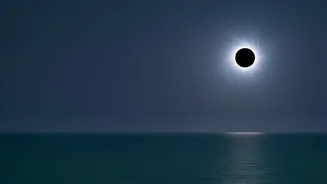
What makes the 2026 eclipse particularly special for those in Spain is its timing. The eclipse will reach totality there late in the local evening, creating the rare and stunning spectacle of an eclipsed sun setting over the horizon. This alignment offers a unique photographic opportunity for eclipse chasers. The maximum duration of totality for this event will be a little over two minutes, experienced off the coast of Iceland. As another celestial bonus, the eclipse coincides with the peak of the Perseid meteor shower, which will be best viewed in the dark, moonless sky after the eclipse.
NASA’s Front-Row Seat
NASA is mobilizing significant resources to study this eclipse. The agency will be flying its WB-57 high-altitude research aircraft along the eclipse path. Equipped with specialised cameras, the jet will chase the Moon's shadow at 460 mph, extending its view of the Sun's corona to nearly three minutes. This research helps scientists understand the corona's mysterious high temperatures and its relationship with the solar wind that flows out and affects Earth. For those not in the path of totality, NASA will provide extensive live coverage. The agency will stream the event across its platforms, including NASA Live, offering views from different locations along the path and commentary from experts. The European Space Agency (ESA) will also be broadcasting live from Spain.
How to Watch Safely From Anywhere
For those in India and other parts of the world outside the path, the best and safest way to watch is through the official NASA or ESA live streams. For anyone fortunate enough to travel to see the eclipse, safety is paramount. Never look directly at the Sun, even during a partial eclipse, without proper eye protection. You must use certified solar viewing glasses (often called 'eclipse glasses') that meet the ISO 12312-2 international standard. Regular sunglasses are not safe. The only time it is safe to look without protection is during the brief period of totality, when the Sun's face is completely covered. The moment the Sun begins to reappear, you must put your eclipse glasses back on immediately.