




The Sun’s Unpredictable Temper
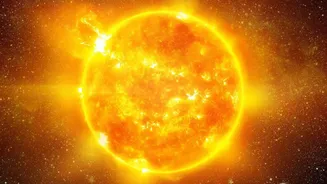
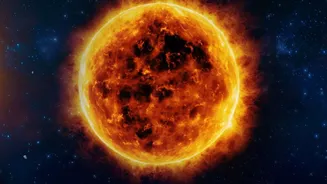
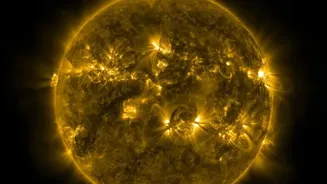
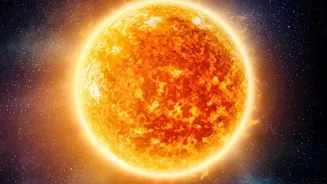
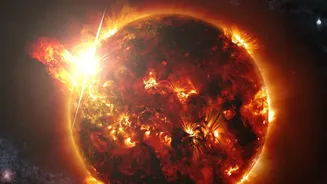
Space weather is a term for conditions in space driven by the Sun’s activity. While our star provides light and heat, it also has a volatile side. It constantly sends out a stream of charged particles called the solar wind. Occasionally, it unleashes
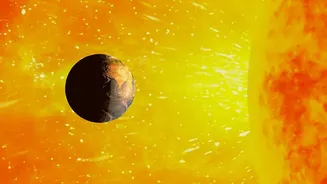
massive eruptions of energy and plasma, known as solar flares and coronal mass ejections (CMEs). When a powerful CME is aimed at Earth, it can interact with our planet's magnetic field and trigger a geomagnetic storm, the most impactful type of space weather event. These storms are beautiful—they create the dazzling auroras—but they also carry the potential for widespread disruption.
High Stakes for a Wired World
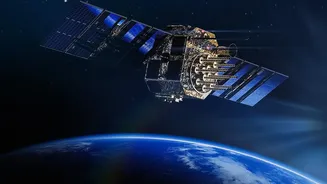
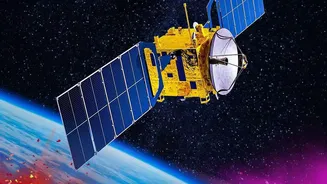
A severe geomagnetic storm is more than just an astronomical curiosity; it poses a significant threat to our technology-dependent society. These storms can induce powerful electrical currents in the ground that can flow into power grids, overload transformers, and cause widespread blackouts. The most famous example is the 1989 storm that knocked out power across Quebec for nine hours. Beyond the grid, satellites are highly vulnerable. The increased radiation can damage sensitive electronics, while the heating of the upper atmosphere increases drag, causing satellites to lose altitude. This disrupts everything from GPS navigation and telecommunications to financial transactions and weather forecasting. The potential economic cost of a severe, widespread event is estimated to be in the trillions of dollars.
An AI-Powered 'Tornado Siren' for Space
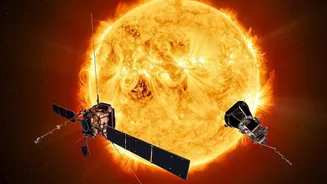
Predicting exactly when and where a solar storm will hit has been a major challenge. To tackle this, NASA has supported the development of an AI model called DAGGER (Deep Learning Geomagnetic Perturbation). Using deep learning, DAGGER was trained on data from NASA spacecraft that measure the solar wind. It learned to identify patterns and connections between the solar wind and the resulting geomagnetic disturbances on Earth. The result is a system that acts like a 'tornado siren' for space weather. It can predict where on Earth a solar storm will strike with a 30-minute advance warning. While that may not sound like much, it's a crucial window of opportunity.
From Prediction to Protection
A 30-minute warning is a game-changer for infrastructure operators. It provides enough time to take preventative action to mitigate damage. Satellite controllers can put their spacecraft into a protective safe mode or even adjust their orbits to minimize risk. Power grid operators can implement conservative procedures to protect transformers and stabilize the system before the storm's impact. Airlines can reroute flights, particularly over polar regions where the effects are strongest, to avoid communication blackouts and radiation exposure. This shift from reacting to a storm to proactively preparing for it is a monumental leap in our ability to defend our critical infrastructure.
The Future of Solar Forecasting
DAGGER is a significant step forward, representing the first model to combine the speed of AI with real-time satellite data to provide fast, specific, and global predictions. The code for the model is open source, meaning power grid companies, satellite operators, and other industries can adapt it for their specific needs. This project is part of a broader push by NASA to use AI to analyze the vast amounts of data it collects about the Sun. Other AI models, like one named Surya developed with IBM, are also being used to forecast solar flares hours in advance. While these tools are still being refined, they signal a new era in which AI will be an essential partner in safeguarding our planet from the Sun's powerful and unpredictable nature.