






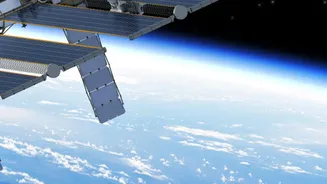
The Dawn of the Post-ISS Era
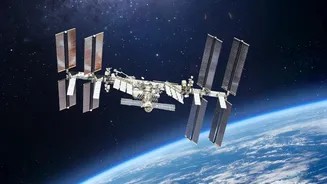
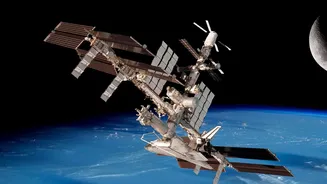
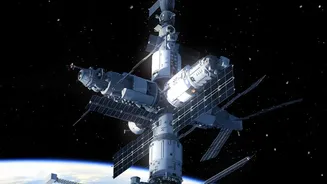
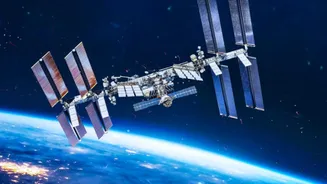
For decades, human activity in low-Earth orbit (LEO) has been dominated by government-led initiatives, with the International Space Station (ISS) serving as a singular hub for science and collaboration. But with the ISS scheduled for retirement around
2030, a new chapter is beginning. NASA is actively fostering a transition to commercially owned and operated destinations. Through its Commercial LEO Destinations (CLD) program, the agency is providing funding and support to several private companies, positioning itself to become just one of many customers in a future orbital marketplace. This strategic shift is designed to ensure a continuous American presence in LEO without the massive operational costs of owning the infrastructure, freeing up government resources for deep-space missions to the Moon and Mars.
More Than Just a Tourist Hotspot
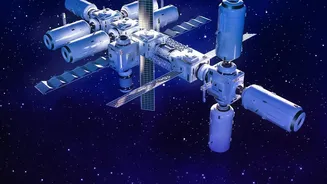
While space tourism grabs headlines, the business models for these new habitats are built on a much broader economic foundation. Companies like Blue Origin and Sierra Space are developing 'Orbital Reef,' which they describe as a "mixed-use business park" in space. This model aims to serve a diverse clientele including international space agencies, private corporations, and research institutions. The core value proposition is providing access to a microgravity environment for research and development that is impossible to replicate on Earth. This includes breakthroughs in pharmaceuticals, where the absence of gravity allows for the growth of more perfect protein crystals, and advanced materials science. Axiom Space, which is already flying private missions to the ISS, plans for its own station to be a microgravity laboratory and industrial park.
The Orbital Factory Floor
A key pillar of this new ecosystem is in-space manufacturing. The unique properties of microgravity allow for the production of materials with superior quality. For example, ZBLAN fiber optic cables produced in space could be significantly more efficient than their terrestrial counterparts. Other promising areas include the creation of flawless semiconductor wafers and advanced metal alloys. Biotechnology is another major focus, with research exploring the 3D bioprinting of human tissues and even organs, a process severely hampered by gravity on Earth. Companies like Varda Space Industries are already demonstrating the capability to manufacture pharmaceuticals in orbit and return them to Earth, proving the viability of this new industrial domain. By creating high-value products in space for use on Earth, these ventures aim to create a truly profitable and self-sustaining economic cycle.
An Ecosystem of Support Services
A space station cannot exist in a vacuum—it requires a complex web of supporting businesses to function. This is where the "ecosystem" concept truly takes shape. The core habitat acts as an anchor tenant, creating demand for a host of ancillary services. These include frequent and reliable transportation for both crew and cargo, such as Sierra Space's Dream Chaser spaceplane. It also encompasses logistics and supply chain management, maintenance, data processing, and communications. Axiom Space is even planning for in-space data centers to manage the massive amounts of information generated by orbital activities. This creates a ripple effect, stimulating growth across a wide range of aerospace and technology sectors, much like an airport stimulates economic activity in the surrounding region.
Navigating the Challenges Ahead
Despite the ambitious vision, the path to a thriving LEO economy is fraught with challenges. The financial hurdles are immense, with development costs running into billions of dollars. Generating sufficient and consistent demand beyond NASA is a critical uncertainty that all commercial players face. There are also significant technical risks associated with launching and operating these complex structures. The regulatory landscape for commercial space activities is still evolving, creating potential roadblocks. However, the commitment from both private industry and government partners suggests a powerful momentum. Recent tests of inflatable habitat technology, like Sierra Space's LIFE module, demonstrate tangible progress in making these orbital platforms a reality.