





The Sun's 11-Year Rhythm
The sun has a heartbeat, a natural rhythm that pulses roughly every 11 years. This is known as the solar cycle. It swings between a quiet period, called the solar minimum, and a turbulent, energetic peak known as the solar maximum. We are currently in Solar
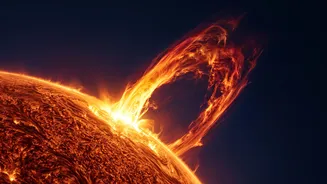
Cycle 25, which began in December 2019. During solar maximum, the sun's magnetic field becomes tangled and hyperactive, leading to a dramatic increase in sunspots, solar flares, and colossal eruptions of solar material.
A Surprisingly Strong Cycle
Initially, scientists predicted that Solar Cycle 25 would be relatively weak, much like its predecessor, Solar Cycle 24. However, the sun had other plans. This cycle has ramped up faster and proven far more powerful than anticipated, with sunspot numbers consistently exceeding forecasts. This heightened activity, which NASA and NOAA confirmed reached its peak phase in late 2024, means the sun is spewing more energy and particles into space. This elevated period of activity is expected to continue delivering impressive celestial events well into 2026 before it begins its slow decline.
How Solar Storms Create Auroras
The connection between the sun's activity and the auroras is direct. The increased sunspots during solar maximum are breeding grounds for massive explosions like solar flares and Coronal Mass Ejections (CMEs). These events hurl vast clouds of charged particles and magnetic fields into space. When this solar wind is aimed at Earth, our planet's magnetic field, the magnetosphere, springs into action. It deflects most of the harmful radiation but funnels some particles toward the North and South Poles.
The Science of the Celestial Dance
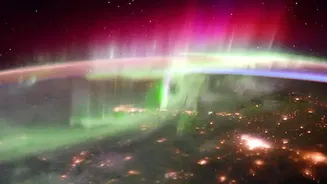
The beautiful glow we call the aurora is the grand finale of this cosmic collision. As the energized particles from the sun are guided down Earth's magnetic field lines, they slam into atoms and molecules—primarily oxygen and nitrogen—in our upper atmosphere. This collision excites the atmospheric gases, causing them to release their excess energy in the form of light, much like a neon sign. The different colors are a direct result of which gas is being hit and at what altitude. Oxygen typically glows green and sometimes red, while nitrogen can produce stunning blues and purples.
Why 2026 Is an Aurora Golden Year
Because Solar Cycle 25 is proving to be so active, the CMEs and solar winds it produces are more frequent and potent. This doesn't just make the auroras brighter; it pushes them further from the poles. Throughout 2024 and 2025, this resulted in stunning displays visible at much lower latitudes than usual, with sightings reported in places as far south as Mexico. While the absolute peak of the cycle may have occurred in late 2024, the "solar maximum phase" is a multi-year event. The declining phase of a cycle can still produce powerful solar storms. This means that 2026 remains an exceptional period for aurora chasing, offering a prolonged window of opportunity to witness these vibrant, dancing lights.
Maximizing Your Viewing Chances
Witnessing this spectacle still requires some planning. The key ingredients are darkness and clear skies. Head away from city lights to a location with minimal light pollution. The best viewing times are typically between late evening and the early morning hours. Winter months in the polar regions offer the longest nights, increasing your chances. Most importantly, keep an eye on space weather forecasts from agencies like NOAA's Space Weather Prediction Center. They provide short-term aurora forecasts that can tell you when a solar storm is expected to arrive, giving you the best shot at seeing the sky come alive.