








What Exactly Is Geoengineering?
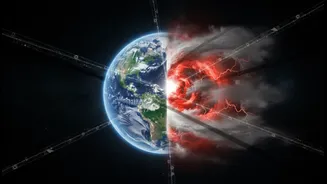
At its core, geoengineering refers to the deliberate, large-scale intervention in the Earth's natural systems to counteract climate change. Think of it as planetary-scale medicine. For decades, the main prescription for the climate crisis has been to reduce
greenhouse gas emissions. But with progress on that front proving slow and the planet experiencing more extreme weather, some scientists and policymakers are starting to explore more direct interventions. These ideas are no longer just speculative; they're attracting growing investment and debate.
The Two Main Flavours
Geoengineering proposals largely fall into two distinct categories. The first is Carbon Dioxide Removal (CDR), which focuses on removing existing CO2 from the atmosphere. This includes methods like planting vast new forests, building machines for direct air capture, or enhancing the ocean's ability to absorb carbon. The second, and more controversial, category is Solar Radiation Management (SRM), or solar geoengineering. The goal of SRM is not to reduce CO2 but to cool the planet by reflecting a small fraction of sunlight back into space, essentially creating a planetary sunshade.
Why The Sudden Interest?
The conversation around geoengineering is getting louder for a simple, sobering reason: desperation. As the impacts of climate change accelerate and global efforts to cut emissions struggle to keep pace, some see geoengineering as a potential last resort. Proponents argue it could be a 'Plan B' to buy humanity more time, rapidly cooling the planet while we transition to a green economy. For example, one of the most-researched SRM methods, stratospheric aerosol injection, mimics the natural cooling effect of large volcanic eruptions by spraying reflective particles into the upper atmosphere.
A Pandora's Box of Risks
Critics, however, warn that we would be opening a Pandora's box. The unintended consequences of tinkering with the global climate system could be catastrophic and irreversible. SRM, for instance, could drastically alter global weather patterns, potentially disrupting the Indian monsoon, which is vital for agriculture and the livelihoods of hundreds of millions. It also does nothing to stop ocean acidification, which is caused by rising CO2 levels. Then there's the 'termination shock': if an SRM system were ever abruptly stopped, the world could face a sudden and rapid surge in temperature. Many also fear a 'moral hazard,' where the promise of a technological fix could reduce the urgency to cut fossil fuel emissions—the root cause of the problem.
The Global Governance Nightmare
Beyond the scientific risks lies a geopolitical minefield. Who would get to control the Earth's thermostat? What happens if one country's actions cause droughts or floods in another? The potential for conflict is immense. Currently, there are no robust international agreements governing geoengineering research or deployment. This raises the spectre of unilateral action, where a single nation or even a wealthy individual could decide to alter the climate for everyone. International bodies like the UN's Convention on Biological Diversity have urged extreme precaution, establishing a de facto moratorium on most projects until their safety can be proven.
India's Cautious Stance
India has traditionally adopted a cautious and wary approach to geoengineering, particularly SRM. Given the country's dependence on the monsoon, the risk of unpredictable changes to rainfall patterns is a major concern. However, there is a growing interest within the Indian scientific community to scale up research and climate modelling to better understand the potential local impacts. While still a fringe topic, some experts believe it will become more mainstream as climate impacts escalate, and they advocate for a national policy to guide research with transparency and public consultation.