



The Science of Clumping and Inaccuracy
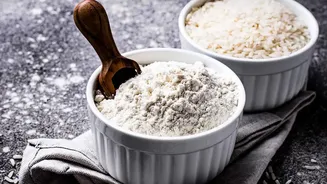
The most immediate problem with a damp measuring cup is clumping. Dry ingredients like flour, cocoa powder, and cornstarch are made of fine particles. When even a small amount of moisture is introduced, it acts like a glue, causing these particles to
stick together. This creates a dual problem. First, the ingredients will stick to your measuring spoon or cup, meaning you aren't adding the full, intended amount to your mixture. Second, the moisture can cause clumps within your main container, making future measurements difficult and inaccurate. When you scoop into a bag of flour, you expect a light, aerated product; a damp spoon can create dense pockets that throw off your ratios and result in heavy, tough baked goods.
The Premature Activation Problem
For chemical leaveners like baking powder and baking soda, moisture is an activation trigger. Baking powder is a balanced mix of a base (sodium bicarbonate), an acid, and a filler like cornstarch. The cornstarch is there specifically to absorb ambient humidity and keep the acid and base from reacting prematurely. When you dip a wet spoon into the container, you introduce enough liquid to start the chemical reaction that produces carbon dioxide gas. Most modern baking powders are 'double-acting,' meaning they have a first burst of leavening when they get wet and a second when heated. By using a damp tool, you're essentially wasting that first crucial lift before the ingredient even makes it into your batter, which can lead to dense cakes and flat muffins.
Sugar's Magnetic Pull for Water
Sugar is hygroscopic, a scientific term meaning it actively attracts and holds onto water molecules from its environment. This property is fantastic inside a cake, as it helps retain moisture and keeps your bakes soft and fresh for longer. However, it’s a problem when that moisture comes from a wet measuring cup. Introducing water can cause the sugar crystals to dissolve and then recrystallize into hard, stubborn clumps. This not only makes the sugar difficult to scoop and measure accurately but also fundamentally changes its texture. For recipes that rely on the creaming method, where sugar crystals cut into fat to create air pockets, lumpy sugar is far less effective, impacting the final texture and lift of your baked goods.
Protecting Spices and Salt
The issue extends beyond the core baking staples. Ground spices and salt are also susceptible to moisture. A damp spoon dipped into a jar of paprika or garlic powder can quickly lead to caking, making the spice difficult to sprinkle or measure evenly. More importantly, moisture can degrade the volatile oils that give spices their potent aroma and flavor. Over time, this exposure can leave you with a jar of spice that has lost its punch. Similarly, salt can clump and harden, and while it doesn't 'go bad,' it becomes a hassle to use. Keeping your tools completely dry ensures every pinch and teaspoon of seasoning is as fresh and potent as possible.
Best Practices for a Dry Workflow
Adopting a few simple habits can eliminate these issues entirely. The most effective method is to maintain two separate sets of measuring tools: one exclusively for dry ingredients and another for wet. If you only have one set, always measure your dry ingredients first before moving on to the liquids. If you must switch from wet to dry, take the extra 30 seconds to thoroughly wash and, crucially, dry the measuring cup or spoon. This simple discipline prevents cross-contamination. Storing your dry goods in airtight containers is another key step, as this protects them from ambient kitchen humidity, especially near sinks or stovetops. By treating your measuring tools with the same precision as your ingredients, you ensure consistency and quality in everything you create.