





An Unlikely, Perfect Pair
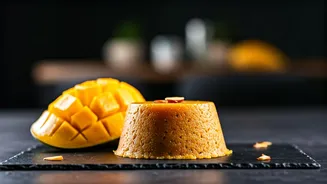
On one hand, you have the Alphonso mango. Known as 'Hapus' in Maharashtra, it’s the undisputed king of fruits, celebrated for its saffron-hued flesh, creamy texture, and a flavour so uniquely potent it defines the Indian summer. Its arrival is an event,
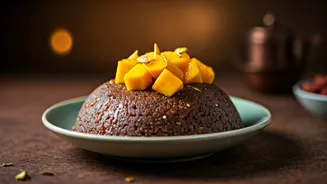
a season of pure, unadulterated indulgence. On the other hand, you have Ragi, or finger millet. This humble, nutrient-dense superfood has been a staple in Indian kitchens for centuries, especially in the south. Known for its earthy, nutty flavour and incredible health benefits—rich in calcium, iron, and fibre—it’s the epitome of wholesome goodness. In a traditional halwa, Ragi offers a deep, comforting richness that is worlds apart from the bright, sunny sweetness of a mango. So, what happens when these two meet? Pure magic.
The Science of Sweetness
This fusion isn't just a gimmick; it’s a masterclass in flavour balancing. The intense, fruity sweetness and slight tartness of the Alphonso mango pulp cut through and lift the dense, earthy profile of the Ragi. The millet’s natural nuttiness provides a perfect backdrop that prevents the mango from becoming overwhelmingly sweet, a common issue in many mango-based desserts. The textures, too, create a beautiful harmony. The smooth, velvety mango puree melds seamlessly with the slightly coarse, ghee-laden graininess of the Ragi halwa. The result is a dessert that is complex, satisfying, and feels both indulgent and nourishing at the same time. Every spoonful gives you the comfort of traditional halwa with a surprising, delightful burst of summer.
Modern Tradition on a Plate
In an age of fleeting food trends, this combination feels different. It’s not about deconstructing a classic but about enhancing it. It respects the integrity of both the time-honoured Ragi halwa and the prized Alphonso mango. This dish speaks to a modern Indian palate—one that seeks healthier alternatives without compromising on taste, and one that loves to innovate while staying connected to its roots. It’s the kind of dessert you’d be proud to serve at a family gathering, impressing both the elders who love their traditional sweets and the younger generation looking for something new and exciting.
The Recipe for Your Own Slice of Heaven
Ready to try this incredible fusion for yourself? It’s simpler than you think. The key is to get the balance right and use the best quality ingredients you can find, especially the mangoes. A good, fragrant, and non-fibrous Alphonso is crucial. Here is a step-by-step guide to creating this masterpiece in your own kitchen.
Ingredients You'll Need
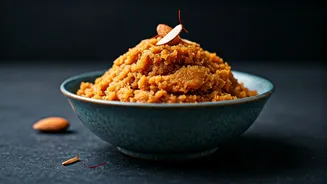
For this recipe, gather the following: 1 cup Ragi (finger millet) flour, 1 cup fresh Alphonso mango pulp (from about 2 ripe mangoes), 3/4 cup jaggery or sugar (adjust to taste, as mangoes are already sweet), 1/2 cup ghee, 2.5 cups water or milk (or a mix), 1/2 teaspoon cardamom powder, and a handful of mixed nuts (almonds, pistachios, cashews), chopped, for garnish. Using jaggery will add a deeper, more traditional flavour that complements the Ragi beautifully.
Step-by-Step Method
First, heat a heavy-bottomed pan and dry roast the Ragi flour on low heat for about 5-7 minutes until you get a pleasant, nutty aroma. Be careful not to burn it. Set it aside. In the same pan, add the ghee. Once it's warm, add the roasted Ragi flour and sauté for another 5 minutes on low heat until it’s well-mixed and fragrant. Now, slowly add the water or milk, stirring continuously to avoid lumps. The mixture will thicken quickly. Cook this for about 3-4 minutes until the Ragi is cooked through. Next, add the jaggery or sugar and mix well until it dissolves completely. Cook for another 2 minutes. Now for the star of the show: add the Alphonso mango pulp and cardamom powder. Mix everything together until the halwa is glossy and starts to pull away from the sides of the pan. This indicates it's done. Turn off the heat.
Serving and Final Touches
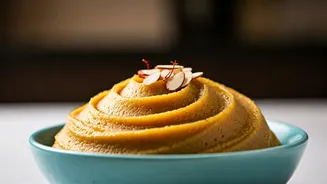
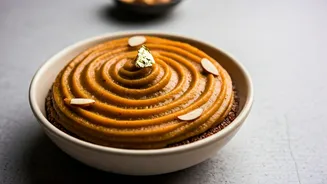
To serve, spoon the warm halwa into bowls. Garnish generously with the chopped nuts. For an extra touch of decadence, you can add a small dollop of fresh mango pulp on top or a few strands of saffron. This halwa can be enjoyed warm or at room temperature. The flavours tend to meld and deepen as it cools. For a perfect pairing, try to find Alphonso mangoes that are ripe but still firm, giving you a pulp that is sweet but not overly watery. Don't be afraid to adjust the sweetness based on your mangoes; a taste test before adding all the sugar or jaggery is always a good idea.