






Understanding Uneven Shoulders
Before we jump into the solution, it’s helpful to understand the cause. For most people, uneven shoulders are a result of muscular imbalance. Think about your daily habits. Do you always carry your heavy laptop bag, grocery bags, or even a child on the same
side? Do you spend hours hunched over a desk, leaning slightly to one side to use your mouse? Over time, these seemingly harmless habits train the muscles on one side of your body to become tighter and more overactive, while the muscles on the other side become weak and lengthened. The dominant side’s trapezius muscle (the large muscle running from your neck to your shoulder) often pulls the shoulder upwards, creating that visible imbalance. This isn't just a cosmetic issue; it can lead to neck pain, shoulder discomfort, and headaches if left unaddressed.
Why Single-Arm Exercises Are Key
When you have a muscle imbalance, performing standard bilateral (two-armed) exercises like a barbell row can sometimes make the problem worse. Your stronger, more dominant side will naturally take over, doing more of the work and further reinforcing the imbalance. This is where unilateral (single-limb) training comes in. By working one side at a time, you force the weaker side to engage fully, without any help from its stronger counterpart. This targeted approach allows you to specifically strengthen the underactive muscles on your lower shoulder side, helping to pull it back into a more neutral and balanced position. The goal is to build strength and stability where it’s lacking.
The Hero: Slow Single Arm Band Pulls
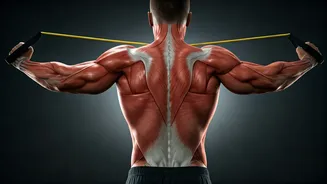
The slow single arm band pull, also known as a single-arm band row, is the perfect exercise for this job. It’s low-impact, incredibly effective, and requires minimal equipment—just a simple resistance band. This movement specifically targets the muscles that are often weak in people with uneven shoulders: the rhomboids (muscles between your shoulder blades), the lower and mid-trapezius, and the latissimus dorsi (your lats). The “slow” part of the name is crucial. By performing the movement with control, you enhance the mind-muscle connection and ensure you’re activating the correct muscles, rather than using momentum or relying on the wrong ones.
How To Do It Right: A Step-by-Step Guide
1. Anchor the Band: Securely attach a resistance band at roughly chest height to a stable anchor point like a door handle, a sturdy pole, or a rack.
2. Get in Position: Stand or kneel facing the anchor point. If you have one shoulder that is noticeably lower, you will perform this exercise with the arm on that lower side. Grab the band with that hand, using a neutral (palm facing inwards) grip. Step back until there is light tension on the band with your arm fully extended.
3. Set Your Posture: Stand with your feet shoulder-width apart, knees slightly bent. Engage your core, keep your chest up, and pull your shoulders back and down, away from your ears. Your spine should be straight.
4. Initiate the Pull: The movement starts with your shoulder blade. Without bending your arm, retract your scapula by pulling it back towards your spine. This is a small but vital movement.
5. Complete the Row: Follow through by pulling the band towards your torso, driving your elbow straight back. Keep your elbow close to your body. Squeeze your back muscles at the peak of the movement.
6. The Slow Return: This is the most important part. Slowly and controllably, return your arm to the starting position over a count of 3-4 seconds. Don't let the band snap you back. Feel the muscles working as you resist the tension.
Common Mistakes to Avoid
To get the most benefit and prevent injury, watch out for these common errors:
- Using Your Bicep: Don’t just pull with your arm. Focus on initiating the movement from your back and shoulder blade.
- Shrugging Your Shoulder: Avoid letting your shoulder creep up towards your ear. This means your upper traps are taking over, which is what we want to avoid. Keep it down and back.
- Using Momentum: Don't swing your body to pull the band. The movement should be deliberate and controlled from start to finish. If you have to use momentum, the resistance is too high.
- Rounding Your Back: Maintain a proud chest and a neutral spine throughout the entire exercise.