
The Great Cosmic Moon Hunt
Finding a new moon around Saturn isn’t as simple as pointing a telescope and spotting a new dot of light. Most of these recently discovered moons are incredibly small and faint, some just a few kilometres across. Astronomers use powerful ground-based
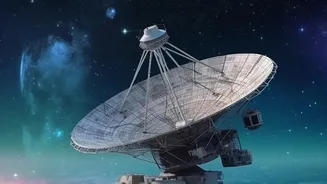
observatories, like the Canada-France-Hawaii Telescope, to take a series of long-exposure images of the space around the planet. They then use a clever technique known as 'shift and stack', where they digitally layer these images, shifting them at the predicted speed of a potential moon. This process makes the faint, moving moon appear as a stationary point of light while the background stars streak by. The final confirmation comes from the International Astronomical Union's Minor Planet Center, which officially catalogues the object once its orbit is verified.
A Tale of Two Moon Families
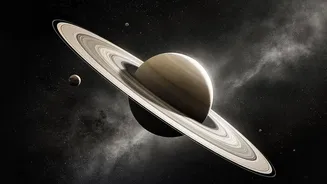
Saturn’s vast collection of moons can be split into two distinct families: the regular and the irregular satellites. The regular moons are the ones we’re most familiar with. There are about 25 of them, including the giant Titan and the geyser-spewing Enceladus. They orbit in neat, nearly circular paths close to Saturn's equator and travel in the same direction as the planet's rotation. Scientists believe these moons either formed from the same disc of gas and dust that created Saturn, or are the result of ancient collisions between larger, earlier moons. They are the 'homegrown' children of the Saturnian system.
The Kidnapped and the Chaotic
The vast majority of Saturn’s moons—more than 268 of them—are classified as irregular. These are the wild ones. They have large, eccentric, and highly tilted orbits that often go in the opposite direction of Saturn's spin, known as a retrograde orbit. These moons are not native to the Saturn system. Instead, they are thought to be 'captured' objects—comets or asteroids that strayed too close to the gas giant's immense gravity and never left. Many of these irregular moons are grouped into families with similar orbits, such as the Norse and Inuit groups, suggesting they are the shattered fragments of larger parent bodies that were captured and later broke apart in collisions.
Why the Number Keeps Changing
The moon count isn't static because our ability to detect them is constantly improving. The massive jump in numbers over the last few years is thanks to more sensitive telescopes and advanced data processing techniques that can spot these tiny, distant objects. For example, 128 moons were added in a single announcement in March 2025. This raises an interesting question: what actually counts as a moon? While there isn't a strict official size cutoff, an object must have a confirmed, stable orbit around the planet to be considered a moon and not just a piece of ring debris. As technology gets better, astronomers will undoubtedly find even smaller and more distant objects, meaning Saturn’s official moon count is likely to continue growing.
More Than Just Numbers
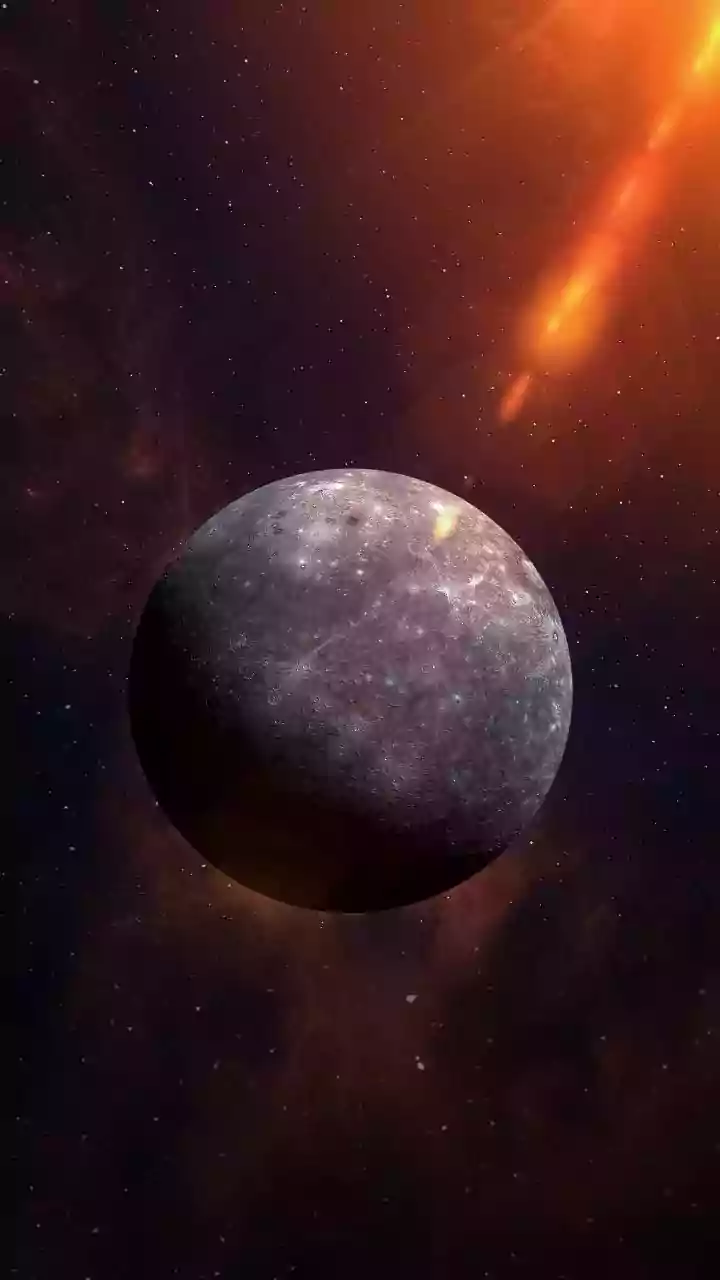
Beyond the impressive total, each moon tells a story. Titan, larger than the planet Mercury, has a thick, nitrogen-rich atmosphere and lakes of liquid hydrocarbons. Enceladus shoots jets of ice and water vapour from a subsurface ocean, making it a prime target in the search for extraterrestrial life. Others are bizarrely shaped, resembling everything from a potato to a sponge. Studying this diverse collection of worlds, from the giant and orderly to the small and chaotic, gives scientists invaluable clues about how our solar system formed and evolved. They are not just satellites; they are relics of a dynamic and sometimes violent cosmic past.