
A Mission to Earth's Hostile Twin
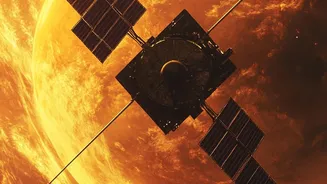
DAVINCI, short for Deep Atmosphere Venus Investigation of Noble gases, Chemistry, and Imaging, is NASA's ambitious plan to return to Venus. It will be the first US-led probe to enter the venusian atmosphere in over 40 years. The mission consists of an orbiter
and a descent probe. The probe, a tough, spherical craft, is designed for a dramatic, one-hour plunge through the planet's thick, toxic clouds. Its destination is a world where surface temperatures hover around 470°C and the atmospheric pressure is 90 times that of Earth's—enough to crush a submarine. During its descent, the probe will sample gases and snap the first-ever high-resolution images of a mountainous region called Alpha Regio, searching for clues about Venus's mysterious past and whether it ever hosted oceans.
Practising on Earth with 'Analogues'
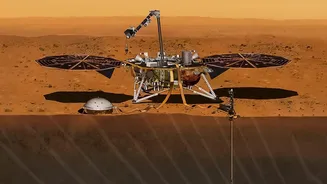
You can't build a full-scale replica of Venus to test a spacecraft. Instead, space agencies use 'analogue missions'. These are field tests conducted in locations on Earth that have physical similarities—whether in terrain, geology, or isolation—to extreme space environments. Think of Antarctica standing in for the cold vacuum of space, or volcanic deserts in Hawaii mimicking the geology of Mars. These dress rehearsals aren't just about testing hardware; they are critical for testing procedures, scientific strategies, and human decision-making under pressure. They allow teams to practice coordinating complex operations and troubleshoot problems before the multi-billion dollar hardware is millions of kilometres from home.
The Utah Test: A Dress Rehearsal in the Desert
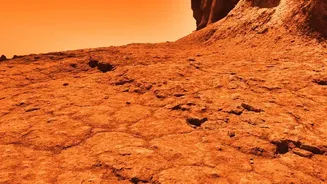
In late June 2026, the DAVINCI team travelled to Crater Island, Utah, to simulate the most critical part of their mission: the probe's descent. Over a three-day campaign, they used a helicopter carrying a prototype of the probe's camera system. Descending slowly from high altitudes, the instruments snapped pictures of the rugged landscape below, just as the real probe will do over Venus. The goal was to prove they could create detailed 3D maps of the terrain and identify different rock types using only the images taken during the descent. By comparing their helicopter-generated maps to existing geological surveys of the Utah site, scientists could verify that their instruments and methods worked. The test was a resounding success, giving the team confidence that they can achieve their science goals on Venus.
The Power of Imperfection
Crater Island, Utah, is a harsh and remote place, but it is obviously not Venus. It lacks the sulfuric acid clouds, extreme heat, and crushing atmosphere. This is where the 'imperfect' nature of analogues becomes a strength. No analogue on Earth can perfectly replicate another world. This forces the science team to grapple with ambiguity and incomplete data, which is precisely the situation they will face during the actual mission. When you're receiving data from another planet, you can't just walk over the hill to see what's there. The imperfections in the analogue environment train the team to think on their feet, refine their analytical models, and learn to trust their instruments to interpret an alien landscape they can't see directly. It’s a test of the team's minds as much as the mission's hardware.
Lessons Learned for a Journey Beyond
The successful Utah test campaign provided the DAVINCI team with more than just three terabytes of data; it provided crucial operational experience. They practiced the entire data pipeline, from image capture in the field to processing at a mission-style base camp. This kind of integrated test reveals the small but critical hitches that can derail a mission—issues with software, communication protocols, or decision-making processes. Identifying and fixing these problems on Earth is the key to ensuring a smooth and successful mission at Venus. These analogue missions reduce risk and cost, building the operational muscle required for humanity's most challenging journeys. When the DAVINCI probe finally makes its fiery descent in the 2030s, the team will be ready, thanks in part to a few days spent pretending a slice of the Utah desert was, for a moment, another world.