


Why Sitting Is the Culprit
The human body is designed for movement. When you spend hours sitting, your hips are held in a flexed position. This causes the muscles at the front of your hips, known as the hip flexors, to become short and tight. At the same time, the muscles on the opposite
side—your glutes—become inactive and weak from lack of use. This combination of tight flexors and weak glutes is a primary driver of hip stiffness, poor posture, and even lower back pain, as your body tries to compensate for the imbalance. Over time, this can restrict your range of motion and make everyday movements feel uncomfortable.
The Solution: Targeted Movement
The good news is that you can counteract these effects with a few simple, targeted exercises. The goal is twofold: to lengthen the muscles that have become tight and to reactivate the ones that have become dormant. By incorporating specific stretches and strengthening moves into your day, you can restore balance to your hips, improve flexibility, and reduce the stiffness that comes from being chair-bound. Consistency is more important than intensity; even a few minutes each day can make a significant difference.
1. Kneeling Hip Flexor Stretch
This classic stretch directly targets the tight hip flexors. To perform it, kneel on one knee as if you were about to propose, with your other foot planted on the floor in front of you, creating a 90-degree angle with your knee. Keeping your back straight and your core engaged, gently push your hips forward until you feel a comfortable stretch in the front of the hip of your kneeling leg. Avoid arching your lower back; the movement should come entirely from the hips. Hold the stretch for 20 to 30 seconds, then switch to the other side.
2. The Glute Bridge
The glute bridge is the perfect antidote to weak, inactive glutes. Lie on your back with your knees bent, feet flat on the floor about hip-width apart, and your arms by your sides. Engage your core and press through your feet to lift your hips toward the ceiling until your body forms a straight line from your shoulders to your knees. Squeeze your glutes at the top of the movement. Hold for a moment before slowly lowering your hips back to the floor. This exercise not only strengthens your glutes but also improves hip stability and can help alleviate stress on the lower back.
3. The Pigeon Pose
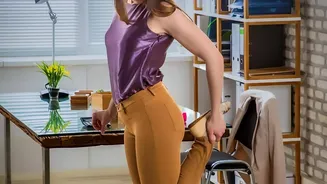
A favorite in yoga, the pigeon pose is an excellent deep stretch for the hip rotators and glutes, especially the piriformis muscle, which can contribute to hip discomfort when tight. Starting on your hands and knees, bring your right knee forward and place it behind your right wrist. Your right shin can be angled back toward your left hip. Extend your left leg straight behind you. You should feel a stretch in your right glute and hip. If this is too intense, you can perform a variation called the 'figure-four' stretch while lying on your back or sitting in a chair.
4. The Seated Butterfly Stretch
This simple stretch can be done on the floor or even in your office chair and targets your inner thighs and opens the hips. Sit tall and bring the soles of your feet together, letting your knees fall out to the sides. Gently hold your feet or ankles. To deepen the stretch, you can gently press your knees toward the floor, but do not force them. If you are on the floor, you can lean forward with a straight back to increase the intensity. This helps improve the external rotation of your hips.