
The Primary Goal: A Precious Souvenir
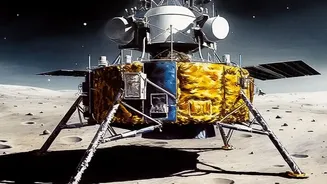
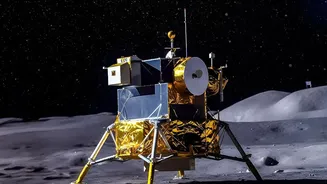
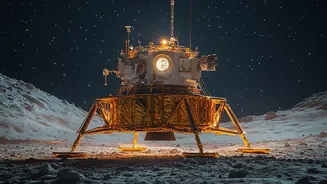
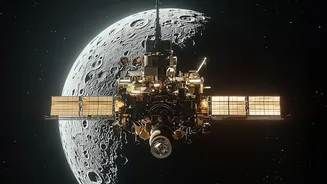
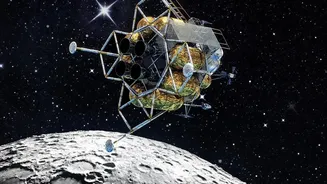
The main objective of the Chandrayaan-4 mission, slated for launch around 2028, is to perform India's first lunar sample return. This means landing on the Moon, collecting several kilograms of soil and rock, and bringing them back for detailed study in laboratories
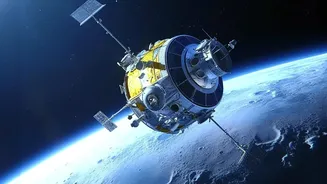
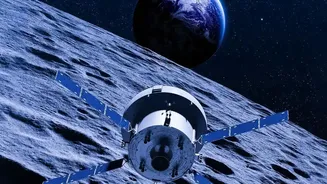
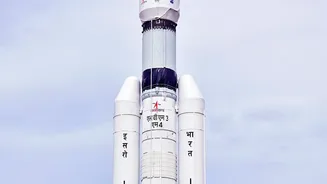
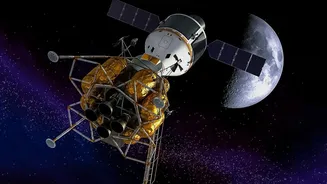
on Earth. If successful, India will join an exclusive club of nations — including the US, the former Soviet Union, and China — that have accomplished this monumental feat. The mission is incredibly complex, involving two separate launches to get all five of its modules into space, where they will dock before heading to the Moon. The plan involves landing near the lunar south pole, a region believed to be rich in water ice and other resources that could be vital for future human exploration.
The Robotic Field Geologist
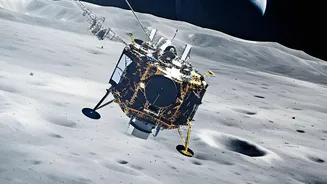
Before any sample begins its long journey home, the Chandrayaan-4 lander will act as a sophisticated on-site laboratory. The first step is collection. The lander is expected to be equipped with a robotic arm to scoop surface material and a drill to collect subsurface samples. This dual approach is critical; the surface is exposed to harsh solar radiation and micrometeoroids, while the soil just beneath might be better preserved, offering a different scientific window. The robotic arm will then carefully transfer these precious samples into a sealed container on the Ascender module, which is the vehicle that will launch from the Moon to begin the return trip. This entire process is designed to be autonomous, showcasing India's growing capabilities in robotics and remote operations.
The On-Site Instrument Toolkit
While the primary analysis will happen on Earth, performing preliminary checks on the Moon is a crucial part of the mission strategy. While ISRO has not finalised the exact payload, the lander will almost certainly carry a suite of scientific instruments to analyze the regolith (lunar soil) in its natural environment. These instruments are likely to be advanced versions of those on Chandrayaan-3. We can expect tools like a spectrometer, which acts like a chemical fingerprint reader to identify the elements and minerals present in the soil. A mass spectrometer is another key instrument that can detect volatile compounds like water. Additionally, microscopic imagers will likely be used to examine the texture, grain size, and physical properties of the soil right after it's collected. These instruments provide immediate data and help scientists understand the context of the samples they are about to receive.
Why Analyse Before You Fly?
Performing this on-site analysis serves several key purposes. First, it helps mission controllers choose the most scientifically interesting samples to bring back. With limited cargo space, you want to ensure you're returning the most valuable material possible. Second, analysing the soil in-situ—in its original place—provides a pristine baseline. The journey back to Earth, including the re-entry through our atmosphere, could subtly alter the samples. Knowing their exact state on the Moon is vital for accurate interpretation later. Finally, this immediate analysis helps scientists understand the environment from which the samples were taken. Data on temperature, radiation, and the local magnetic field provides context that is lost once the sample is removed. This preliminary check ensures that when the lunar soil arrives on Earth, scientists will know exactly what they have and where it came from, maximising the scientific return of this historic mission.