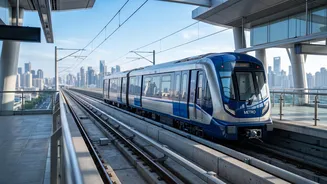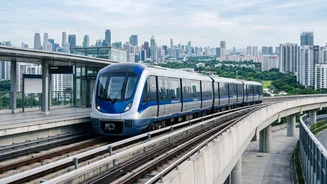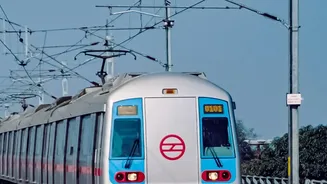






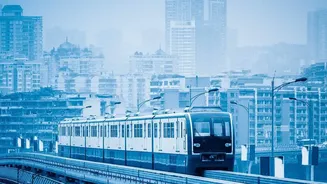
A Record-Breaking Feat
The claim in the headline is not an exaggeration. On November 2, 2026, during a pre-Diwali travel surge, Delhi Metro's driverless trains carried a staggering 1.6 million passengers in a single day. With the entire network hosting around eight million passengers that
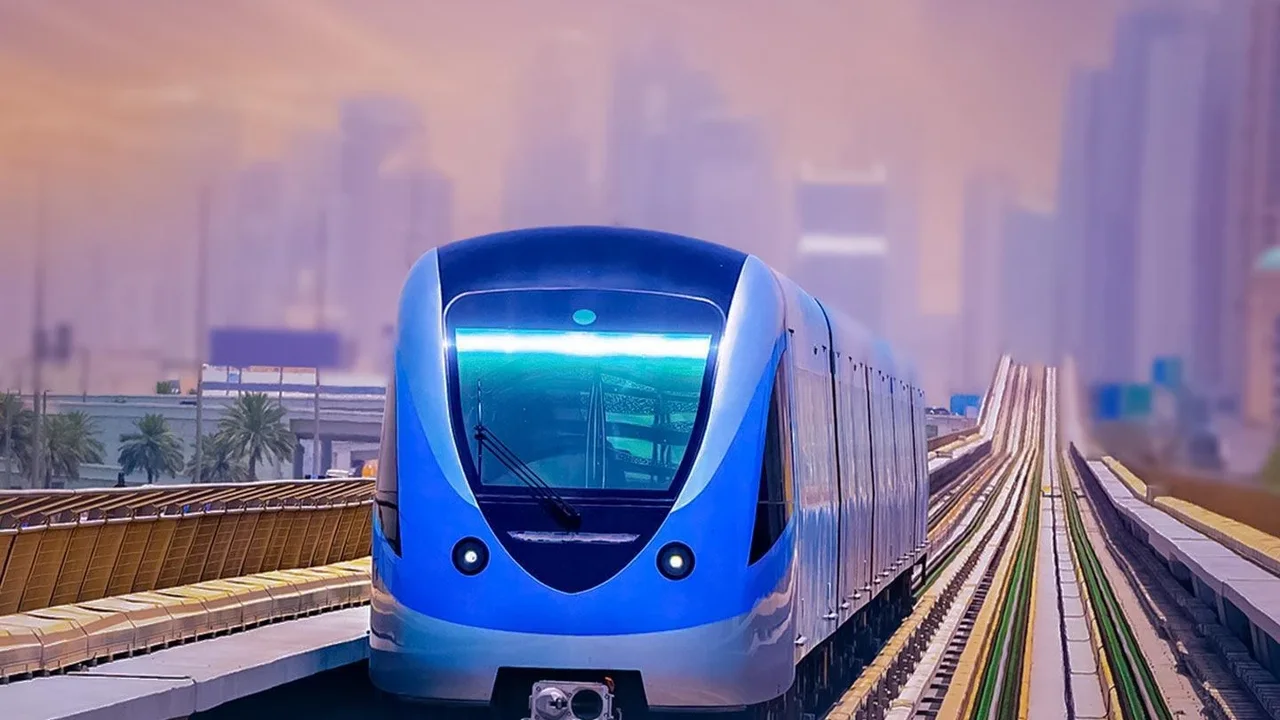
day, this meant that one in every five commuters—or 20%—chose a train operating on fully automated technology. This figure is a testament to the growing acceptance and reliance on a system that was first introduced in India less than a decade ago, in December 2020 on the Magenta Line. The driverless network, which also includes the Pink Line, now spans about 120 kilometres, making it one of the largest automated metro networks in the world.
The Driverless Duo: Pink and Magenta Lines
The backbone of this technological achievement are two key corridors: the Magenta Line (Janakpuri West to Botanical Garden) and the Pink Line (Majlis Park to Shiv Vihar). These lines are crucial orbital routes, connecting parts of the city that were previously hard to reach via a single line of public transport. The introduction of Unattended Train Operation (UTO) on these lines was a phased process. Initially launched with operators in the cabin to build public confidence, the system has since transitioned to full automation. Today, around 100 trains operate under the UTO system across these two lines, which together account for nearly 30% of the entire Delhi Metro network's length.
How Does a Driverless Train Actually Work?
The idea of a train without a driver can be unnerving, but the technology behind it, known as Communications-Based Train Control (CBTC), is designed for precision and safety. Unlike traditional systems that use fixed signals on the track, CBTC uses constant radio communication between the train and a central control centre. This allows for real-time tracking of each train's exact position and speed. The system can automatically adjust speed, apply brakes, and maintain a safe distance from other trains with far greater accuracy than human reflexes would allow. Furthermore, safety is bolstered by platform screen doors, which prevent accidental falls onto the tracks, and extensive CCTV surveillance inside and outside the trains. This automation eliminates the potential for human error and allows for a higher frequency of trains, a significant benefit during peak hours.
The Impact on Your Daily Commute
For the daily commuter, the benefits of driverless technology are tangible. The high degree of automation allows the Delhi Metro Rail Corporation (DMRC) to run trains with greater flexibility and punctuality. The system can respond to sudden surges in demand by deploying trains more rapidly. According to DMRC officials, the technology has improved the availability of coaches for service because the manual checks usually performed by operators are now automated. This leads to more reliable service and reduced waiting times. For passengers on board, the removal of the driver's cabin has also freed up more space, increasing the carrying capacity of each coach and offering a unique view of the tracks ahead from the front window.
A Blueprint for India's Urban Future?
The success of the driverless lines in Delhi serves as a powerful case study for other Indian cities. With metro networks expanding rapidly across the country in places like Mumbai, Chennai, and Bengaluru, the Delhi model provides valuable insights. DMRC's Managing Director, Vikas Kumar, has stated that the time has come for other projects to adopt this technology, citing its efficiency and reliability. While some critics point to the high initial investment and potential impact on jobs, DMRC has stated that operators have been retrained and redeployed for other essential roles like station management. The high ridership numbers demonstrate a clear public vote of confidence, suggesting that passengers have embraced the safety and convenience of this futuristic mode of transport.