





Beyond 'Fighting Like Cats and Dogs'
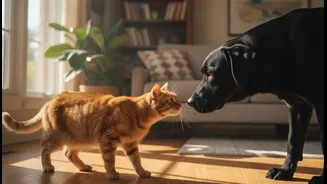
The age-old saying paints a picture of natural animosity, but reality is far more nuanced. The idea that cats and dogs are sworn enemies is largely a myth perpetuated by cartoons and cultural stereotypes. In truth, countless multi-pet households thrive.
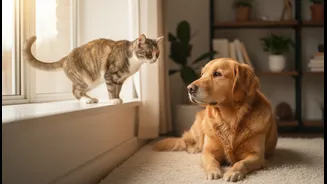
The key isn't forcing a friendship, but fostering an environment of mutual respect. Their instincts are different; dogs are often pack-oriented, while cats can be more solitary and territorial. A dog's playful bow might be misinterpreted by a cat as a lunge, and a cat's flicking tail—often a sign of irritation—could be seen by a dog as an invitation to play. Understanding these fundamental differences is the first step toward bridging their communication gap.
The Art of Reading the Moment
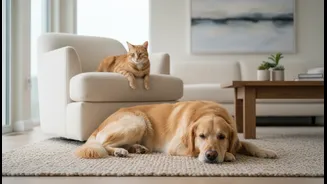
Success lies in observing the small interactions. It's not about whether they are cuddling, but about the quality of each brief encounter. Is the cat’s body relaxed when the dog walks by? Does the dog ignore the cat when it jumps onto the sofa? These are the moments that matter. Pay close attention to body language. For a dog, a relaxed body, soft eyes, and a gently wagging tail signal comfort. In contrast, stiffness, a tucked tail, and excessive yawning or lip-licking are signs of stress. For cats, slow blinks are a sign of trust, while flattened ‘airplane’ ears, a swishing tail, and a crouched posture indicate fear or annoyance. Recognizing these signals in real-time allows you to intervene before a neutral moment turns negative.
Setting the Stage for Success
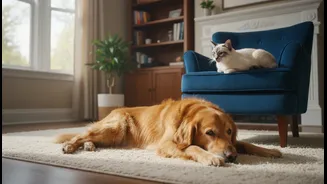
A peaceful home is a well-managed one. This starts with creating an environment where both pets feel secure. A cat should always have an escape route and vertical spaces like cat trees or shelves where they can retreat from an overly enthusiastic dog. This isn't just about hiding; it's about giving the cat control over its interactions. Likewise, ensure the dog has its own safe space, like a crate or bed. Initial introductions should be slow and heavily managed. Experts recommend keeping pets separated at first, allowing them to get used to each other's scent by swapping bedding. Subsequent meetings should be brief, supervised, and always on the pet's terms, using barriers like baby gates to ensure safety. The goal is to build a library of positive, or at least neutral, moments.
From Tolerance to Friendship
It’s important to have realistic expectations. Not every dog and cat will become best friends who snuggle together, and that's okay. The true goal is calm coexistence, where both animals feel safe and unstressed. Some pets will only ever tolerate each other, sharing the same space without much interaction. Others will develop a genuine bond, engaging in gentle play or grooming each other. Any outcome on this spectrum is a success, as long as it's free from fear and aggression. The process can take weeks, months, or even longer. Patience is paramount. Forcing interactions or rushing the process can create negative associations that are difficult to undo. Celebrate the small victories, like a shared moment in the same room with no tension, as these are the building blocks of a peaceful multi-pet home.