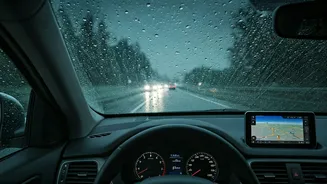




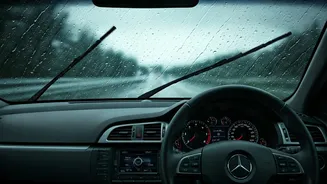




Start with a Pre-Monsoon Vehicle Check
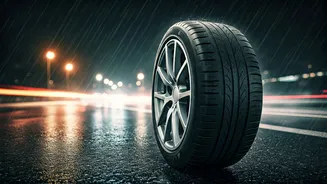
Before you even think about hitting the highway, your car needs a thorough inspection. The most critical components for rainy conditions are your tyres, wipers, and lights. Check your tyre treads for wear; a depth of at least 3mm is advisable for good
grip on wet surfaces. Under-inflated or over-inflated tyres can reduce traction, so ensure they are at the manufacturer's recommended pressure. Next, inspect your windscreen wipers. If they leave streaks or make a scraping noise, replace them immediately. Clear visibility is non-negotiable. Finally, test all your lights—headlights, taillights, brake lights, and indicators. In low-visibility conditions caused by heavy rain or fog, they are your first line of defence and communication with other drivers.
Master the Art of Wet-Road Driving
Driving in the rain demands a change in your technique. The golden rule is to slow down. Your vehicle needs more distance to stop on a wet road, so reduce your speed by at least a third of the posted limit. Increase your following distance from the car ahead to at least four to five seconds, up from the usual two to three. This gives you more time to react to sudden braking or obstacles. Avoid abrupt actions. Gentle acceleration, smooth braking, and gradual steering movements will help you maintain control and prevent skids. If you have cruise control, turn it off. You need to be in complete control of your speed and ready to react instantly, something cruise control can hinder.
Understand and Avoid Hydroplaning
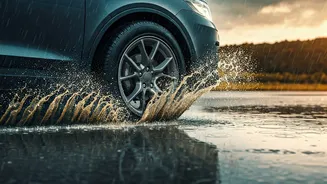
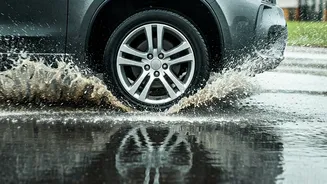
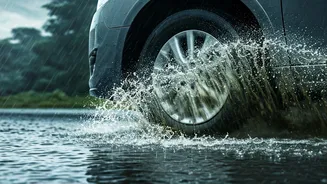
Hydroplaning is one of the most frightening experiences a driver can have. It occurs when a layer of water builds up between your tyres and the road surface, causing a loss of traction and steering control. It feels like you're floating. To avoid it, stay away from standing water and puddles where possible, and drive in the tracks of the vehicle in front of you. If you do feel your car start to hydroplane, do not panic and do not slam on the brakes. Instead, ease your foot off the accelerator and steer straight ahead until your tyres regain their grip on the road. A sudden steering or braking action can send the car into a spin.
Maximise Your Visibility, and Be Seen
When it's raining heavily, seeing and being seen is paramount. Turn on your low-beam headlights, even during the day. This not only helps you see the road better but, more importantly, makes you more visible to other drivers and pedestrians. Avoid using high beams in rain or fog, as the light can reflect off the water droplets and cause glare, worsening your own visibility. Keep your windscreens, windows, and mirrors clean, both inside and out. Use your car’s defogger to prevent the windscreen from fogging up on the inside, a common issue due to the high humidity. If visibility becomes so poor that you can't see the edges of the road or other vehicles, find a safe place to pull over and wait for the weather to improve.
Navigate Hidden Road Hazards
Indian roads during the monsoon are notorious for hidden dangers. Potholes, open manholes, and damaged road surfaces can be completely submerged under rainwater, turning them into dangerous traps. Be extra cautious when driving through waterlogged areas. If you must drive through standing water, do so slowly and steadily to avoid stalling the engine. After you've cleared the water, lightly tap your brakes a few times to dry them out and ensure they are working effectively. Be wary of slippery patches caused by oil and grime that rise to the surface of the road when it first starts to rain, often making conditions most treacherous in the first half-hour of a downpour.