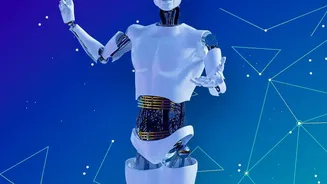


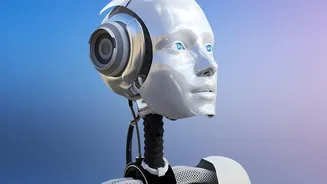

What was once science fiction is rapidly becoming business reality. Human-shaped robots are stepping out of research labs and into the real world, with global companies exploring how they can be used in factories, warehouses, and beyond.
From Concept to Commercial Viability
For years, humanoid
robots were impressive but impractical, known more for viral videos of backflips than for performing useful work. That is changing fast. Recent breakthroughs in artificial intelligence, particularly in machine learning and computer vision, have given these machines the 'brains' to match their increasingly capable bodies. Combined with more affordable and powerful hardware, a new class of robots is emerging, designed not for spectacle but for specific, commercially valuable tasks. Companies are betting billions that these machines can solve persistent labour shortages in physically demanding jobs and boost productivity in environments built for humans.
The Race to the Factory Floor
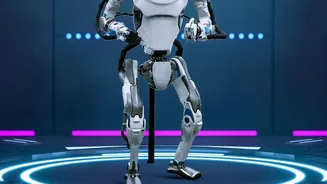
The automotive and logistics industries have become the primary proving grounds for this new technology. Automaker BMW is a prominent early adopter, expanding its use of robots from Figure AI at its plant in South Carolina. After a successful 11-month pilot where a 'Figure 02' robot loaded sheet metal parts in the body shop, the company is now deploying the next-generation 'Figure 03' for logistics tasks like sorting components for the assembly line. Similarly, Boston Dynamics, now owned by Hyundai, is deploying its famous 'Atlas' robot at Hyundai's own manufacturing plants. The first units of the new, all-electric Atlas are being used for automotive parts logistics and sequencing. Agility Robotics has also found a key partner in logistics giant GXO, where its 'Digit' robot has been moving totes in a commercial capacity since 2024. Following the initial success, GXO has expanded its agreement to deploy Digit in two additional US facilities starting in early 2027.
What Can They Actually Do?
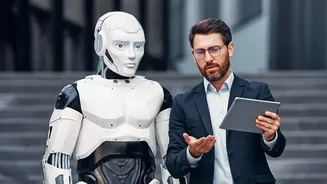
The initial commercial applications are focused on repetitive, physically demanding, and often unergonomic tasks. In warehouses, humanoid robots are being tested for moving totes, sorting parcels, and preparing orders for shipment. Their key advantage is the ability to work in spaces designed for people, navigating aisles and using existing shelves without requiring expensive facility retrofits. In manufacturing, the use cases include transporting parts, loading components into machinery, and performing initial quality inspections. Tesla is using its own 'Optimus' robots internally for tasks like sorting battery cells and light assembly work at its Gigafactories. While these tasks may sound simple, they represent a significant step toward flexible automation that can adapt to changing production needs.
The Hurdles to Mass Adoption
Despite the rapid progress, a future where humanoid robots are commonplace is not yet guaranteed. Cost remains a major barrier, though it is declining. Reliability and uptime are critical in industrial settings; a robot must be able to perform its tasks consistently through long shifts with minimal human intervention. The 'Figure 02' pilot at BMW, for instance, ran 10-hour shifts five days a week, but still operated at a slower pace than a trained human worker for its specific task. Safety is another paramount concern, as these robots will eventually work in close proximity to people. Finally, scaling production from hundreds to tens of thousands of units is a massive industrial challenge that companies like Boston Dynamics, Agility Robotics, and Tesla are now tackling.