









The Engine Behind the Boom
Several powerful forces are converging to fuel this green jobs surge. At the forefront is the Indian government's ambitious policy push. With a target of achieving 500 gigawatts (GW) of renewable energy capacity by 2030, the policy landscape is designed
to accelerate growth. Initiatives like the Production-Linked Incentive (PLI) scheme are encouraging domestic manufacturing of solar panels and batteries, creating jobs across the supply chain. Simultaneously, the economics of green energy have become undeniable. The cost of solar and wind power has plummeted over the last decade, making renewables the cheapest source of new electricity in many parts of the country. This has attracted massive private and international investment, turning ambitious targets into tangible projects that require a skilled workforce to build, operate, and maintain.
More Than Just Solar Panels
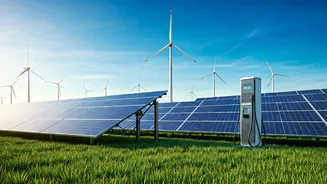
When people think of green jobs, they often picture technicians installing solar panels on a roof. While that's a crucial and growing role, the reality is far more diverse. The boom extends across multiple sub-sectors, each with unique labour demands. The wind energy sector, particularly in coastal states like Tamil Nadu and Gujarat, requires engineers and technicians for its massive turbines. The electric vehicle (EV) ecosystem is another powerhouse, generating demand for everything from battery R&D scientists and automotive engineers to charging station technicians and software developers for vehicle management systems. Furthermore, emerging fields like green hydrogen and energy storage are poised to become major employers in the coming years, requiring specialists in chemistry, material science, and grid management.
The Most In-Demand Roles
As the sector expands, specific roles are in particularly high demand. Solar and wind technicians are on the front lines, responsible for installation, maintenance, and repair. Behind the scenes, data analysts and energy modelers play a critical role in optimising power generation and grid stability. Project managers are essential for overseeing the construction of large-scale solar parks and wind farms, ensuring they are completed on time and on budget. In the manufacturing and R&D space, electrical engineers, material scientists, and quality control experts are sought after to improve efficiency and durability of components. As companies scale, they also need professionals in finance, logistics, and policy advocacy who understand the unique dynamics of the renewable energy market.
Skills to Power Your Green Career
Breaking into the green energy sector requires a blend of technical expertise and adaptable skills. For technical roles, a background in electrical, mechanical, or civil engineering remains highly valuable. Diplomas or certifications from institutions like the National Institute of Solar Energy (NISE) or the National Institute of Wind Energy (NIWE) can provide a significant edge. However, the industry is also hungry for digital skills. Proficiency in data analytics, IoT (Internet of Things) for monitoring equipment, and cybersecurity for protecting grid infrastructure is becoming increasingly important. On the soft skills side, employers prize problem-solving abilities, project management, and adaptability. As technologies and policies evolve rapidly, a commitment to continuous learning is perhaps the most critical skill of all. Many companies are investing in upskilling programs to help their workforce keep pace.
Where the Green Jobs Are
The green hiring boom isn't happening uniformly across the country. Job opportunities are concentrated in states with favourable policies and geographical advantages. Rajasthan and Gujarat are hotspots for solar energy development, hosting some of the world's largest solar parks and, consequently, a high demand for installation and operations personnel. For wind energy, the coastal states of Tamil Nadu, Karnataka, and Maharashtra lead the way. Meanwhile, manufacturing hubs for solar modules and EV components are emerging in states like Telangana and Haryana, driven by government incentives. As the focus shifts to a complete green ecosystem, including energy storage and green hydrogen, new industrial clusters are expected to develop, further diversifying the geographic spread of these future-focused jobs.