


Consistent Power, Day and Night
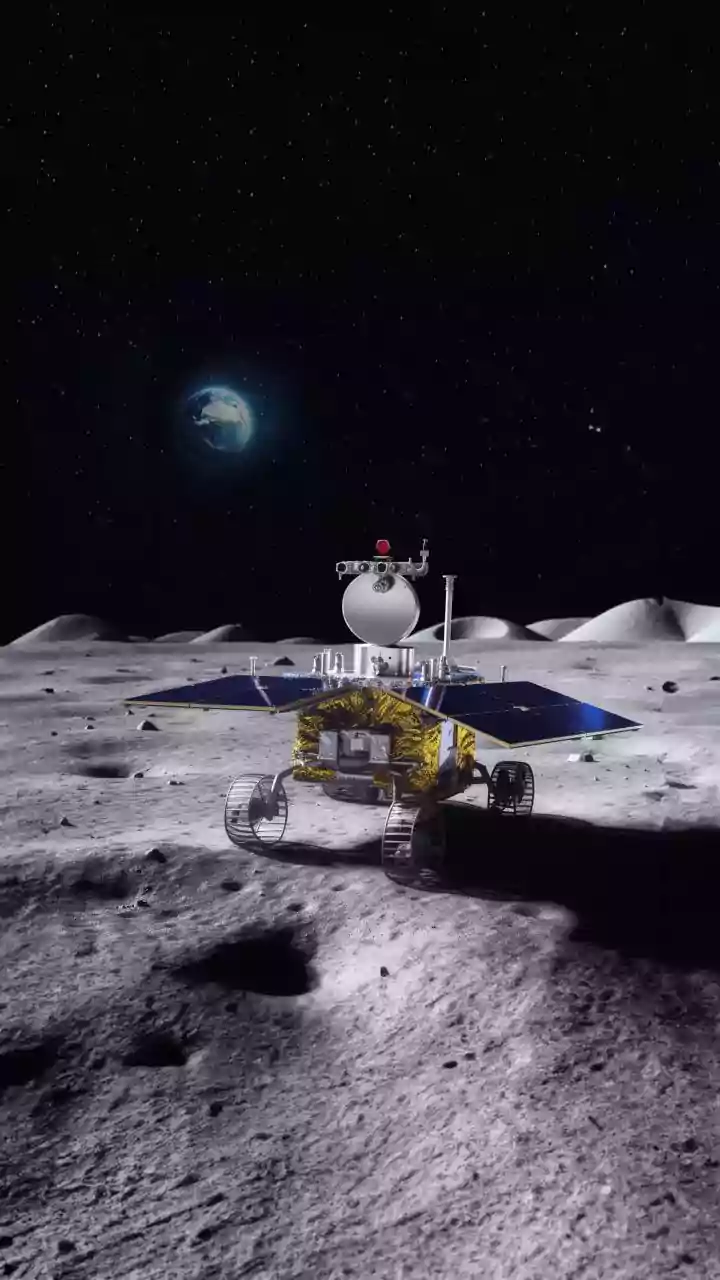
The first major hurdle is power. The Moon experiences extreme temperature swings, from scorching days to frigid nights that last for about 14 Earth days. While solar panels are a great option during the long lunar day, surviving the extended, deep-freeze
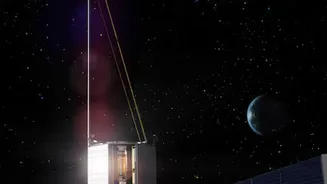
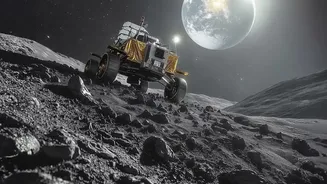
darkness requires a different solution. NASA is developing multiple options. One is advanced energy storage, like regenerative fuel cells that act like rechargeable batteries, using solar power to split water into hydrogen and oxygen, then recombining them in a fuel cell to produce electricity during the night. The other key technology is fission surface power, which involves sending small, portable nuclear reactors to the Moon. These systems could provide a steady, reliable output of several kilowatts for at least a decade, regardless of sunlight, powering habitats, rovers, and experiments.
Mining for Water and Air
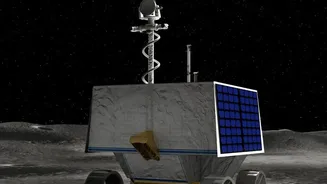
Launching water from Earth is incredibly expensive, so a sustainable lunar base must 'live off the land'. This concept is called In-Situ Resource Utilization, or ISRU. The most critical resource is water, which scientists know exists as ice in permanently shadowed craters near the lunar poles. Robotic missions will be sent to map these deposits, followed by excavators designed to dig up the frozen regolith (lunar soil). This ice can be melted for drinking water, but its value goes far beyond hydration. Through electrolysis, water can be split into breathable oxygen for habitats and hydrogen and oxygen for use as rocket propellant. This would allow for refuelling spacecraft on the Moon, a crucial step for future missions to Mars and beyond. Extracting these resources is a key focus of NASA's Artemis program.
A Shelter from the Storm
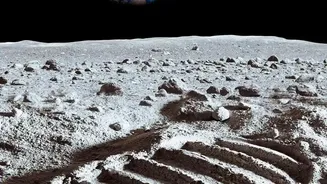
A lunar habitat has to do more than just keep the air in. It must protect astronauts from two constant dangers: micrometeoroids and radiation. The Moon has virtually no atmosphere to burn up incoming space debris, and it lacks a magnetic field to deflect the steady stream of galactic cosmic rays and intense bursts of solar radiation. Long-term exposure to this radiation is a major health risk. The most practical solution is to use the Moon's own soil as a shield. Early concepts involve covering habitat modules with several meters of regolith, which can significantly reduce radiation exposure. Other ideas include using inflatable habitats, which can be launched in a compact form and offer better protection than traditional metal structures, or even building structures underground. Advanced construction techniques, like 3D printing with regolith, are also being developed to build landing pads, roads, and other essential infrastructure.
Life Support and Growing Food
For long-duration stays, a base needs a closed-loop life support system that recycles air and water with maximum efficiency. But to truly become self-sufficient, lunar inhabitants will need to grow their own food. This presents a unique set of challenges. The lunar regolith is devoid of organic compounds and contains toxic materials, so it can't be used like terrestrial soil. Furthermore, the intense radiation on the surface can damage plant life. The solution will likely involve building shielded greenhouses where food can be grown hydroponically or in carefully prepared soil brought from Earth or processed on-site. Experiments on Earth are already underway to determine which crops grow best in simulated lunar conditions and how to create a self-sustaining ecosystem far from home.