






The Invisible Intruder: Understanding PM2.5
First, let's meet the opponent. PM2.5 refers to fine particulate matter less than 2.5 micrometres in diameter—so small it's about 30 times thinner than a human hair. Originating from vehicle exhaust, industrial emissions, construction dust, and crop burning,
these particles are a major component of the air pollution plaguing many Indian cities. Because of their minuscule size, they can penetrate deep into our lungs and even enter the bloodstream, posing significant health risks. When outdoor air quality is poor, these particles inevitably find their way indoors through gaps in windows, doors, and ventilation systems, making indoor air just as hazardous.
The Mechanical Defender: How Air Purifiers Work
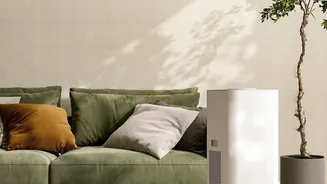
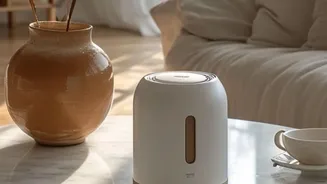
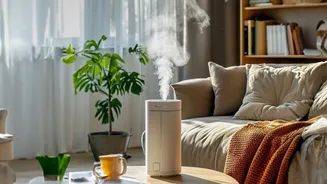
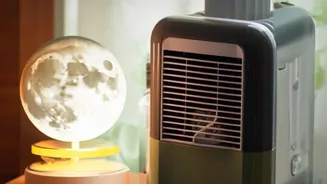
An air purifier is a machine designed specifically to clean the air inside a room. Most effective models use a High-Efficiency Particulate Air (HEPA) filter. The device works by pulling in room air with a fan and forcing it through this dense, multi-layered filter. A true HEPA filter is certified to capture at least 99.97% of particles that are 0.3 micrometres in size. This makes them exceptionally good at trapping PM2.5, along with other allergens like dust, pollen, and pet dander. Some purifiers also include an activated carbon filter, which helps remove gases, chemicals, and odours that a HEPA filter can't catch. The effectiveness of a purifier is measured by its Clean Air Delivery Rate (CADR), which tells you how much clean air it can produce at its highest fan speed. For tackling PM2.5, a purifier with a high CADR for smoke is the most reliable choice.
The Green Myth: The Truth About Houseplants
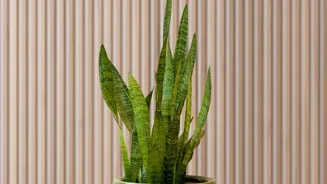
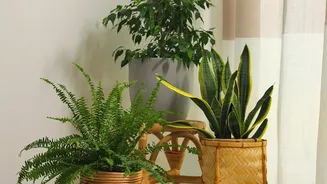
The belief that houseplants clean the air is incredibly popular, largely thanks to a 1989 NASA study. In that experiment, researchers placed plants in small, sealed chambers and found they could remove certain gaseous pollutants called Volatile Organic Compounds (VOCs), like formaldehyde and benzene. However, this finding has been widely misinterpreted. A real home is not a sealed chamber; it has constant air exchange from people coming and going and air leaking from outside. Subsequent research has shown that for plants to have any meaningful impact on air quality in a typical room, you would need an enormous number—estimates range from 10 to 1000 plants per square metre. While plants are great at absorbing some VOCs, their ability to remove airborne particles like PM2.5 is practically non-existent in a home setting.
The Verdict: Purifiers Win on PM2.5
When it comes to the specific, urgent problem of removing PM2.5 particles from indoor air, there is no contest: the air purifier is vastly superior. A purifier is a purpose-built machine that can circulate and filter the entire volume of air in a room multiple times per hour, physically removing a high percentage of harmful particles with each pass. Studies show that running a correctly sized HEPA purifier can reduce indoor PM2.5 concentrations by 50% or more. Plants, on the other hand, work on a much slower, biological level and are simply not equipped to handle the sheer volume of particulate pollution. One study noted that plants would take around two to four times longer than a purifier to bring dangerously high PM levels down to a safe range in a closed room. For immediate and significant reduction of PM2.5, a HEPA purifier is the only effective tool.
Don’t Discard Your Plants Just Yet
While houseplants fail as PM2.5 filters, they are not useless. They excel in other areas where many basic purifiers fall short. Plants are effective at absorbing certain VOCs—gaseous chemicals emitted from paints, furniture, and cleaning supplies. Species like the Bromeliad, Dracaena, and Peace Lily have been shown to absorb compounds like acetone and benzene in controlled settings. Furthermore, plants offer proven psychological benefits, reducing stress and improving mood, and they can help regulate indoor humidity through a process called transpiration. An air purifier cleans the air of particles; a plant makes the space more pleasant to be in.