





Know Before You Go: Check Conditions First
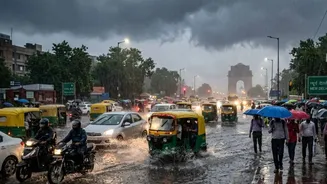
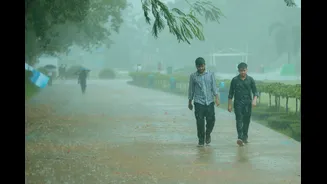
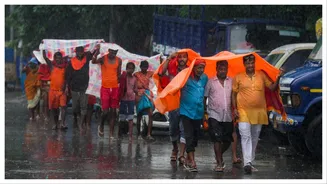
Before starting your journey, the most crucial step is to assess the situation. Heavy rainfall on Monday has led to severe waterlogging, and authorities in Gurugram have even issued a work-from-home advisory for today, August 25th, to avoid traffic congestion.
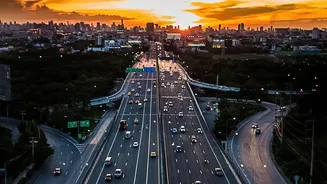
Check real-time traffic updates on mapping apps and follow the social media handles of Delhi, Gurugram, and Noida traffic police for the latest advisories on road closures and diversions. The India Meteorological Department (IMD) has issued alerts for the region, warning of continued rainfall, so conditions can change rapidly. If your travel is not essential, the safest option is to stay put.
Major Waterlogged Hotspots Across NCR
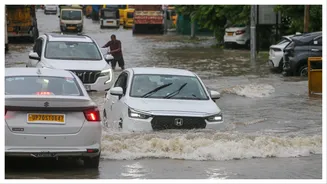
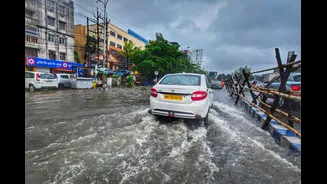
Several key areas across the National Capital Region have been severely affected. In Delhi, major waterlogging has been reported at the Zakhira underpass, Connaught Place, Munirka, Sangam Vihar, and near the New Ashok Nagar Metro Station. Gurugram is facing a particularly tough situation, with NH-48, Narsinghpur, Hero Honda Chowk, Rajiv Chowk, and IFFCO Chowk being among the worst-hit areas. School buses and even ambulances were seen stranded on flooded roads like Sohna Road. In Ghaziabad, the industrial area underpass on NH-9 has also seen significant water accumulation, making passage difficult for motorists. It is best to avoid these routes entirely if possible.
Driving on Flooded Roads: Essential Safety Rules
If you absolutely must drive, exercise extreme caution. First, try to gauge the water's depth; if it appears to be above the center of your wheels, do not attempt to cross. Hidden potholes and open manholes are a major risk under flooded streets. When driving through water, engage a low gear (first or second) and keep the engine revs high to prevent water from entering the exhaust pipe. Maintain a steady, slow speed and avoid sudden braking or acceleration, which can cause you to stall or lose control. It's also wise to turn off your car's air conditioning to reduce the load on the engine and avoid using electrical systems like power windows if water enters the cabin. Remember to gently tap your brakes after clearing a waterlogged patch to dry them out.
If Your Vehicle Stalls in Water
One of the most critical rules is to never attempt to restart your car if it stalls in water. Doing so can cause water to be sucked into the engine, leading to a catastrophic failure known as hydrostatic lock, which can be incredibly expensive to repair. The water can also short-circuit the vehicle's complex electrical systems. If your car stops, the safest course of action is to put your hazard lights on, exit the vehicle if it is safe to do so, and seek assistance. Your personal safety is more important than the vehicle.
Consider Public Transport Alternatives
While some low-lying areas near metro stations have reported waterlogging, the Delhi Metro remains one of the most reliable ways to travel across NCR during heavy rains. With advisories urging people to stay off the roads to allow civic agencies to conduct repair and drainage work, opting for public transport can be a safer and less stressful alternative. Check the official DMRC channels for any updates on their services before you head out, but in general, the elevated tracks and underground networks are less susceptible to the chaos unfolding on the streets.