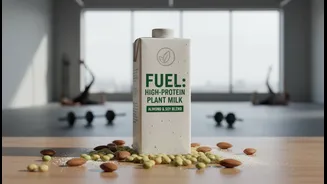









The New Power Players in the Fridge
Walk down the beverage aisle of any major supermarket, and you'll notice the dairy section has some new neighbours. A growing number of brands are offering plant-based milks specifically engineered to be rich in protein. These aren't the thin, watery
almond milks of the past. Today's innovations are often blends of soy, pea protein, oats, or almonds, formulated to deliver a protein punch that rivals, and sometimes even exceeds, traditional dairy milk. For instance, some new high-protein soy milk options pack over 13 grams of protein per cup, while certain high-protein almond milk variants, fortified with soy or pea protein, contain over 10 grams. This is a significant jump compared to regular almond milk, which has only about 1 gram, and standard dairy milk, which typically has around 8 grams per cup. Brands like Sofit, So Good, and others are at the forefront, responding to a clear consumer demand for plant-based options that don't compromise on this crucial macronutrient.
Fueling the Fitness Revolution
This protein focus is directly linked to India's burgeoning fitness culture. The Fit India Movement, launched in 2019, has significantly raised national consciousness about health and wellness, encouraging citizens to adopt more active lifestyles. As more Indians embrace everything from running and cycling to yoga and gym workouts, the demand for functional foods that support these activities has soared. Protein is essential for muscle repair, satiety, and sustained energy, making it a priority for anyone with an active lifestyle. Plant-based high-protein milks offer a 'clean label' solution that appeals to this modern, health-aware consumer. They provide the necessary fuel for an active life without the lactose, cholesterol, and saturated fat associated with dairy, fitting perfectly into a holistic vision of fitness that prioritises overall well-being.
A Conscious Choice for the Planet
The shift toward plant-based milks is not driven by health alone; sustainability is a powerful motivator. Consumers, particularly millennials and Gen Z, are increasingly aware of the environmental impact of their food choices. Animal agriculture, especially dairy farming, is resource-intensive. Producing a single litre of dairy milk requires significantly more water and land, and generates roughly three times the greenhouse gas emissions compared to plant-based alternatives like soy or oat milk. While the environmental footprint of each plant milk varies—almond cultivation, for example, is criticised for its high water usage in drought-prone regions—the overall impact is consistently lower than that of dairy. This appeal to environmental ethics, combined with India's long-standing cultural principles of ahimsa (non-violence), has created fertile ground for a plant-based revolution.
From Niche to Nationwide
What began as a trend in metropolitan hubs like Mumbai, Delhi, and Bengaluru is steadily becoming a nationwide phenomenon. The plant-based market in India is expanding rapidly, with dairy alternatives holding the largest share of the market. The growth is fueled by several factors. A significant portion of the Indian population—estimated between 60-74%—is lactose intolerant, creating a massive, built-in market for dairy-free options. Furthermore, the rise of e-commerce has made these products accessible far beyond Tier-1 cities. Events like 'Veganuary' saw participation from over 300,000 Indians in early 2026, with a notable demand for resources in Hindi, signalling that interest in plant-based eating is crossing linguistic and geographic barriers. From café chains like Chaayos introducing oat milk to menus in premium hotels, the availability and normalisation of plant-based options are making them a part of the everyday Indian diet.