

It’s one of the most ambitious missions ever conceived: bringing pieces of Mars back to Earth. But after hitting major budget and timeline hurdles, NASA is hitting the reset button on its Mars Sample Return (MSR) programme.
A Prize Worth the Price?
The goal of the Mars Sample
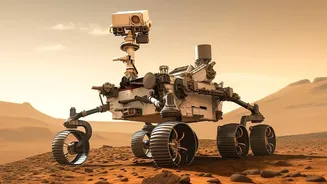
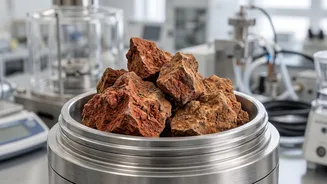
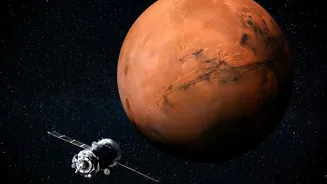
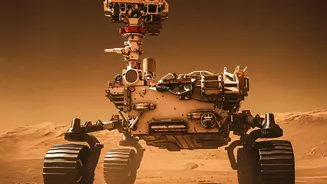
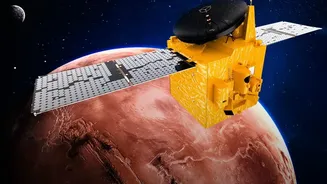
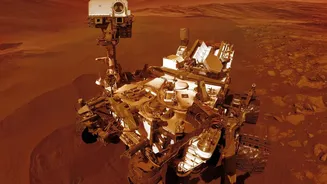
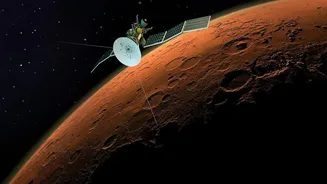
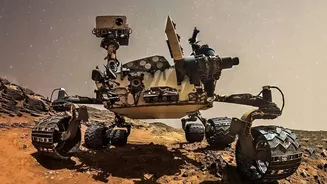
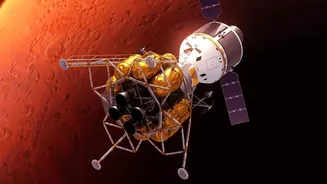
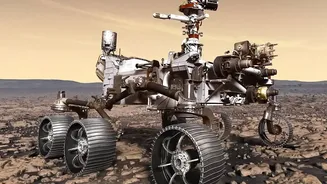
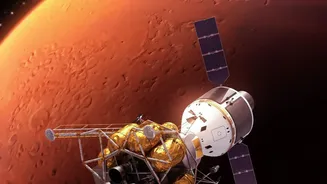
Return programme is nothing short of revolutionary. For years, NASA's Perseverance rover has been drilling into the Martian surface in Jezero Crater, an ancient lakebed, and sealing cigar-sized rock and soil samples into titanium tubes. Scientists believe these samples could hold the key to understanding Mars' geological history and, most tantalisingly, could contain signs of ancient microbial life. Bringing these pristine samples back would allow them to be studied in state-of-the-art labs on Earth with equipment far too large and complex to send to Mars. This joint mission with the European Space Agency (ESA) involves a lander to retrieve the samples, a rocket to launch them off the Martian surface for the first time in history, and an orbiter to catch the capsule and fly it back home.
When Ambition Meets Reality
The mission's complexity has been its undoing. In late 2023, an independent review board delivered a sobering assessment: the original plan was unrealistic. The report highlighted a ballooning budget, estimated to be between $8 billion and $11 billion, and a schedule that pushed the sample return into the 2040s. NASA Administrator Bill Nelson called this timeline 'unacceptable' and the price tag 'too expensive'. The projected cost threatened to cannibalise funding for other critical science missions, forcing the agency to pause and seek a more feasible path forward.
NASA's Search for a New Plan
In response, NASA opened the floor to its own research centres and, crucially, to private industry, soliciting new, innovative proposals to get the job done faster and cheaper. This has led to a new approach. In early November 2026, NASA detailed its fresh strategy, called the Perseverance Sample Retrieval Architecture (PSRA). Instead of one rigid plan, the agency is now developing two competing architectures. One would rely on proven NASA technology like the 'sky crane' system used to land the Curiosity and Perseverance rovers. The other would leverage emerging commercial heavy-lift lander capabilities, with companies like SpaceX and Blue Origin being potential players. Both options aim for a simpler, less massive mission that could return the samples as early as 2035 for a more manageable cost, potentially in the $7 billion range.
The Road Ahead
The final decision on which path to take is not expected until mid-2026, with a strategy team kicking off its work in January 2027. This allows time to flesh out the engineering details and weigh the risks of each approach. The new plans simplify the lander and swap solar panels for a radioisotope power system to ensure it can operate through Mars' infamous dust storm seasons. However, the pressure is on. China is moving forward with its own Mars sample return mission, Tianwen-3, which aims to launch by 2028 and return samples to Earth as early as 2031. While NASA's mission is scientifically more methodical, the race to be first adds a geopolitical dimension to the technical and financial challenges. For now, the precious samples collected by Perseverance wait patiently on the red planet, their potential secrets locked away until a ride home can be secured.