





In a world that constantly demands our attention, what if you could achieve deep, restorative rest without actually falling asleep? This is the promise of Yoga Nidra, a powerful yet simple guided practice that unlocks profound calm.
What Exactly Is Yoga Nidra?
Often translated as
'yogic sleep', Yoga Nidra is a state of conscious relaxation that hovers somewhere between waking and sleeping. It's not about contorting your body into complex poses; in fact, it requires almost no physical effort. During a session, a guide's voice leads you through a structured sequence of cues designed to systematically relax your body and mind. This process allows you to access a deeper level of awareness, where your body can repair itself and your mind can release accumulated stress. Unlike traditional meditation that might focus on emptying the mind, Yoga Nidra uses a series of internal focal points—like a body scan and breath awareness—to keep the mind gently engaged, preventing it from drifting into sleep or distracting thoughts.
The 'Form': Stillness Over Stretching
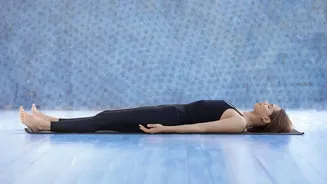
The 'form' in Yoga Nidra is refreshingly simple and accessible to everyone, regardless of physical fitness. The primary posture is Savasana, or Corpse Pose. You simply lie down on your back on a comfortable surface, with your arms resting gently by your sides, palms facing up, and your feet falling open naturally. The key is to find a position of complete stillness and support. You can place a cushion under your knees to release your lower back or a thin blanket over your body for warmth, as your body temperature can drop during deep relaxation. The goal is to remain as still as possible throughout the practice. This physical stillness is what encourages the mind to settle, creating the perfect environment for the nervous system to shift from a state of 'fight or flight' to 'rest and digest'.
The Breath as Your Anchor
While the body remains still, the breath becomes a central focus. However, Yoga Nidra does not involve complex 'pranayama' or breathing exercises that require you to control the breath. Instead, the practice emphasizes natural, calm breathing. The guide will typically draw your attention to the gentle, automatic rhythm of your inhales and exhales. You are invited to simply observe the breath without trying to change it. This act of passive observation is a powerful tool. It anchors your awareness in the present moment and has a direct soothing effect on the nervous system. By noticing the sensation of air flowing in and out, the rise and fall of your abdomen, you cultivate a state of mindful presence that is deeply calming.
A Journey for the Mind
A typical Yoga Nidra session unfolds in a series of stages, each designed to peel back layers of tension. It often begins with setting a 'Sankalpa', or a heartfelt intention. This is a short, positive statement in the present tense that you silently repeat, planting a seed for transformation in your subconscious mind. Following this, the guide leads you through a 'rotation of consciousness', a systematic body scan where you bring awareness to different parts of the body one by one, relaxing them without moving them. Other stages may include breath awareness, exploration of opposite sensations (like heaviness and lightness), and visualizations, which often involve recalling serene images or universal symbols. This structured journey keeps the mind lucid and focused, allowing you to access deeper brainwave states associated with creativity and profound rest.
Benefits Beyond Simple Relaxation
The rewards of a consistent Yoga Nidra practice extend far beyond a few moments of peace. Because it helps downstegulate the sympathetic nervous system (responsible for the stress response), it can be a powerful antidote to modern ailments like anxiety, burnout, and insomnia. Many practitioners report sleeping more soundly and feeling more resilient to daily pressures. Studies have shown that the practice can help lower blood pressure and cortisol levels. On a mental level, it can enhance focus, improve emotional regulation, and foster a greater sense of inner connection. It offers a unique space to process emotions and release subconscious patterns, leading to greater clarity and wellbeing in everyday life.