

The Golden Rule: Wash Everything Well
Before we get to the specific fruits, it is crucial to remember one thing: the monsoon's dampness is a breeding ground for bacteria. All fruits, whether you plan to eat the peel or not, must be washed thoroughly under clean, running water. For fruits with
rough or fuzzy skins, a soft brush can help remove surface contaminants. Avoid pre-cut fruits from street vendors, as they are highly susceptible to contamination. Always cut your fruit at home just before you plan to eat it to ensure maximum freshness and safety.
Jamun: The Iconic Monsoon Berry
The deep purple Jamun, or Indian blackberry, is a monsoon staple. To pick the best ones, look for fruits that are a dark, almost black, purple colour; this indicates they are fully ripe and sweet. Fresh jamuns will have smooth, glossy skin. Avoid any that look dull, wrinkled, or have soft spots. A ripe jamun will feel firm but yield slightly to a gentle press. They are a delicate fruit and should be refrigerated and eaten within a day or two for the best taste.
Litchi: Sweet, Juicy Spheres
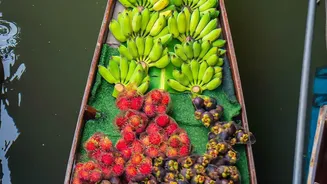
This tropical delight is a monsoon favourite for its sweet, floral flavour. When buying litchis, look for a vibrant, pinkish-red shell. Greenish tints mean the fruit is unripe, while dark brown patches suggest it's overripe. The fruit should feel firm and heavy for its size. A fresh litchi will also have a light, floral fragrance; if it smells fermented or sour, it is past its prime. The stem should look fresh and green, not dry or brittle, which is a sign the fruit is old.
Plums: Sweet and Tart Gems
Plums are another fantastic monsoon fruit, offering a balance of sweet and tart flavours. A ripe plum will have a deep, even colour without any blemishes or soft spots. While different varieties have different colours, avoid any with green patches, which means they were picked too early. Like other stone fruits, a plum should have a slight give when pressed gently. They should also feel heavy for their size and have a faintly sweet aroma. Store them in the fridge once they are ripe to prolong their freshness.
Peaches: The Fuzzy Favourite
A perfect peach is one of summer's greatest pleasures that extends into the monsoon. Look for a creamy gold to yellow background colour; the red blush is just a sign of the variety, not ripeness. A key indicator is the smell – a ripe peach should have a distinctly sweet and fragrant aroma. It should be firm but yield slightly to gentle pressure, especially near the stem. Avoid peaches that are overly soft, bruised, or have any green tinge.
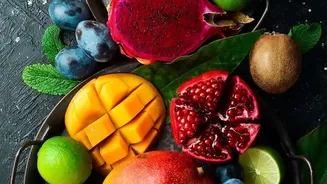
Pomegranate: Jewel of the Season
Pomegranates are an excellent choice for the monsoon, as their thick, tough skin provides a natural barrier against contamination. When selecting one, choose a fruit that feels heavy for its size, which indicates juicy seeds. The skin should be firm, smooth, and a deep, rich red colour. Look for a shape that is more squared-off than perfectly round, as this means the seeds inside have pressed against the skin and are plump. Avoid any with cracks, bruises, or soft spots.