








More Than a Medieval Horror Story
When we think of plague, most of us picture the Black Death of the 14th century. It’s an event synonymous with unimaginable death, wiping out as much as half of Europe's population. But to see it only as a macabre tale of rats and fleas is to miss the point
entirely. The Black Death was a profound societal rupture that reshaped the Western world. Before the plague, Europe was overpopulated, and a rigid feudal system kept labourers in a state of servitude with little power. With the sudden, drastic labour shortage, surviving peasants found themselves with unprecedented bargaining power. They demanded higher wages, gained mobility, and began to challenge the old class structures. This economic shift helped dismantle feudalism and laid some of the earliest groundwork for a middle class and modern capitalism. The plague also triggered immense cultural and religious shifts, sparking everything from extremist cults to a questioning of church authority, which some historians believe helped set the stage for the Reformation.
The Plague That Shook an Empire
Long before the Black Death, the Plague of Justinian struck the Byzantine Empire in the 6th century. Caused by the same bacterium, Yersinia pestis, this pandemic is believed by many historians to have killed tens of millions and significantly weakened the empire at a critical moment. Emperor Justinian was in the midst of a grand campaign to reconquer the Western Roman Empire and restore its former glory. The plague crippled his military, exhausted the treasury, and caused widespread famine and social breakdown. While some recent scholarship suggests its demographic impact may have been exaggerated in ancient texts, its role as a destabilizing force is hard to deny. It highlights how a microscopic organism can alter the course of empires, halting expansion and leaving powerful states vulnerable to invasion. It’s a historical lesson in how interconnectedness, through trade routes like the grain ships from Egypt that brought the plague to Constantinople, has always been a double-edged sword.
The Modern Plague We Barely Discuss
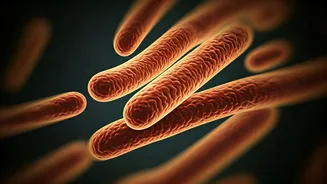
The third major plague pandemic is one many have never heard of, yet it began in the 1850s and was considered active by the WHO until 1960. Originating in China, it spread across all inhabited continents via modern steamships and trade, killing over 12 million people in India and China alone. This pandemic unfolded alongside the birth of modern medicine. It was during the Hong Kong outbreak in 1894 that bacteriologist Alexandre Yersin isolated the bacillus Yersinia pestis. Shortly after, Paul-Louis Simond demonstrated the role fleas played in transmission. This era shows not a story of helpless suffering, but one of scientific discovery happening in real-time. It marked a turning point where humanity began to understand its invisible enemy. Yet even with this new knowledge, responses were often brutal and ineffective, including forced quarantines and the burning of entire neighbourhoods. It’s a powerful reminder that scientific understanding doesn't automatically translate to effective and humane public health policy.
Why Nuance Matters More Than Panic
Sensationalist health reporting reduces these complex historical events to a single emotion: fear. It creates a cycle of panic and desensitization, hindering our ability to have informed public discussions. Studies on media coverage during the COVID-19 pandemic found that negative and alarming framing dominated, often at the expense of context and scientific nuance. When headlines scream about a new plague without context, they flatten history into a one-dimensional monster movie. This not only fuels anxiety but also robs us of the crucial lessons these past events offer. The history of plague is not just about death tolls; it's about resilience, societal adaptation, the dawn of public health measures like quarantines, and the profound economic and political changes that followed. By focusing only on the terror, we fail to see how past societies, even with far fewer resources, navigated catastrophe and were irrevocably changed by it—for better and for worse.