


First, What Is a Quasar?
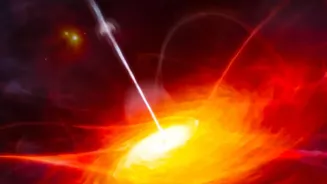
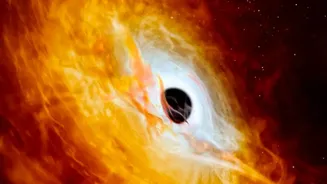
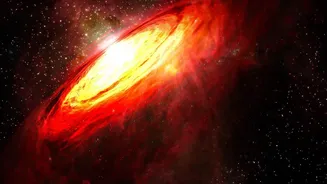
Imagine a supermassive black hole at the center of a galaxy. Now, imagine that black hole is actively feasting on a massive buffet of gas, dust, and stars. As this material gets sucked in, it heats up and glows with unimaginable intensity, creating a beacon
of light that can outshine all the stars in its own galaxy combined. That brilliant, hyper-luminous object is a quasar. They are some of the brightest things in the entire universe, acting as cosmic lighthouses that allow astronomers to study the distant past.
Why Finding a 'Pair' Is a Big Deal
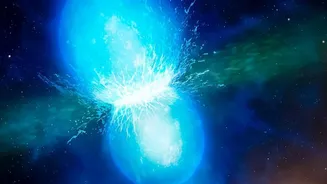
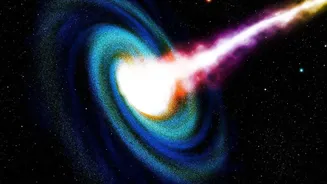
Finding one quasar is exciting, but finding two right next to each other is exceptionally rare and important. A quasar pair like J1602+4228AB is the smoking gun for a galactic merger. It means two galaxies, each with its own central supermassive black hole, are in the process of colliding. As they crash together, the gravitational chaos funnels enormous amounts of gas toward both black holes, causing them both to 'switch on' and shine as quasars simultaneously. This discovery provides a direct snapshot of two giant galaxies merging when the universe was in its infancy.
The 'Cosmic Dawn' Context
The light from J1602+4228AB traveled for nearly 13 billion years to reach us, meaning we are seeing it as it was just 900 million years after the Big Bang. This period is known as the 'Cosmic Dawn', when the very first stars and galaxies were forming. Finding not one, but two gigantic, actively feeding black holes from this era is a major puzzle. Current theories of cosmology struggle to explain how black holes could grow so massive, so quickly. According to one lead researcher, there is no definitive theoretical explanation for how even a single one of these giant quasars exists so early, let alone two.
Meet J1602+4228AB
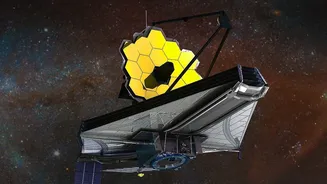
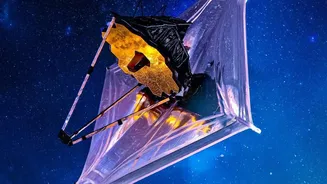
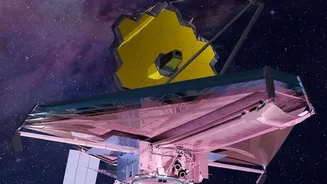
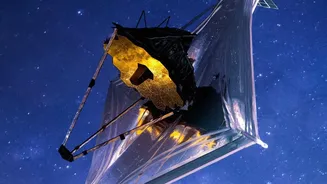
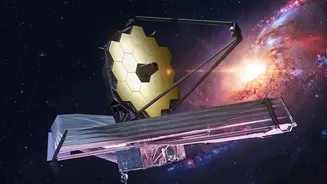
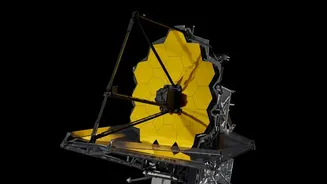
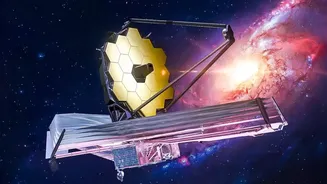
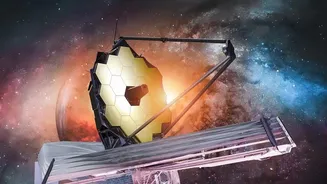
This specific system, also given the Hawaiian name Nāpōwawāʻenakaulua, consists of two behemoths. One black hole weighs in at an estimated 1.5 billion times the mass of our sun, while its companion is a 'smaller' 400 million solar masses. They are separated by just 18,100 light-years, which is about one-fifth the diameter of our entire Milky Way galaxy. This makes it the most compact quasar pair ever found from that early epoch. The discovery was made by combining the power of the JWST, which first spotted the faint companion, with follow-up observations from the Gemini North telescope in Hawaiʻi, which confirmed they were two distinct objects.
Rewriting the Story of Galaxy Growth
This discovery fundamentally challenges our understanding of how the universe’s largest structures came to be. The existence of such massive black holes in a close pair so early on suggests that the processes of galaxy mergers and black hole growth were happening much faster and more efficiently in the primordial universe than previously thought. It implies that the early cosmos was an incredibly dense and dynamic environment where galaxies collided frequently, fueling the rapid growth of their central black holes. J1602+4228AB serves as a unique natural laboratory for studying how the first massive galaxies assembled themselves in the cosmic dawn.