





Why Your Desk Job Causes Pain
Spending hours sitting at a desk often leads to poor posture, such as a forward head position and rounded shoulders. This 'tech neck' posture places excessive strain on the muscles and ligaments in your neck and upper back. Over time, this constant tension
can cause muscle fatigue, stiffness, spasms, and even chronic pain that disrupts your workday and personal life. The problem is compounded by a lack of movement, which reduces circulation and makes muscles even tighter. Understanding this connection is the first step toward finding a sustainable solution.
The Gentle Neck Tilt
This simple stretch targets the muscles along the sides of your neck, which often hold a lot of tension. To perform it, sit tall in your chair with your feet flat on the floor and your shoulders relaxed. Slowly tilt your head toward your right shoulder, as if trying to touch your ear to it without raising the shoulder. You should feel a gentle stretch along the left side of your neck. Hold this position for 15 to 30 seconds, breathing deeply. Return your head to the center and repeat on the left side. Perform this 2-3 times on each side to release tightness.
Upper Trapezius Stretch
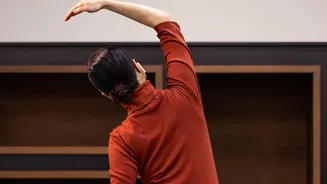
The upper trapezius muscle runs from the base of your skull to your shoulders and is a major culprit in neck and shoulder tension. To stretch it, sit straight and gently bend your neck to one side. You can deepen the stretch by placing the hand on the same side on top of your head and letting its weight gently guide your head down. At the same time, you can anchor your other arm by holding onto the side of your chair. Hold for about 20-30 seconds on each side, feeling the pull from your ear down to your shoulder. This helps counteract the effects of slouching.
Shoulder Blade Squeezes
This exercise, also known as a scapular squeeze, is excellent for activating weak upper back muscles and improving posture. While sitting or standing tall, imagine there is a pencil between your shoulder blades. Gently squeeze your shoulder blades together as if you are trying to hold the pencil in place. Hold the squeeze for a few seconds before relaxing. Repeat this movement 10-15 times. This helps to pull your shoulders back and open up your chest, reversing the hunched-forward posture many desk workers adopt.
Seated Spinal Twist
A gentle twist can work wonders for a stiff upper and mid-back. Sit tall in your chair with your feet firmly on the floor. Twist your torso to the right, using your hands to help. Place your left hand on your right knee and your right hand on the back or armrest of the chair. As you exhale, gently deepen the twist, looking over your right shoulder. Hold for 15-30 seconds, making sure not to force the movement. Return to the center and repeat on the left side. This helps improve spinal mobility and relieve tension.
Chest Opener Stretch
Rounding forward all day shortens the muscles in your chest. This stretch helps to counteract that. Sit on the edge of your chair with your feet flat on the floor. Clasp your hands behind your back, or if that's not accessible, grab the sides of your chair. Squeeze your shoulder blades together and pull your chest forward and up, creating an arch in your upper back. You should feel a good stretch across the front of your shoulders and chest. Hold this for 15-20 seconds and repeat several times throughout the day.
Prevention Beyond Stretching
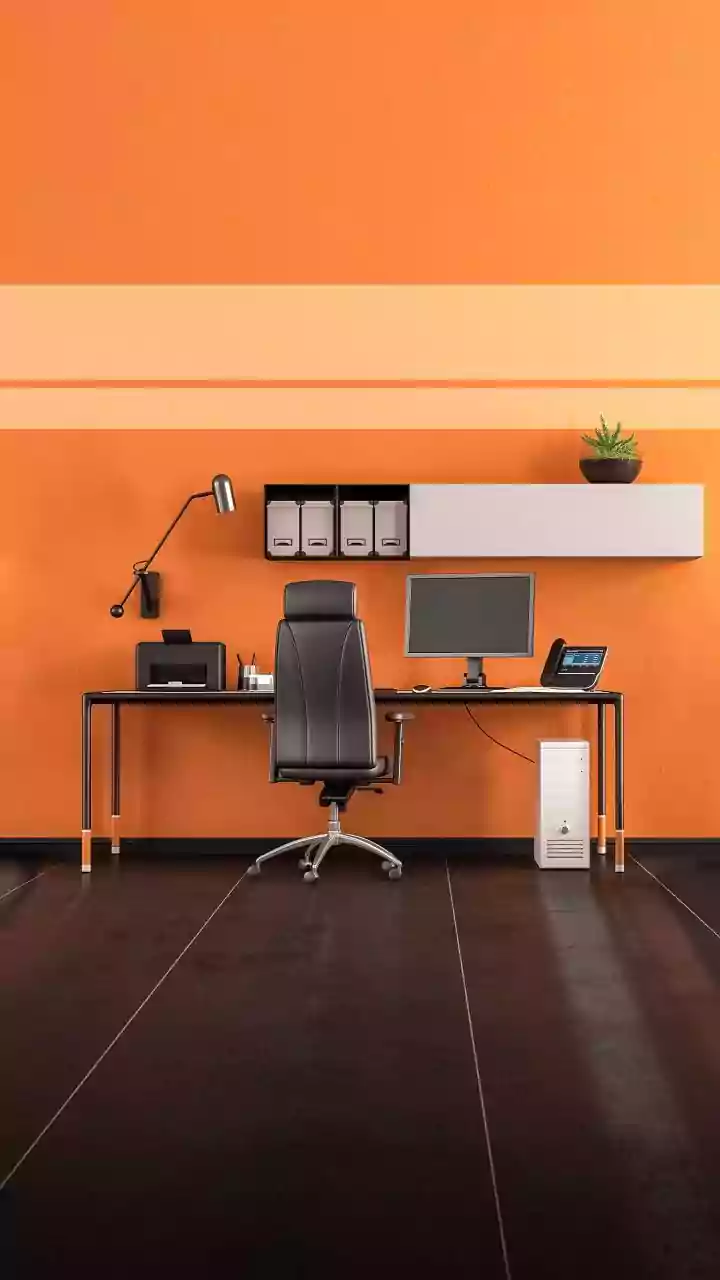
While stretches are incredibly helpful, long-term relief comes from prevention. Pay attention to your workstation ergonomics. Adjust your chair so your feet are flat on the floor, and use a lumbar support if needed. Position your monitor so the top of the screen is at or just below eye level to keep your neck in a neutral position. Most importantly, take frequent breaks. Stand up and move around for a few minutes every hour to combat the negative effects of a sedentary day. Alternating between sitting and standing, if possible, is also highly beneficial.