




A Bigger, Wider Net
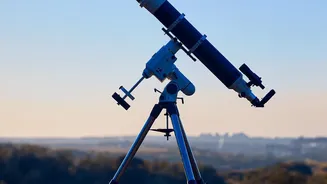
The first step in finding a small, fast-moving object in the vastness of space is simple: you need a bigger net. For decades, asteroid hunting was a painstaking process, relying on telescopes that could only see small patches of the sky at a time. This
meant that smaller, dimmer asteroids could easily slip through unnoticed until they were dangerously close. Today, new survey telescopes are designed for breadth and speed. Systems like the Asteroid Terrestrial-impact Last Alert System (ATLAS) use multiple telescopes to scan the entire night sky every 24 hours. This constant, sweeping search is a game-changer. Instead of pointing and shooting at specific areas, these systems create a moving map of the sky, allowing them to spot faint points of light that have moved from one night to the next. The headline claim of spotting asteroids weeks in advance holds true, but it depends on the asteroid's size. For a 100-meter object—large enough to cause significant regional damage—a system like ATLAS can provide several weeks of warning. For a smaller, 20-meter object, that warning time shrinks to a few days.
Seeing in the Dark
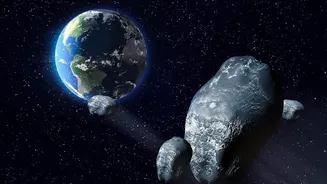
It isn't just about scanning wide; it's also about seeing deep. The Vera C. Rubin Observatory in Chile, set to revolutionize astronomy, combines a huge 8.4-meter mirror with the world's largest digital camera, a 3,200-megapixel behemoth. This incredible sensitivity allows it to detect objects far fainter and more distant than previous surveys could manage. Even in its preliminary testing phases, Rubin has already discovered thousands of new asteroids. This power is crucial for identifying 'Potentially Hazardous Asteroids' (PHAs), which are typically larger than 140 meters. Scientists estimate we have only found about 40% of these mid-sized objects, but once fully operational, Rubin is expected to nearly double the known catalog. Furthermore, space-based telescopes like the upcoming NEO Surveyor will use infrared to spot asteroids. Some asteroids are as dark as printer toner, reflecting very little sunlight, making them nearly invisible to optical telescopes on Earth. However, they still emit heat, which an infrared telescope can detect, giving us another vital tool to find otherwise hidden threats.
The Brains Behind the Brawn
All this new hardware generates an unimaginable amount of data. A single night of observations can produce terabytes of images, far too much for humans to sift through manually. This is where artificial intelligence and advanced software come in. Algorithms are now the frontline soldiers of planetary defense. Programs with names like HelioLinc3D and THOR are designed to pore through archival and new images, looking for the tell-tale signs of a moving object that human eyes might miss. By comparing images taken minutes or hours apart, these AI models can identify faint moving dots against a static background of stars and galaxies. This process has already proven its worth. One AI program, by analyzing old data, recently uncovered over 27,000 previously unknown asteroids. AI not only finds potential candidates but also helps calculate their orbits with incredible speed, flagging any that might be on a worrying trajectory for further study by human astronomers.
From Detection to Defense
Finding an asteroid early is the most critical step in planetary defense. An early warning gives scientists time—potentially years or even decades—to act. That time allows for follow-up observations to precisely calculate an asteroid's path and understand what it's made of. This knowledge is vital for planning a response. The DART (Double Asteroid Redirection Test) mission in 2022 was a landmark success, proving that humanity could intentionally crash a spacecraft into an asteroid to alter its course. The European Space Agency's Hera mission, which recently arrived at the impact site, is now studying the aftermath to turn that successful experiment into a reliable deflection technique. Without the advance warning provided by survey telescopes, such a mission would be impossible. The goal of these systems is to create a comprehensive catalog of our cosmic neighborhood, ensuring that if a genuine threat ever emerges, it won't be a surprise. It will be an expected event that we have the time and the tools to confront.