

The End of an Era, The Start of a Market
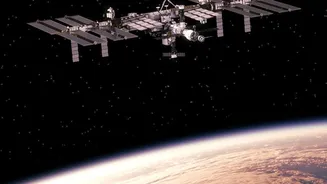
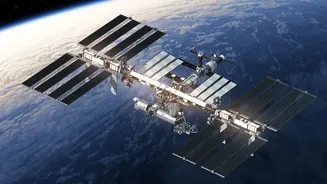
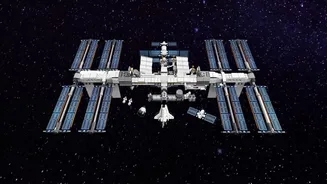
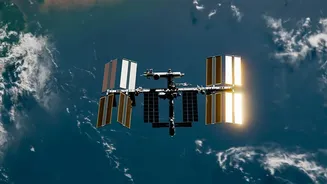
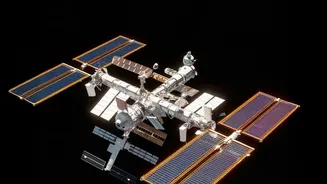
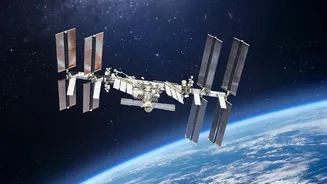
The International Space Station represents one of the greatest feats of engineering and international cooperation in history. For more than 25 years, it has served as a premier laboratory for microgravity research, hosting astronauts from around the globe.
But the aging orbital outpost is scheduled to be deorbited by the end of this decade. This impending retirement creates a critical challenge: without a successor, the United States and its partners face a gap in their ability to conduct research and maintain a human presence in low-Earth orbit (LEO). Recognizing this, NASA has shifted its strategy. Instead of building the next station itself, the agency is fostering a commercial market, aiming to become just one of many customers for a fleet of privately owned and operated space stations.
The Frontrunners in the Orbital Race
Several key players have emerged, each with a unique approach to building the orbital habitats of the future. Axiom Space has a significant head start, having already sent private astronaut missions to the ISS. Its strategy involves attaching its first commercial modules directly to the ISS beginning around 2026 or 2027, testing them in a live environment before detaching to form a free-flying station. Another major contender is the Starlab project, a joint venture between Voyager Space and aerospace giant Airbus. They plan to launch a large, single-module station designed to serve as an on-orbit science park. Then there is Orbital Reef, envisioned by Blue Origin and Sierra Space as a "mixed-use business park" in space, designed to accommodate science, manufacturing, and even tourism with its expandable LIFE habitat modules.
More Than Just a Laboratory
While science and research remain a core purpose, these commercial stations have far broader ambitions. Their business models depend on attracting a diverse range of clients beyond government space agencies. The vision is to create a true orbital economy. This includes opportunities for in-space manufacturing, where the microgravity environment allows for the creation of unique materials like flawless fiber optics or superior semiconductor crystals. Other potential uses include film and media production, leveraging the ultimate Earth-view backdrop. And, of course, there is space tourism. While early accommodations may be spartan, companies like Blue Origin and Axiom see a future where private citizens can visit and live in orbit, transforming the concept of a 'habitat' from a purely functional lab to a unique destination.
Navigating the Challenges Ahead
The path to a bustling LEO economy is not without obstacles. Timelines are ambitious, and some in the industry have expressed concern that a commercial platform may not be fully ready by the time the ISS is decommissioned. Funding is another significant hurdle; while NASA has provided seed money through its Commercial LEO Destinations (CLD) program, the companies themselves are responsible for raising the vast majority of the capital required. The technical challenges are also immense, requiring new launch vehicles and robust life-support systems. In early 2026, NASA even briefly shifted its strategy, proposing a government-owned core module for companies to plug into, before reversing course after industry feedback. This highlights the dynamic and uncertain nature of this emerging market.