




A New Era of Ambition
For decades, ISRO has been globally respected for its efficient and successful missions. Now, the focus is shifting from singular achievements to building a comprehensive, next-generation space infrastructure. This 'test season' is a deliberate, high-stakes
phase focused on validating the complex technologies required for human spaceflight, reusable rockets, and deep space exploration. It's a calculated sprint of ground and flight tests that will determine the timeline for India's most audacious goals: a sustained human presence in space and missions to the Moon. Every test, whether a success or a learning opportunity, is a vital step in transforming India from a space-faring nation into a space leader.
Gaganyaan: The Human Frontier
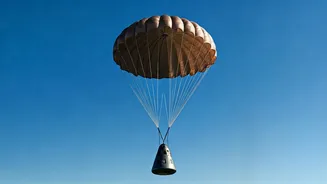
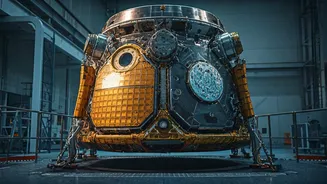
At the heart of this test season is the Gaganyaan mission, India's inaugural human spaceflight program. Before astronauts, or 'Gaganyatris', launch into orbit, ISRO is executing a meticulous series of validation flights. The program includes several uncrewed missions to prove the safety and reliability of every component. The first uncrewed flight is scheduled for the latter half of 2026. These missions will test the human-rated LVM3 rocket, the life support systems, and crucially, the crew emergency escape system. To simulate human conditions, a humanoid robot named Vyommitra will be on board, gathering critical data. This painstaking, multi-stage testing process is designed to ensure that when the first crewed mission launches, targeted for 2027, every foreseeable risk has been mitigated.
The Reusable Revolution: Pushpak
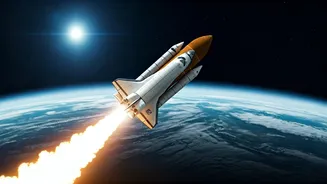
A game-changer for space access is reusability, and ISRO is making significant strides with its Reusable Launch Vehicle (RLV), named 'Pushpak'. Recently, ISRO successfully completed a hat-trick of autonomous landing experiments. In these tests, the winged vehicle was released from a helicopter at a high altitude and had to navigate its own way to a precise, high-speed landing on a runway, simulating a return from space. The final test demonstrated this capability under more challenging wind and release conditions. Mastering this technology is essential for drastically reducing the cost of launching satellites and other payloads, making space access more frequent and affordable. The next major step will be an orbital re-entry mission, where Pushpak will be launched into space on a rocket before making its return glide to Earth.
Powering the Future
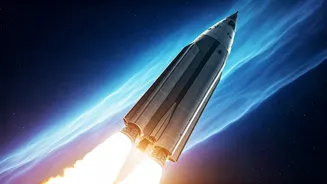
To carry heavier payloads for the space station and future lunar missions, India needs more powerful rockets. This has spurred the development of the Next Generation Launch Vehicle (NGLV). The NGLV is envisioned as a partially reusable, heavy-lift rocket that will eventually replace the current fleet. Its development hinges on perfecting new propulsion systems, including powerful semi-cryogenic and environmentally friendlier LOX-Methane engines. The NGLV will be capable of lifting payloads up to 30 tonnes to Low Earth Orbit, a significant increase from current capacity. The Union Cabinet has approved the project, signaling a firm commitment to developing this next-level launch capability.
The Grand Vision on the Horizon
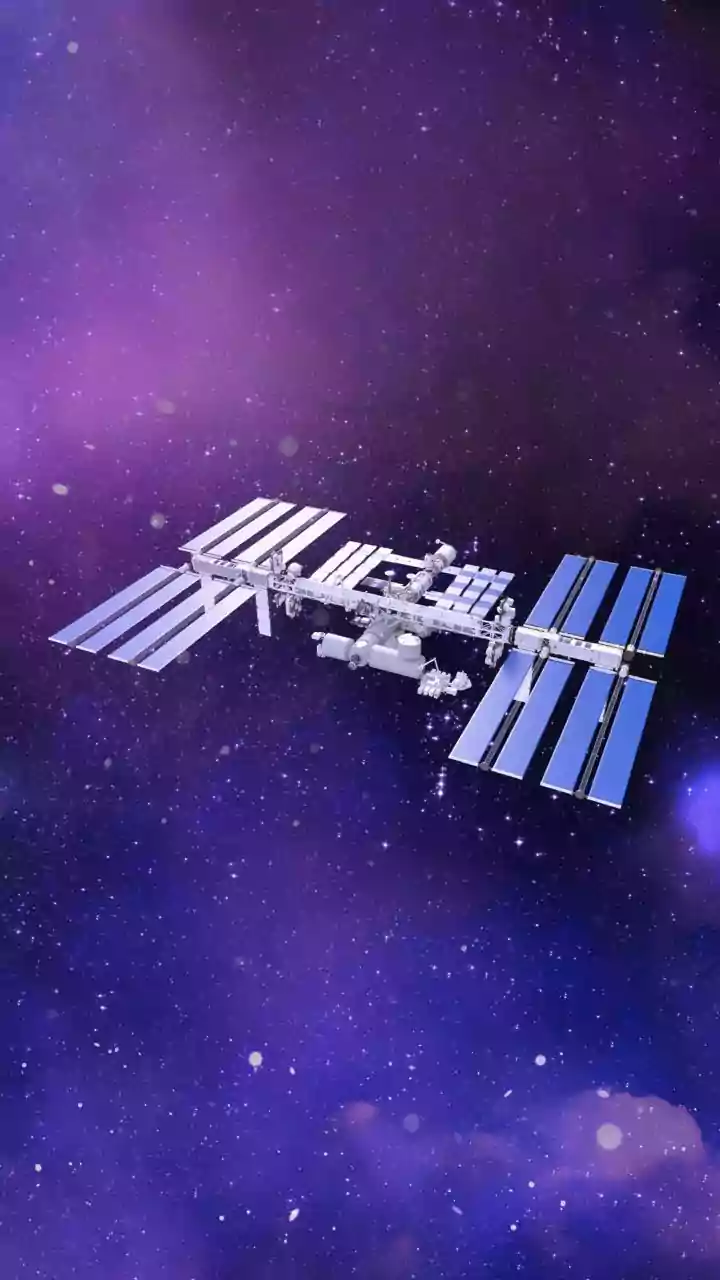
This intense period of testing is not happening in isolation. Each validated system is a building block for a clear and ambitious long-term roadmap. The successful development of these technologies is directly tied to establishing the Bharatiya Antariksha Station (Indian Space Station) by 2035. This modular station will be assembled in orbit, with the first module targeted for a 2028 launch. Even further on the horizon, these capabilities are the foundation for India's goal of landing an astronaut on the Moon by 2040. The 'test season' of today is therefore laying the essential groundwork for India’s next giant leaps in space exploration.