




The Immense Challenge of Escaping Earth
Getting anything into space is a fight against Earth's powerful gravity. To escape it, a spacecraft must reach a staggering speed of over 40,000 kilometres per hour. A single, monolithic rocket would need to carry an impossible amount of fuel to achieve
this. The more fuel you carry, the heavier the rocket becomes, which in turn requires even more fuel to lift—a classic catch-22. This is where the genius of multistage rocket design comes into play, a solution that has been fundamental to space exploration since its inception.
Shedding Weight to Gain Speed
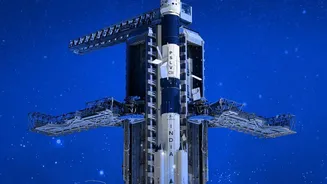
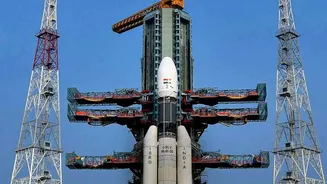
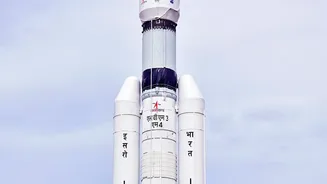
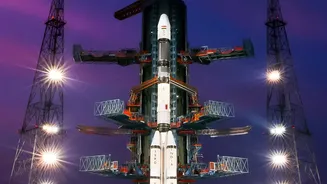
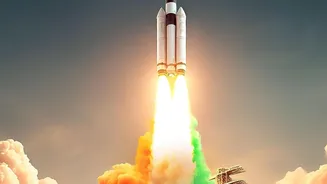
A multistage rocket is essentially several rockets stacked on top of each other. Each section, or stage, has its own engines and fuel. ISRO's workhorse, the Launch Vehicle Mark-3 (LVM3), is a prime example of a three-stage system. It begins its journey by firing two massive solid rocket boosters (the 'first stage') to power it off the launchpad. Once their fuel is spent, these heavy casings are jettisoned, instantly making the rocket much lighter. The liquid-fueled core stage then takes over, pushing the now-lighter vehicle even faster before it too separates. Finally, the high-efficiency cryogenic upper stage ignites, providing the final, powerful push needed to send the payload on its precise trajectory towards the Moon. By shedding dead weight along the way, the rocket can use its fuel far more efficiently to build speed.
What Makes ISRO's Launchers 'Advanced'?
The 'advanced' part of ISRO's systems lies in their increasing power, efficiency, and homegrown technology. The LVM3's C25 cryogenic upper stage, which uses super-cooled liquid oxygen and liquid hydrogen, is a major technological feat. Cryogenic engines provide more thrust for every kilogram of propellant burned compared to solid or earth-storable liquid fuels, making them ideal for the final stage of a long-duration mission. Furthermore, ISRO is continuously upgrading its capabilities. For instance, the planned semi-cryogenic engine will replace the current liquid stage on the LVM3, further boosting its payload capacity. This constant innovation ensures that India can not only launch its own complex missions but also compete in the global commercial launch market.
A Mission Too Complex for One Rocket
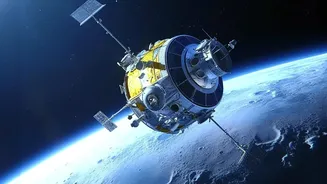
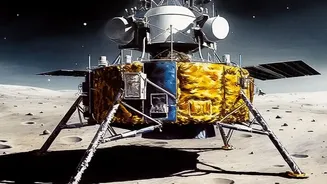
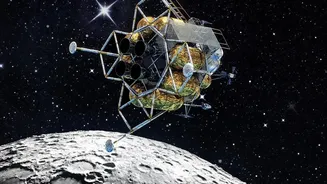
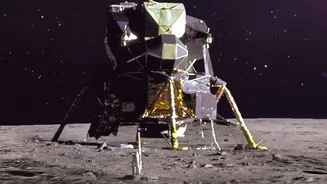
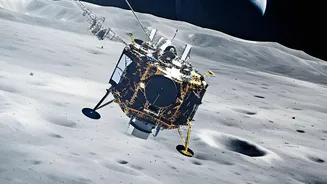
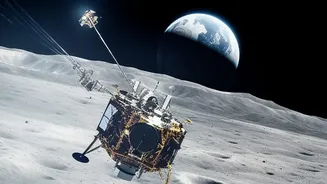
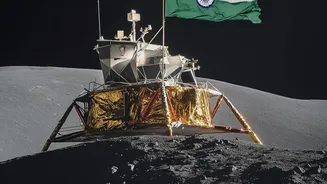
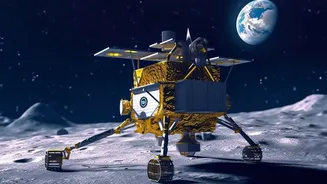
Chandrayaan-4 is ISRO's most complex mission to date. It aims to land on the Moon, collect samples, and then launch a module from the lunar surface to return those samples to Earth. The mission architecture is so intricate that it requires five separate modules: a propulsion module, a descender, an ascender, a transfer module, and a re-entry module. This complexity and weight mean that a single LVM3 launch is not enough. The current plan involves two separate LVM3 launches to put all the necessary components into space, where they will later dock and assemble for the journey to the Moon. This dual-launch strategy highlights just how demanding a lunar sample return mission is.
Fueling India's Deep Space Ambitions
Mastery of multistage rocket technology is the foundation for all of India's future space ambitions. It enabled the historic Chandrayaan-3 landing, the Aditya-L1 solar observatory, and will be critical for the upcoming Gaganyaan human spaceflight program and the Bharatiya Antariksh Station. For Chandrayaan-4, this technology isn't just a transport service; it's the enabler of a national milestone. Successfully returning samples from the Moon will make India only the fourth country in the world to do so, cementing its status as a major space-faring power. These powerful, reliable rockets are quite literally the vehicles driving India's journey into the cosmos.