





Your First Port of Call: On-the-Spot Assistance
For any issue that arises during your journey, your first and most immediate point of contact is the railway staff on the train or at the station. This includes the Train Ticket Examiner (TTE), coach attendant, guard, or any Railway Protection Force (RPF)
personnel on board. In cases of theft, they can provide you with an FIR form to fill out on the spot, so you don't have to break your journey to file a police report. For booking discrepancies or seat issues, the TTE is the primary authority. For problems at a station, approaching the Station Master or the nearest RPF Assistance Post should be your first move. Acting quickly and informing the nearest official is the most effective initial step.
The Digital Solution: RailMadad Portal and App
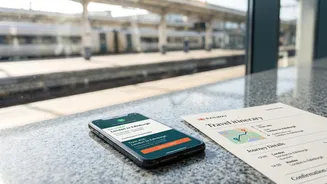
For a more formal and trackable complaint, the 'RailMadad' platform is the official, all-in-one grievance redressal system for Indian Railways. It's accessible via its website (railmadad.indianrailways.gov.in) and a dedicated mobile app. This system allows you to lodge complaints about a wide range of issues, including those related to luggage, booking, cleanliness, staff behaviour, and catering. You will need to provide your PNR number or journey details, select the appropriate complaint category, and describe the issue. The biggest advantage of RailMadad is that it generates a unique complaint reference number, allowing you to track the status of your grievance online until it is resolved.
The Universal Helpline: Dial 139
Indian Railways has integrated its various helplines into a single, universal number: 139. This 24x7 service is available in twelve languages and can be accessed from any mobile phone, without needing a smartphone. The Interactive Voice Response System (IVRS) guides you to the right department. You can press '1' for security or medical emergencies, '2' for enquiries like PNR status, and '3' or '4' for lodging various complaints. For specific booking and refund issues, this is a direct line to customer care. For lost luggage, you can report it via 139 to alert railway authorities, who can then inform staff on the train or at upcoming stations.
Harnessing Social Media: X (Formerly Twitter)
In recent years, social media has emerged as a surprisingly effective tool for quick grievance redressal. The official account of the Ministry of Railways, @RailMinIndia, and the dedicated passenger support handle, @RailwaySeva, are very active on X (formerly Twitter). When posting your complaint, be sure to clearly state your issue and include essential details like your PNR number, train number, and date of journey. Tagging the official accounts of the relevant Divisional Railway Manager (DRM) can also accelerate the response. Public visibility often prompts a faster investigation and resolution from railway officials.
Specific Channels for Booking and Refunds
If your problem is strictly related to online booking, e-tickets, or refunds processed through the IRCTC portal, it's best to use their dedicated channels. You can log into your IRCTC account and use the complaint and feedback section. For specific issues, IRCTC provides email support at care@irctc.co.in for general e-ticket queries and etickets@irctc.co.in for cancellation-related matters. While RailMadad can also handle these issues, going directly to the source at IRCTC can sometimes be more efficient for problems originating on their platform.
The Escalation Ladder: When Your Complaint Goes Unanswered
If your complaint isn't resolved satisfactorily through the initial channels, there is a formal escalation hierarchy. You can take your complaint to the Divisional Railway Manager (DRM) of the concerned division. If you still don't get a resolution, you can escalate it further to the Additional General Manager (AGM) at the Zonal Headquarters. For unresolved issues of a serious nature, the complaint can be taken to the Centralized Public Grievance Redress and Monitoring System (CPGRAMS), which is a government-wide portal. Finally, as a last resort, passengers have the right to approach consumer courts for deficiency of service.