

The Foundation: More Than a Handshake
The groundwork for this deep collaboration was laid when India signed the Artemis Accords in 2023, joining a U.S.-led coalition of nations committed to principles of peaceful and transparent lunar exploration. This isn't just a symbolic gesture. The Accords create
a framework for interoperability, data sharing, and joint missions, effectively integrating India into a global standard for space operations. The recent invitation, extended during the U.S.-India Civil Space Joint Working Group meeting, moves the partnership from principles to practice. It signals a future where ISRO is not just a collaborator on singular missions like the NISAR satellite, but a partner in building sustained human presence on the Moon.
A New Lunar Economy
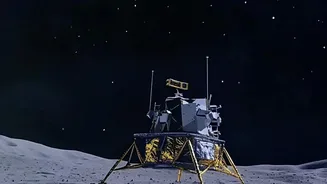
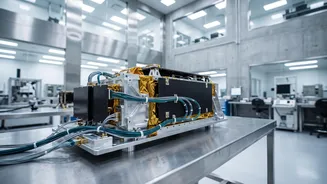
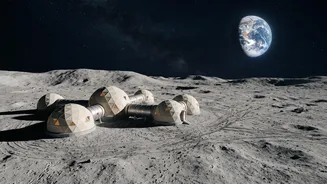
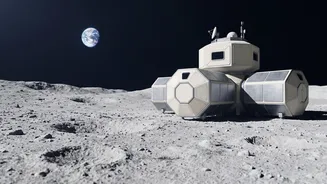
Building a moon base is an immense logistical and technological undertaking that goes far beyond launching rockets. It will require creating a complex supply chain for everything from habitat modules and life support systems to power generation, robotics, and communication networks. This is where the opportunity for India's private sector explodes. While ISRO will lead the strategic and scientific aspects, the sheer scale of building and maintaining a lunar outpost necessitates a robust industrial ecosystem. The demand for specialized components, on-orbit servicing, resource extraction, and data analytics will create countless commercial verticals, transforming lunar exploration from a government-led pursuit into a new economic frontier.
India’s Private Players Are Ready
India's private space sector is no longer nascent. Since the government opened up the sector in 2020, over 400 startups have emerged. Companies like Skyroot Aerospace, which successfully launched its Vikram-1 rocket, and Agnikul Cosmos, with its 3D-printed engines, are proving their launch capabilities. Others like Pixxel are focused on satellite data, Dhruva Space on satellite platforms, and Bellatrix Aerospace on propulsion systems. This diverse and rapidly maturing ecosystem is perfectly positioned to pivot towards the needs of a lunar mission. Their expertise in creating cost-effective, innovative solutions for Earth orbit can be scaled and adapted for the more demanding lunar environment, offering everything from component manufacturing to specialized payload development.
The Role of the Ecosystem Enabler
The government's role has been crucial in this transformation. The establishment of the Indian National Space Promotion and Authorisation Centre (IN-SPACe) created a single-window agency to facilitate private participation, bridging the gap between ISRO and industry. By providing access to ISRO’s testing facilities, offering policy support, and streamlining regulations, IN-SPACe is nurturing the ecosystem. For the moon base opportunity to be fully realized, this role must expand. It will involve facilitating technology transfers from ISRO, promoting public-private partnerships for complex systems, and ensuring Indian firms can meet NASA's stringent interoperability and quality standards.
Challenges on the Launchpad
Despite the immense potential, the path is not without challenges. The Indian private space sector still faces significant hurdles, primarily in securing large-scale, long-term funding. Space ventures are capital-intensive with long gestation periods, which can deter traditional venture capital. Furthermore, there is intense global competition from established players, a continuing dependence on imported critical components, and the need for a more comprehensive legislative framework like a dedicated Space Activities Act. Overcoming these hurdles will require sustained policy focus, attracting deeper pools of capital, and developing a specialized talent pipeline to meet the demands of advanced space technologies.